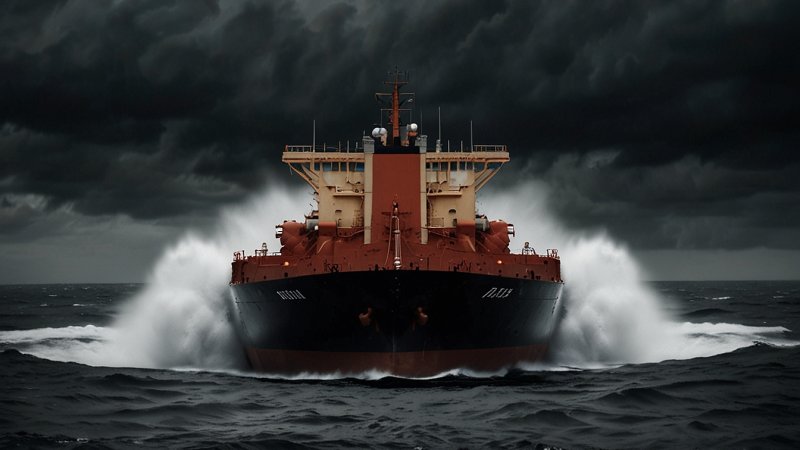





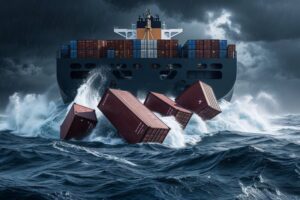

On 3 March 2026, the container ship OOCL Sunflower, operated by Orient Overseas Container Line and flying the Hong Kong flag, lost a significant number of containers overboard during its voyage from Kaohsiung to Long Beach. The incident occurred south of the Aleutian chain in the North Pacific, in particularly severe weather conditions that caused violent vessel movements. According to some sources, around 57 containers fell into the sea, while a report from NOAA (National Oceanic and Atmospheric Administration) cites a notification from the US Coast Guard indicating 32 units.
The vessel, with a capacity of 16,828 TEU and delivered in 2025, was deployed on a transpacific route when it encountered the storm. The crew was unable to carry out an immediate damage assessment due to operational conditions, postponing detailed inspections until arrival in the United States. Initial reconstructions suggest that extreme rolling and pitching caused the failure of some cargo securing systems. In addition to the containers lost overboard, others were damaged, shifted or left leaning on deck, with potential implications for the vessel’s stability and safety. The area of the incident, in the North Pacific south of the Aleutians, is known for harsh weather conditions, particularly during the winter months.
The OOCL Sunflower reached Long Beach around 12 March, where inspections by the Coast Guard and port authorities began. These checks focus on the vessel’s stability, the condition of the remaining cargo and the handling of any dangerous goods. The overall extent of the damage, including the final number of containers lost and those to be removed for safety reasons, remains under assessment.
The incident falls within the new regulatory framework introduced by the International Maritime Organization, which came into force in January 2026 and mandates the reporting of containers lost at sea. These rules aim to improve traceability of such events and reduce risks to navigation and the environment. In the case of the OOCL Sunflower, the notification to NOAA and the publication of an official report represent a concrete application of this system, despite discrepancies in the initial data.
Extreme weather conditions continue to represent a risk factor for cargo integrity and supply chain continuity. The combination of severe meteorological events, ever larger vessels and the complexity of stowage operations keeps industry attention focused on safety, securing systems and risk management.
The OOCL Sunflower case fits into a broader trend which, according to data from the World Shipping Council, has seen a reduction in the annual number of containers lost in recent years compared with the past, albeit with fluctuations. In 2023, losses fell to 221 containers, the lowest level since WSC tracking began, while in 2024 they rose again to 576 containers, still below the ten-year average of 1,274. Last year, a significant share of incidents was concentrated around the Cape of Good Hope, with around 200 containers lost, more than 35% of the 2024 total, in a context shaped by route diversions away from the Red Sea. For 2025, however, no consolidated WSC or IMO data are yet available and the figures in circulation remain provisional: some interim analyses suggest to more than 800 containers lost by year-end, a threshold which, if confirmed, would indicate a further deterioration compared with 2024, but which should be treated with caution as it does not yet correspond to an official statistic.