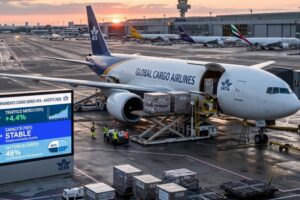









Despite geopolitical uncertainties and high tariffs, Asia remains the main driver of global growth, contributing an estimated 60% in 2025–2026, according to the International Monetary Fund. At the same time, Iata reports that air cargo volumes on the Europe–Asia corridor rose by 12.4% year-on-year in September 2025, confirming a growing flow of traffic involving Southeast Asian economies. Trade between China and ASEAN countries reached 3.67 trillion yuan (around €471 billion), up 9.6% year-on-year, while exchanges with the United States declined by 9.3%.
Against this backdrop, Rhenus launched three new air cargo transport platforms in 2025, located in Singapore, Bangkok and Kuala Lumpur. These facilities are designed to enhance intra-Asian freight flows and connections with major global routes. Kuala Lumpur supports inbound loads from Europe and outbound cargo to Oceania; Singapore handles flows from Asia and Oceania bound for the Americas; while Bangkok serves as a multimodal hub for intra-Asian and Europe-bound links.
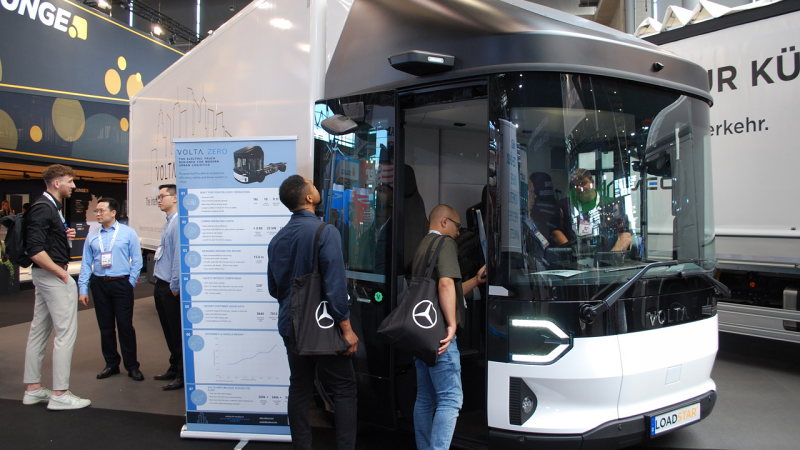
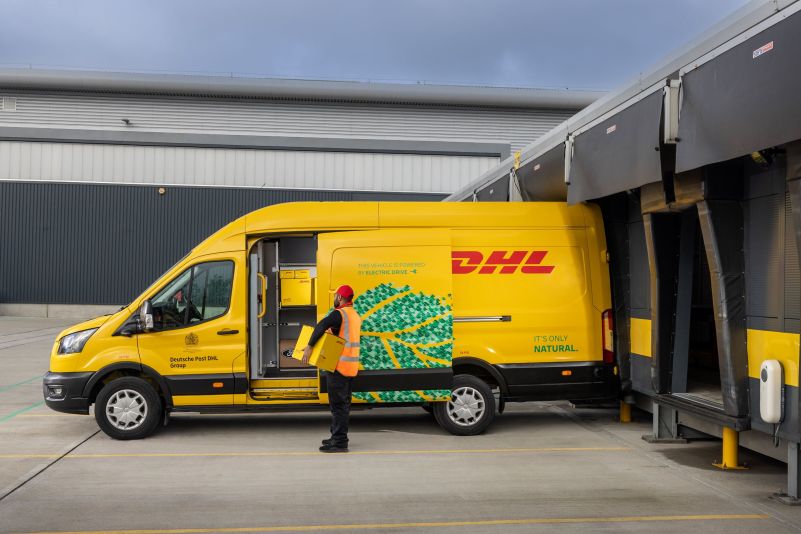
According to Chris Bode, global vice president for air freight at Rhenus Group, the new hubs are “at the heart of our expansion strategy, integrating digital and sustainable solutions to ensure efficiency and scalability.” The facilities include door-to-door services, customs clearance, freight consolidation and digital platforms for real-time shipment management. Environmental initiatives include the use of electric vehicles, optimised routing and low-emission solutions.