






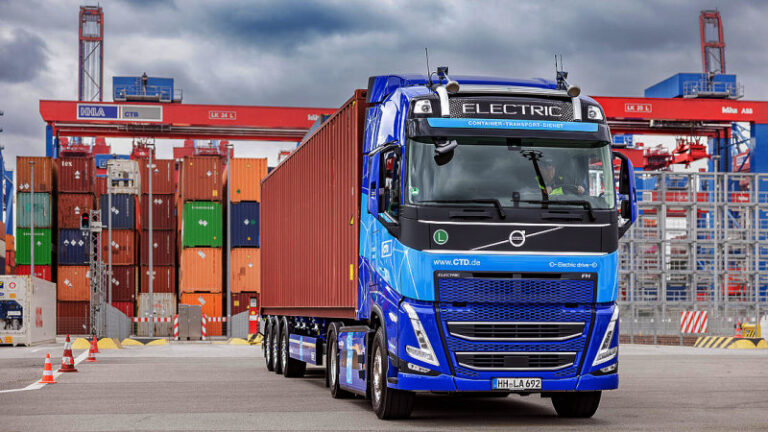
Hamburger Hafen und Logistik, which operates the main container terminals in the port of Hamburg, has launched a measure to facilitate the use of electric trucks across its facilities. The initiative falls under the company’s Balanced Logistics environmental strategy and marks a direct intervention in operational procedures, aiming to cut emissions along the logistics chains that pass through the port.
From 16 November 2025, the company has added a new booking category for electric trucks to the slot reservation system used for terminal access, removing the obligation to comply with a fixed one-hour time window. The measure, which will run on a pilot basis until mid-2026, allows haulage companies to reserve a slot valid for the entire day, overcoming the one-hour intervals required for conventional vehicles. The arrangement takes into account charging cycles and the operational planning needs of electric fleets.
A comparison with the traditional system illustrates the operational scope of this change. Slot booking was introduced in 2017 to reduce congestion and regulate truck access to terminals. At present all trucks must book a one-hour window, with a tolerance of thirty minutes before and after the selected time. Arrivals outside the designated period are handled only if there is residual capacity; in the event of significant delays the slot expires and must be rebooked. The new category removes this rigidity for electric trucks, allowing flexible handling throughout the booked day.
According to chief operating officer Jens Hansen, the temporary suspension of time constraints is designed to provide targeted support for the spread of lower-emission drive systems. He noted that the group has been electrifying its equipment across Europe for several years, with the aim of reducing its environmental footprint and offering customers more sustainable solutions. The initiative is intended to make investment in electric trucks more attractive for transport operators working in the port by removing a recurring operational barrier in delivery scheduling.
The measure aligns with the Balanced Logistics strategy, which targets group-wide climate neutrality by 2040 and a 50% cut in carbon dioxide emissions by 2030 compared with 2018 levels. By the end of 2024 the company had already achieved a 42% reduction relative to 2018.
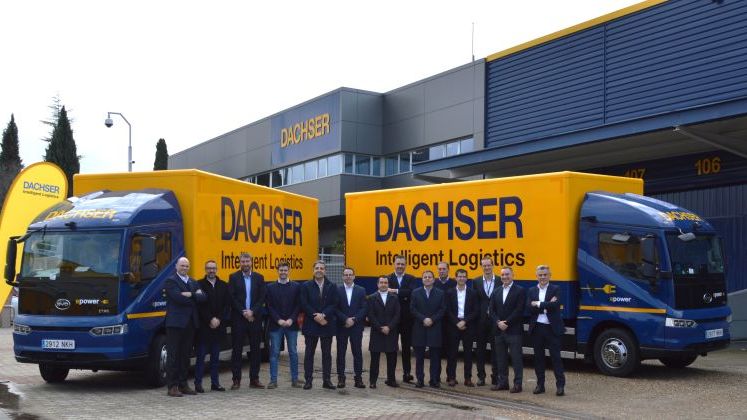
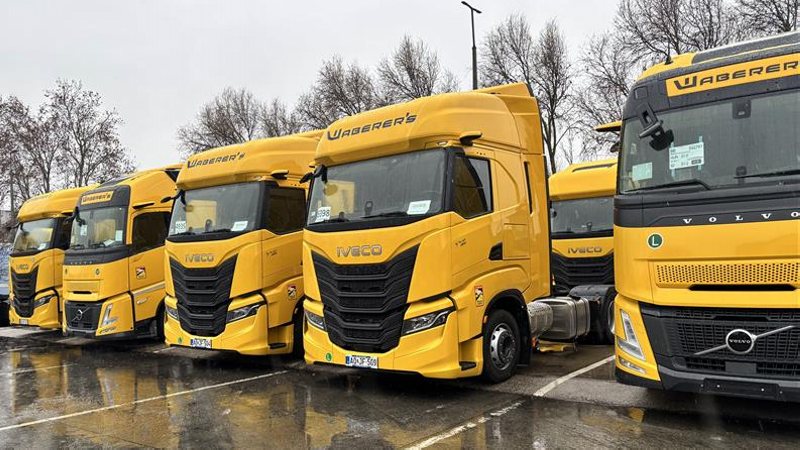
HHLA has launched several electrification initiatives in land transport. In June 2024 its subsidiary Container Transport Dienst commissioned its first two Volvo FH Electric trucks for container haulage within the port of Hamburg. The vehicles are equipped with 540 kWh batteries, charging power of up to 250 kW and a range of between 260 and 340 kilometres at full load. The trial phase is designed to gather data on day-to-day use, consumption and charging times to assess potential fleet expansion.
Rail subsidiary Metrans has been operating electric trucks since 2022 and, in September 2025, introduced the Czech Republic’s largest electric fleet, comprising six Volvo FH Electric units. The vehicles are used mainly for last-mile deliveries in urban and suburban areas, with the aim of cutting emissions on the feeder routes to intermodal terminals.
Electrification also extends to internal terminal operations. The Container Terminal Altenwerder completed the conversion of its entire automated guided vehicle fleet to electric drive in the fourth quarter of 2023. The 95 vehicles now in service run on renewable electricity and have eliminated around three million litres of diesel per year, equivalent to roughly eight thousand tonnes of carbon dioxide. Altenwerder was the world’s first container terminal to be certified climate-neutral and uses green energy for all major equipment, including quay cranes, yard cranes and rail-mounted cranes.
The group also leads the Clean Port and Logistics innovation cluster, which brings together more than forty companies committed to decarbonising port operations. As part of the project, September 2025 saw the launch at Container Terminal Tollerort of tests on the first hydrogen-powered straddle carrier, manufactured by Konecranes. The vehicle features a modular propulsion platform designed to be configured with hybrid, electric or hydrogen power. The Clean Port and Logistics project has received around three million euros in funding from the German Federal Ministry of Transport under the national programme for hydrogen and fuel cells.