





Volvo Trucks Italia has reached a significant environmental milestone: zero landfill disposal of waste across the sixteen sites of Volvo Truck Centre Italia. This result, achieved in partnership with Omnisyst, marks a concrete step forward in the sustainable management of industrial waste, a sector often overlooked but vital for the ecological transition. Since 2019, the Italian service sites in the Volvo network have handled over 3,850 tonnes of waste through fully traceable processes, without sending a single kilogram to landfill. The project has also included the offsetting of more than 38 tonnes of CO2 equivalent, though the real core of the initiative lies in the prevention of emissions through logistical efficiency and the use of nearby treatment facilities.
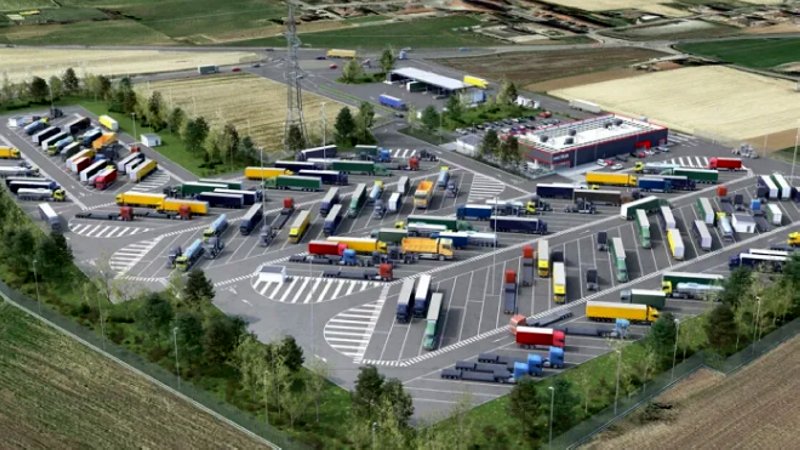
Behind this achievement lies a detailed strategy that brings together technology, governance and shared responsibility. Volvo Trucks has faced a considerable challenge: ensuring high environmental standards across a distributed network of sixteen sites, each with its own operational characteristics. The key to success has been an integrated management approach, entrusted to Omnisyst, a company specialised in applying circular economy principles to the industrial sector.
Omnisyst has developed a proprietary software solution for Volvo Trucks that digitalises the entire environmental management process, from data collection to waste flow traceability and compliance reporting. This system enables continuous monitoring, standardised procedures and streamlined operations. The model is built on three pillars: digitalisation, logistical proximity and qualified local presence. The supplier network, selected through continuous audits and rigorous criteria, ensures consistent coverage across all sites, minimising risks and costs while maintaining regulatory compliance even in the most complex contexts.
At many of the Italian Volvo centres, all waste is already recovered. Where this is not possible, treatment methods such as D8 and D9 – referring to biological and physico-chemical purification – are used for the most difficult residues. Energy recovery through incineration is only considered as a last resort, due to its higher environmental and economic impact. Perhaps the most telling data point is the reduction of emissions at source: thanks to improved transport logistics and the choice of nearby facilities, the amount of CO2 requiring offsetting is steadily decreasing. An algorithm developed by Omnisyst allows for the precise calculation of residual emissions, which are then offset using certified credits.
Each Volvo site benefits from the presence of a dedicated figure: the Sustainability Agent. This is not a formal position, but an active role charged with translating the parent company’s environmental guidelines into practical measures and proposing site-specific improvements. This figure turns sustainability from an abstract value into a daily practice. As Camilla Ridolfi, HSEQ Manager at Volvo Trucks Italia, puts it: “Sustainability Agents are the local custodians of our vision. Their widespread presence ensures constant and conscious oversight, making sustainability a lived value.”