




Global container fleet above 33 million teu
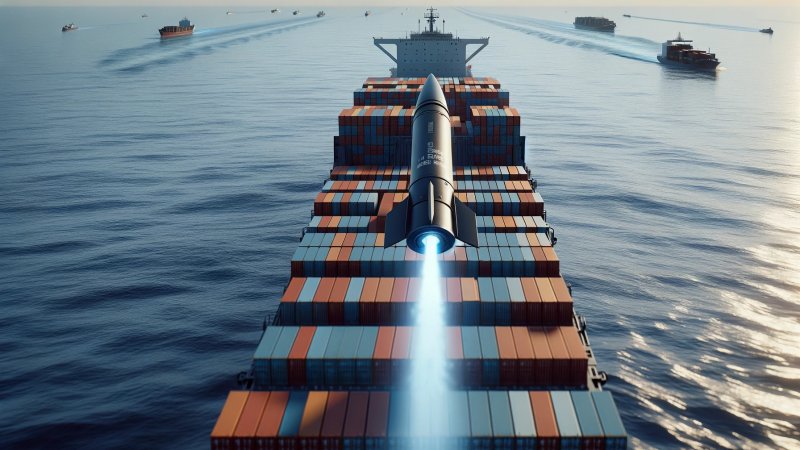
According to the latest Alphaliner report, the global containership fleet has exceeded 33 million teu, a threshold reached through a combination of organic growth and newbuild deliveries. The analytics firm highlights the central role of Msc, which has surpassed 7 million teu with 961 vessels, 702 of them owned, and is set to expand further through 119 new units for a total of 2.1 million teu. The gap with Maersk continues to widen: the Danish line operates 723 ships, including 344 owned, with a capacity of 4.6 million teu. Alphaliner also notes that Maersk could soon be overtaken by Cma Cgm, which fields 707 vessels, 348 owned, for just over 4 million teu and holds the largest orderbook in the sector with 142 ships totalling 1.82 million teu, second only to Msc. Hmm has also emerged among the top ten, with 98 vessels and 1 million teu of capacity. The top ten carriers analysed by Alphaliner control 4,040 of the 6,642 containerships in service, equal to 60.9% of the total, for a combined capacity of 28.1 million teu, representing 85% of global capacity.
Man to shift part of its production to Poland
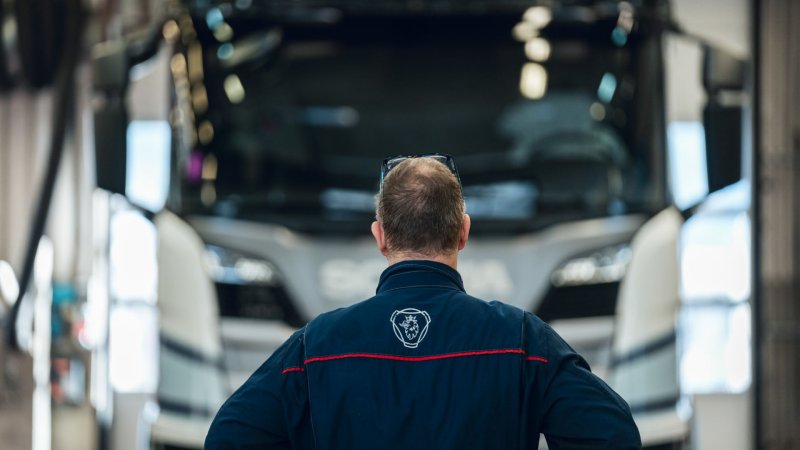
According to the daily Kurier, Man Trucks is accelerating its internal reorganisation by transferring part of its industrial vehicle cab production from Munich to Kraków, a move expected to generate several hundred million euros in savings while raising concerns for thousands of German workers. Documents submitted to the supervisory boards of Man and parent company Traton seek approval for a package of measures deemed “necessary for long-term competitiveness” in a market that, according to internal forecasts, shows no signs of improvement even in 2026. Kraków will concentrate production of Traton’s modular system cabs, a new paint shop and the assembly lines for fully outfitted interiors, while the plan also removes benefits beyond the collective agreement, with expected savings of €160 million. Technical assessments presented to the board estimate an improvement in economic results amounting to €935 million by 2028, a figure needed to avoid negative returns on sales that year. The shift to Poland is justified by rising production costs in Germany, where energy, labour and climate regulations are eroding industrial competitiveness in a context that saw the loss of more than 50,000 manufacturing jobs between 2021 and 2023. Man confirms it will retain its plants in Munich, Nuremberg and Salzgitter and plans €1 billion of investment over five years. Union representatives warn that the decision risks eroding Germany’s industrial capabilities: for Sybille Wankel of Ig Metall, the measures “threaten the existence of the main Munich plant”, while Karina Schnur of the central works council calls them “a slap in the face for employees”.
Spanish road haulage expands
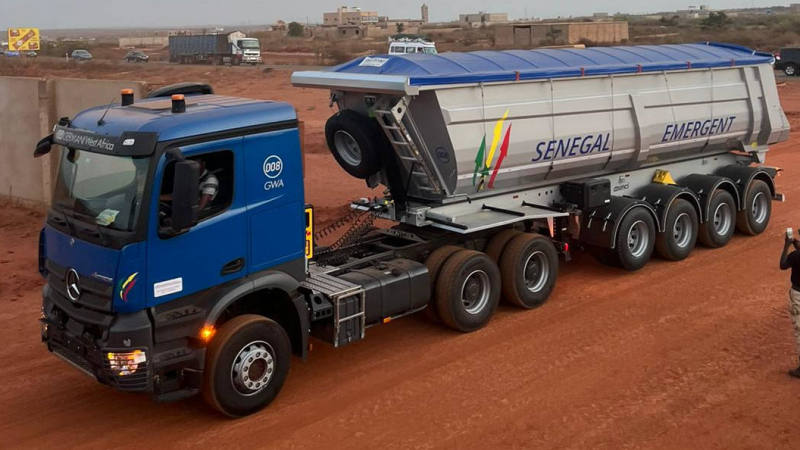
In the first half of 2025 Spain’s road haulage companies recorded rising volumes, supported by domestic demand. According to data from the Ministry of Transport and Sustainable Mobility, activity grew by 6.6% in the first quarter, driven by a 7.4% increase in the domestic market, while international traffic fell by 4.6%. Growth continued in the second quarter, up 2.6% to 427 million tonnes. In tonne-kilometres the trend was weaker, with a 4.8% fall in the second quarter and a broadly stable half-year total at –0.1%. The macroeconomic environment remains favourable: after growth of 3.5% in 2024, GDP rose by 3.2% year on year in the first quarter of 2025 and 3.1% in the second. Forecasts point to full-year growth between 2.6% and 3% in 2025 and between 2% and 2.2% in 2026. The trend was entirely driven by domestic demand, up 3.5% in the second quarter, sustained by household consumption and investment, while the services sector does not generate a proportionate need for freight transport. In EU trade, in 2023 66% of exports and 64% of imports moved by road. In the first eight months of 2025 exports to France, Germany and Italy fell by 6.3%, 2.5% and 6.3% respectively, while imports from the area showed greater momentum: +3.5% from Germany, +1.9% from France and +11.8% from the Netherlands, for an overall increase of 4.4%.
Hmm orders eight containerships
Hmm has signed a USD 1.456 billion contract with HD Korea Shipbuilding & Offshore Engineering for eight dual-fuel 13,400 teu containerships, described by the shipbuilder as the largest container vessel order in 18 years. The units, 337 metres long and 51 metres wide, will be equipped with liquefied natural gas engines and fuel tanks enlarged by 50% to increase operational range. Two ships will be built by Hyundai Heavy Industries and six by Hyundai Samho, with deliveries scheduled through the first half of 2029. The initiative forms part of the investment plan announced by Hmm in October 2025, totalling KRW 4 trillion (USD 2.8 billion), which includes 14 new vessels, among them 12 dual-fuel containerships and two VLCCs. Hmm said the order is aligned with tightening decarbonisation rules and its strategy towards 2030, which aims to expand container capacity to 1.5 million teu and achieve carbon neutrality by 2045.
Step forward for LH Cargo cargocity in Frankfurt
According to Lufthansa Cargo, completion of the first phase of its new site at Frankfurt Airport marks a significant step in the cargocity modernisation programme. The company plans to begin operating the first 60 workstations following building approval, expected by mid-December, while the next three construction phases will run until early 2028, with phase two due for delivery in autumn 2026. The project includes 10,000 square metres of new offices and is part of a broader infrastructure renewal plan, including the construction of a new cargo hub. The total investment, at €600 million, is currently the group’s largest infrastructure project. By 2030 the entire 330,000-square-metre cargo centre will be redeveloped while maintaining operational continuity. The airport handles 1.4 million tonnes a year, equal to 80% of the airline’s global volumes, and has been operating without interruption since 1982. Modernisation is progressing on schedule and includes the construction of a 42-metre-high self-supporting warehouse, among the tallest at the airport.
New locomotives for Orlen Kolej
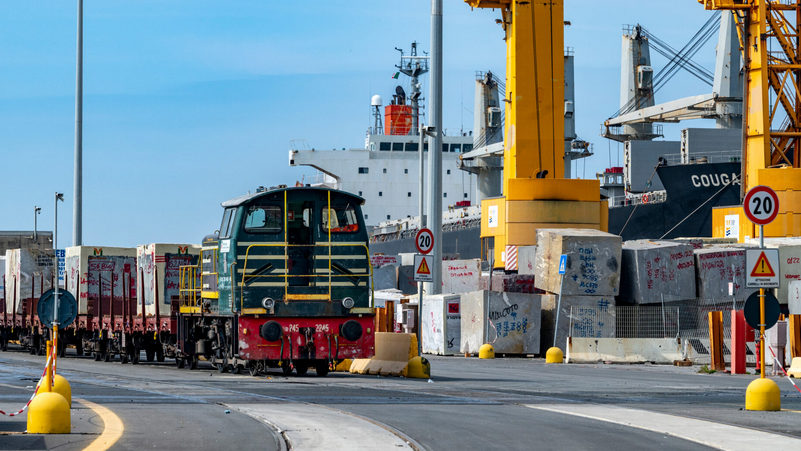
Orlen Kolej will procure 40 new electric locomotives equipped with a diesel module for non-electrified routes, with a stated aim of reducing energy consumption by 30% per tonne transported. The programme includes twenty 304e locomotives with an output of 5.6 MW and twenty e6actadnb Dragon 2 units rated at 5 MW, all designed to improve efficiency and operational continuity. The operator estimates the new fleet will be able to move up to 7.2 million tonnes a year over 5.5 million kilometres, adding capacity to the group’s freight activities. Orlen said the total contract value exceeds PLN 800 million (around €190 million), financed through operating leases provided by Pko Leasing.