




From 1 January 2026, major changes will come into force in Austria that will directly affect the costs and operations of commercial vehicles. The main developments concern the reform of motorway tolls, a strengthening of environmental measures and a more restrictive management of heavy goods traffic along the Brenner corridor, influenced by structural works on the Lueg bridge.
As far as tolls are concerned, 2026 will mark a shift in the tariff structure. According to motorway operator Asfinag, the automatic inflation adjustment of the infrastructure component has been suspended, keeping the base rate unchanged compared with 2025. However, there will still be an overall increase, estimated at between 10% and 13%, driven by higher charges linked to carbon dioxide emissions and external costs such as noise and air pollution. This environmental package is expected to generate around €42 million in additional revenue in 2026.
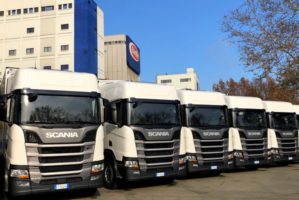
In operational terms, based on Asfinag’s calculations, the kilometre rate for a two-axle Euro VI truck will be around 27.74 euro cents per kilometre, while for a Euro VI vehicle with four or more axles it will rise to approximately 57.24 euro cents per kilometre. Zero-emission vehicles, electric or hydrogen-powered, will continue to benefit from reduced tariffs, at around 11.89 euro cents per kilometre for vehicles with four or more axles.
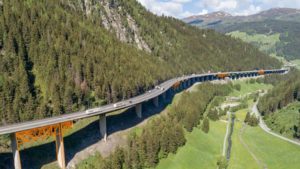
Alongside tolls, 2026 will be a particularly challenging year for freight traffic transiting the Brenner. Works on the Lueg bridge on the A13 motorway will impose a single lane in each direction throughout the year. According to the Land Tirol authorities, for structural reasons heavy vehicles over 3.5 tonnes will be required to use the left-hand lane only, concentrating the load on the strongest part of the structure. The right-hand lane will be reserved for light vehicles and monitored by automatic weighing systems, with heavy penalties in case of infringement.
This reduction in capacity has led to the introduction of further traffic restrictions. For 2026, fourteen additional days of total bans have been set for heavy goods vehicles over 7.5 tonnes, particularly during peak tourist periods, in order to avoid critical congestion on the Brenner axis.
The truck metering system known as Blockabfertigung at the Kufstein Nord crossing on the German border will also remain in place. The 2026 calendar foresees thirty metering days, down from 36 in 2025, precisely as a result of the additional total bans. In the first quarter of the year, according to official communications from the Land Tirol, blocks are scheduled for 7 January, 2, 9, 16 and 23 February, and 2, 9 and 16 March, with an operational limit of around 300 trucks per hour.
On the regulatory side, the sectoral ban on the A12 Inntal Autobahn will also remain in force, limiting the transport of specific categories of goods such as waste, soil and stones, timber, motor vehicles and construction materials. The exemption for Euro VI vehicles will continue to apply only to vehicles registered after 31 August 2018. Political discussions are under way on a possible tightening of this temporal threshold, but for now the official date remains unchanged, making it essential to check the first registration date on the vehicle registration document.
Finally, for the 2025–2026 winter season, exit bans from the motorway network for transit traffic are confirmed. From 20 December 2025 to 6 April 2026, in the districts of Innsbruck-Land, Kufstein, Reutte and Imst, it will be forbidden to leave the motorway to bypass queues. Exits will be permitted exclusively for vehicles with a local origin or destination, while through traffic must remain on the main axis, as stipulated by the Land Tirol authorities.
Antonio Illariuzzi