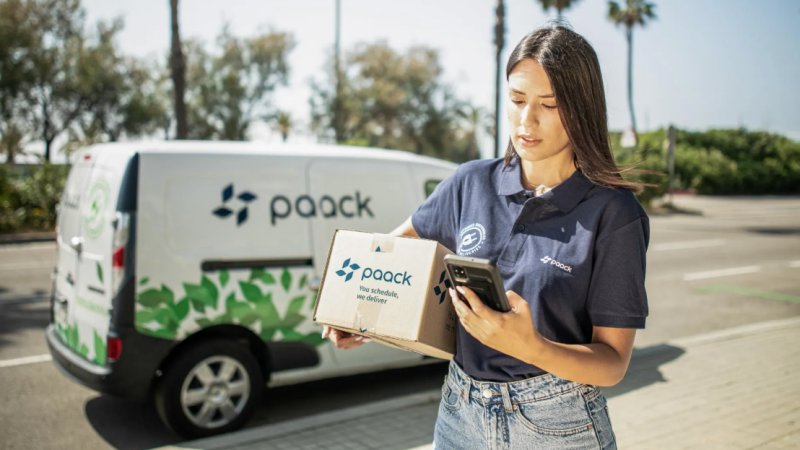








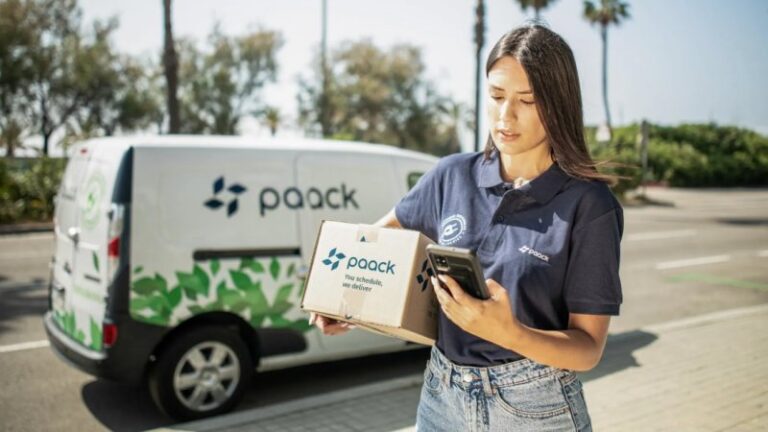
On 15 October 2026, CEVA Logistics announced the integration of Colis Privé and Paack under a single brand identity. The two last-mile delivery networks operate in France, Belgium, Luxembourg, Spain and Portugal, together delivering 150 million parcels annually through more than 17,000 out-of-home delivery points, including 8,000 in France, 1,500 in Belgium and 8,000 in Spain. The unified brand combines Colis Privé's operational scale and local presence with Paack's technological capabilities, offering online retailers operating across several European markets simpler delivery management, cross-border solutions through an integrated network and more consistent service. CEVA says the integration has already produced its first result: a joint delivery service for a major international retailer, whose identity has not been disclosed.
Turning to intralogistics automation, on 22 October CEVA Logistics, Sereact, Nvidia, Nebius and Zalando announced a closed-loop training system for Cortex, the robotic "brain" developed by Sereact. Its first application involves handling Zalando returns at selected CEVA Logistics facilities. E-commerce returns are among the most difficult warehouse processes to automate: every item comes back in the condition in which the customer left it, folded or crumpled, bagged or loose, with or without tags, while product ranges change with each season. The robot must pick up each item, identify it, inspect its condition and sort it. Cortex learns from real-world picking operations, but these cover only items that have already passed through a workstation. Improving its control policy, the set of rules determining how the robot moves, requires collecting data from operations, retraining the system, testing it on the robot and repeating the process. Until now, each cycle took weeks and covered only scenarios that engineers could recreate manually. With the new system, a mistake made by a robot on Monday could be incorporated into a tested update within days.
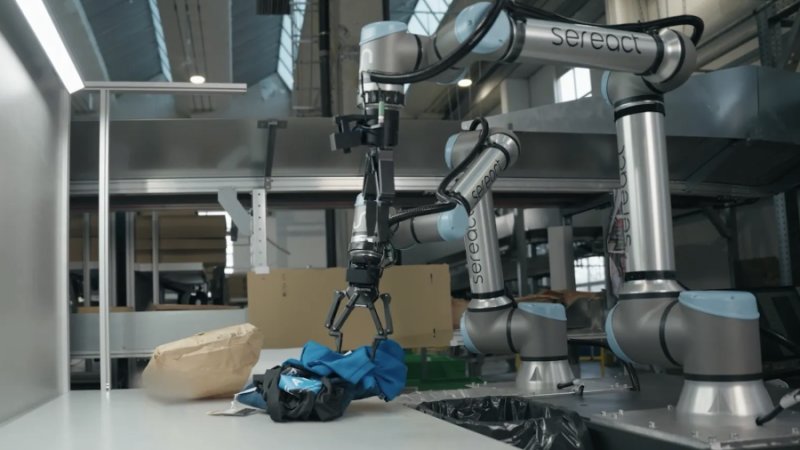
Recorded episodes from returns workstations, including video and motion data, are transferred to Nebius object storage, where Nvidia Isaac Lab generates thousands of simulated variations. Cosmos reproduces these scenarios with different garment conditions, packaging, materials and lighting. The resulting dataset is used to complete Cortex training on Nvidia Blackwell GPUs. The entire process is managed by an artificial intelligence agent. Nvidia's Physical AI Data Factory skills consist of open, version-controlled instruction files that a coding agent can read directly, while Nebius provides additional Workbench skills for simulation, training, evaluation and threshold checking. Before each run, the agent estimates GPU costs, launches the various stages, checks whether the required threshold has been met and, following a failed run, determines which scenarios need further development. Sereact engineers specify the objective, such as "validate the policy for the autumn product range", and approve runs that exceed a predefined cost limit.