





Within the European framework outlined by Upply’s report on forecasts for European road haulage in 2026, Italy ranks among the countries with the most limited growth. Gross domestic product is expected to increase by just 0.8%, a pace below the European Union average, and this will be reflected in a moderate trend in transport volumes. Demand for road haulage services will be supported mainly by domestic consumption and distribution, while the manufacturing industry will continue to show signs of weakness, particularly in the most energy-intensive sectors.
For road freight transport, this context translates into a broad stability of flows, without a genuine expansion phase. National corridors and cross-border routes with France, Germany and Austria will remain central, but volume growth will be limited and often concentrated in specific supply chains, such as agri-food and fast-moving consumer goods. Italy’s productive structure, characterised by a strong presence of small and medium-sized enterprises, continues to generate fragmented demand, with smaller average loads and a high incidence of short- and medium-haul journeys.
One of the most problematic aspects for Italy concerns the profitability of haulage companies. Upply’s report shows that freight rates in Italy, as elsewhere in Europe, remain at historically high levels, but are not always sufficient to offset rising operating costs. Labour costs continue to increase, driven by driver shortages and an ageing workforce, while indirect costs linked to fuel, maintenance and insurance remain high. In this scenario, many companies struggle to pass on tariff increases in full to customers, particularly in relationships with large-scale retail and manufacturing industry.
Driver availability also represents a structural constraint in Italy. Although Upply’s report focuses on more detailed data for Germany and France, the trend towards an ageing driver population is common to the Italian market as well, with growing difficulty in attracting younger workers. The revision of the European Driving Licence Directive, which will allow access to driving heavy goods vehicles from the age of 18, is seen as a potential balancing factor in the medium term, but in the short term it is not enough to offset exits from the labour market.
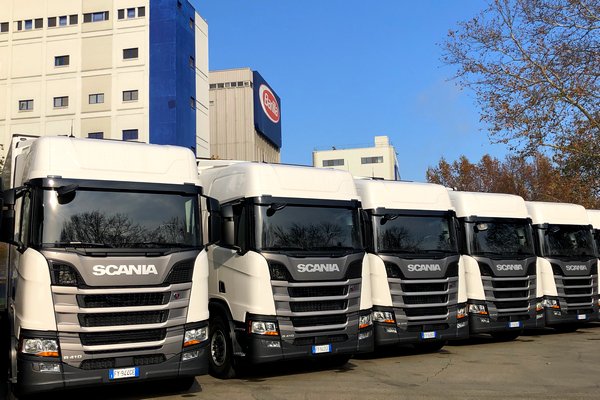
Italy has not yet introduced a tolling system directly based on carbon dioxide emissions comparable to the German model, but operators nevertheless feel the indirect effects of the environmental transition. Rising costs for low-emission vehicles and uncertainty over future rules are prompting many companies to postpone investments. According to Upply, the gap between large logistics groups and small companies is set to widen: the additional cost, estimated at between €100,000 and €150,000 to replace a diesel truck with an electric or hydrogen vehicle, represents a significant obstacle for much of Italy’s business fabric.
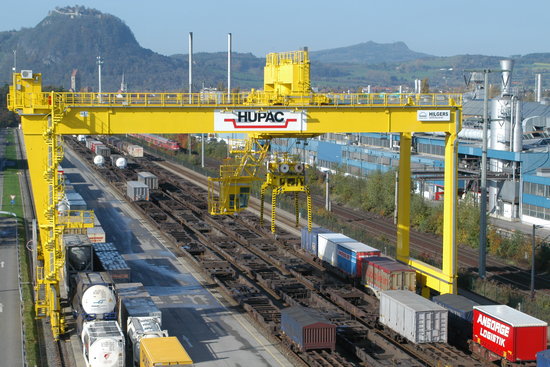
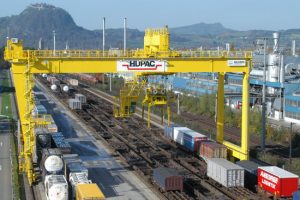
In this context, industrial and infrastructure policy instruments take on greater importance. Investments planned under the Pnrr (National Recovery and Resilience Plan), particularly in transport infrastructure, intermodality and digitalisation, are seen as a potentially positive factor for the sector, although their effects on road freight will be gradual. Integration with rail and maritime transport, especially in connections with ports, represents a lever to improve the overall efficiency of the logistics chain, but it requires operational coordination and additional investment.
From a technological perspective, Italy appears to be in an intermediate position compared with other major European countries. The adoption of advanced digital solutions is progressing, but unevenly, with greater uptake among medium-sized and large operators. According to Upply, technology can help improve vehicle utilisation and reduce operating costs, but in the Italian context it remains heavily constrained by market fragmentation and the limited investment capacity of many companies.
Overall, the Italian chapter of Upply’s report depicts a sector operating in a precarious balance in 2026. Volumes do not decline significantly, but growth remains weak, while costs continue to rise. The ability of Italian road haulage to adapt will increasingly depend on consolidation opportunities, access to investment and the evolution of public policies supporting the transition and intermodality.
P.R.