






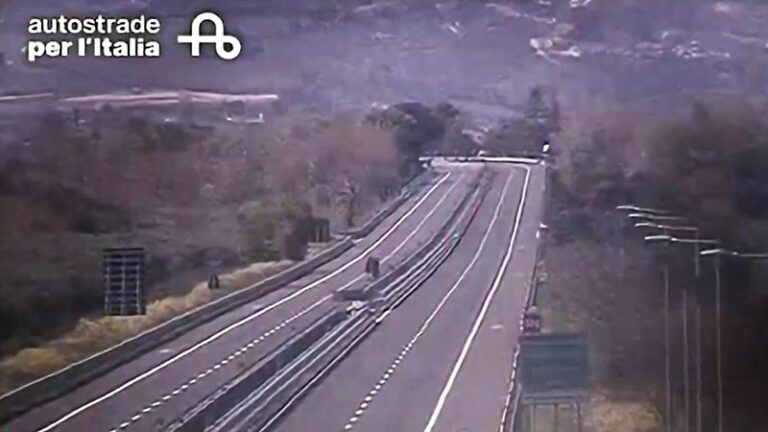
The historic Petacciato landslide, in the province of Campobasso (Italy), was reactivated between 7 and 8 April 2026 following intense rainfall, simultaneously disrupting three key infrastructures along the Adriatic corridor: the A14 motorway, the Adriatic railway line and the SS16 state road. The moving front, extending for around four kilometres, has affected the section between Montenero di Bisaccia/Petacciato and Termoli, forcing the closure of the motorway and the suspension of rail services between Vasto and Termoli. Emergency management is being coordinated by the Dipartimento della Protezione Civile (Civil Protection Department), together with the Prefettura (Prefecture), law enforcement agencies and infrastructure operators. Department head Fabio Ciciliano has ruled out immediate intervention: as long as ground movement remains active, restoration works cannot proceed. Technical assessments are ongoing, with a return to normal conditions expected to take weeks or months.
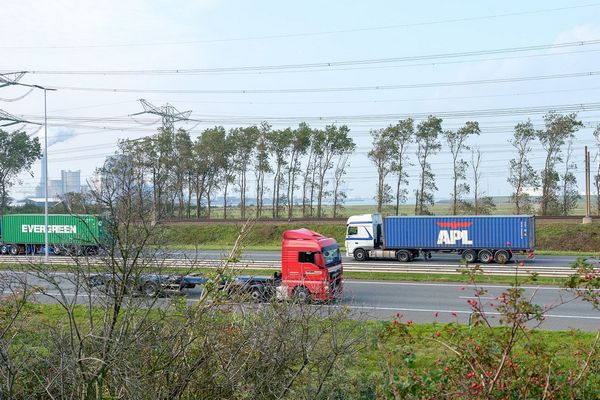
The event has had a direct impact on the continuity of road freight transport along the Adriatic axis, one of the country’s main north–south freight corridors. Operational guidance for heavy goods vehicles involves complex routing, including mandatory exit at Vasto Sud, transit along inland state roads and re-entry to the motorway network via the A1 and A16. These diversions shift significant traffic volumes onto infrastructure not designed to handle motorway-level loads, with immediate effects on journey times and delivery reliability. Congestion is also spreading to the secondary road network.
In practical terms for road haulage, the closure of the A14 between Vasto Sud and Termoli effectively forces traffic to abandon the Adriatic route across Molise and reroute flows onto the Tyrrhenian–Apennine axis. For an articulated lorry travelling from central-northern Italy to Puglia and the south, the operational solution indicated in the early hours of the emergency is to continue on the A14 to Vasto Sud, then divert onto the SS650 Trignina towards Isernia, followed by the SS85 Venafrana to Vairano Scalo or Caianello, rejoining the A1 towards Naples and subsequently taking the A16 towards Canosa and Bari. According to local sources, this currently represents the primary alternative corridor for southbound heavy vehicles.
The same pattern applies in reverse for traffic travelling north from Puglia towards Abruzzo, Marche and Emilia-Romagna. In this case, the route follows the A16 towards Naples, then the A1 northbound to Caianello, exiting onto the SS85 and continuing along the SS650 to Vasto Sud, where vehicles can rejoin the A14 north of the landslide area. In effect, this has become the temporary backbone for freight connections along the Adriatic axis, defined by the Prefettura (Prefecture), Polizia Stradale (Traffic Police) and motorway operators to ensure continuity of heavy flows under safe conditions.
Alternative routes also vary depending on the origin of the journey. For vehicles arriving from the north-east, the standard route remains along the A4, A13 and A14 to Vasto Sud, followed by the inland diversion. However, during periods of peak congestion it may be more efficient to shift earlier onto the Brenner corridor and the A1, avoiding extended travel along the Adriatic. For traffic departing from the north-west, the most direct option is often to join the A1 and then the A16, bypassing most of the central Adriatic corridor. Similarly, for connections from central Italy, particularly from the Tyrrhenian side, the A1–A16 axis is likely to remain the most stable option until the disrupted section is restored.
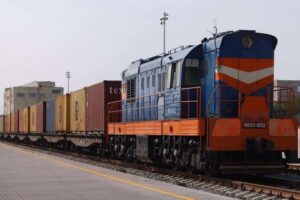
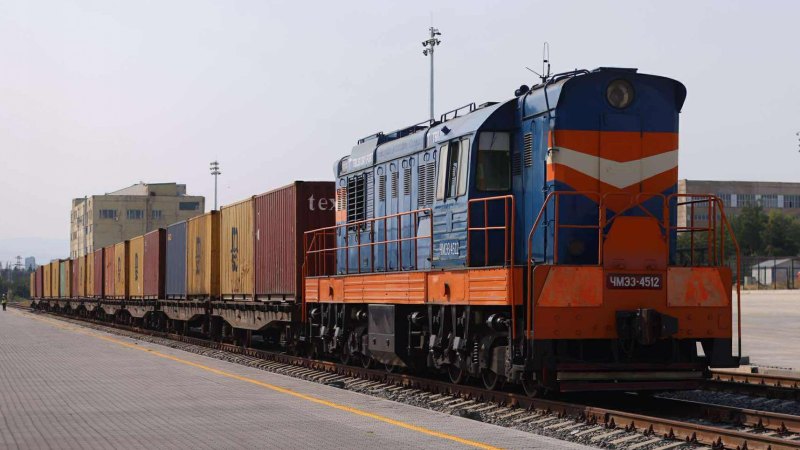
This reorganisation is not neutral for the sector. The diversion of heavy traffic from the A14 onto inland state roads and longer routes leads to increased distances, greater exposure to congestion and a direct impact on journey planning, driving and rest times, and delivery punctuality. In longer supply chains, there may therefore be increased use of alternative solutions combining road, rail and maritime transport, with the aim of easing pressure on the A1 and A16 until the Adriatic corridor is fully restored.
The Petacciato landslide is a deep-seated sliding phenomenon that has been active for more than a century, affecting large sections of hillside. Heavy rainfall in recent weeks has saturated the ground, reactivating large-scale movement precisely in the area crossed by transport infrastructure. The geological context and the scale of the moving front make any rapid solution difficult, bringing renewed focus to the structural vulnerability of this section of the Adriatic corridor. As long as sensors continue to record movement, safety remains the priority and closures will stay in place.