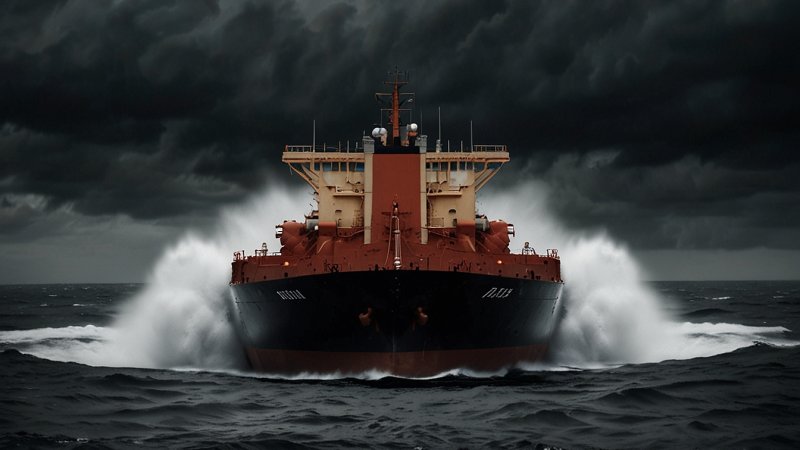




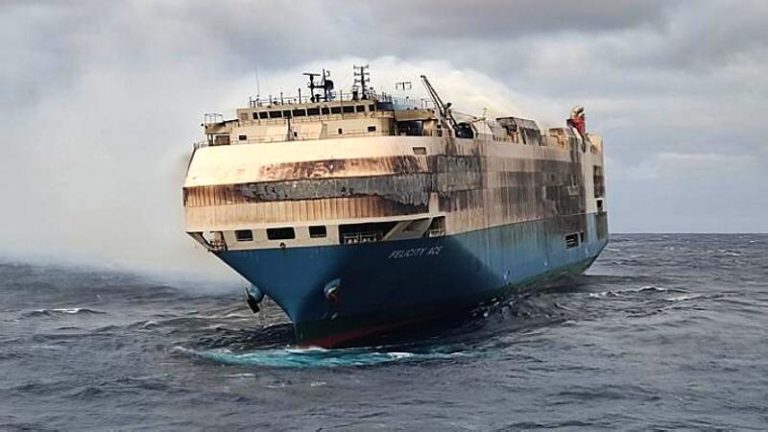
When a car carrier loaded with high-value vehicles sinks, it is easy to predict that the incident will lead to a lengthy legal dispute over damages. And when the cargo is worth around 438 million dollars, the courtroom becomes an inevitable destination. This is precisely what is happening following the sinking of the Felicity Ace, which caught fire in February 2022 while sailing off the Azores and eventually sank on 1 March, taking with it 3,965 brand new vehicles, mostly from the Volkswagen Group. Among them were 1,100 Porsches, 186 Bentleys and numerous Audis and Lamborghinis. The ship was registered under the Panamanian flag and operated by the Japanese company Mitsui Osk Lines.
The main trial related to this incident began on 2 July 2025 at the civil court of the Landgericht Braunschweig in Germany, with the ship’s owning company, the shipowner and various marine insurance specialists acting as plaintiffs. They have sued two Volkswagen Group companies, seeking compensation amounting to several hundred million euros. According to the plaintiffs, the fire was allegedly caused by a lithium-ion battery in a Porsche Taycan, which is said to have ignited due to a technical fault. The Volkswagen Group is not being accused so much of the fire itself as of failing to properly inform the shipowner about the specific risks associated with the batteries installed in the Porsche Taycan models.
The defence firmly rejects these allegations, stating that the shipowner had been sufficiently informed of the risks and that the causes of the fire must be sought elsewhere. Moreover, the car manufacturer’s lawyers argue that the sinking could have been avoided through more prudent actions and that the foam extinguishing system on board could have contained the fire if it had been properly activated.
At the heart of the case is the concept known in German as “Wissensvorsprung”, meaning an informational or knowledge advantage. In practical terms, the court must determine whether Volkswagen held superior technical knowledge regarding the risks posed by lithium-ion batteries and whether it should have shared this knowledge with the shipowner beforehand. Another contentious issue concerns the adequacy of the fire suppression systems installed on the Felicity Ace. The plaintiffs argue that the foam extinguishing systems were not designed to deal with battery fires, which require specific extinguishing protocols. The defence, on the other hand, maintains that the system could have prevented the spread of the fire had it been activated promptly.
Thus, the trial hinges both on the cause of the fire and on whether it could have been extinguished. But the complication lies in the fact that the Felicity Ace now rests more than three thousand metres underwater, making recovery impossible. The reconstruction of events relies mainly on crew testimonies and indirect technical analysis, making it difficult to establish clear responsibility. The issue is so complex that the presiding judge, Ingo Michael Groß, summed it up with the phrase about whether the chicken or the egg came first.
Whatever the outcome, this trial is set to become a landmark case for future litigation involving the transport of electric vehicles, not only in Germany. The Felicity Ace is not an isolated case. The German Insurance Association Gesamtverband der Deutschen Versicherungswirtschaft estimates that, including the Felicity Ace and other similar incidents, over 10,000 new vehicles have been destroyed during transport since 2022, with damages exceeding one billion euros. The outcome of the Braunschweig case will be key in determining the shared liability of electric vehicle manufacturers in fires occurring aboard ships.