









The Broken Wall operation, carried out by the Guardia di Finanza and the Florence Customs Agency under the coordination of the European Public Prosecutor’s Office in Bologna and Turin and announced on 19 November 2025, has dismantled a fraud network that for years exploited special customs regimes designed to facilitate the movement of goods within the European Union. Investigators estimate that VAT evasion reached €90 million, with more than €19 million in assets seized by order of the preliminary investigations judge in Florence.
At the core of the scheme was the abuse of customs procedure 42, which allows release for free circulation without immediate VAT payment when goods are destined for another Member State. Imports from China were declared as bound for customers elsewhere in Europe, but the goods actually remained in Italy, entering the domestic market at lower prices thanks to the unpaid tax. The supposed intra-EU supplies were supported by falsified invoices and transport documents, while the European “buyers” were fictitious entities or front men.
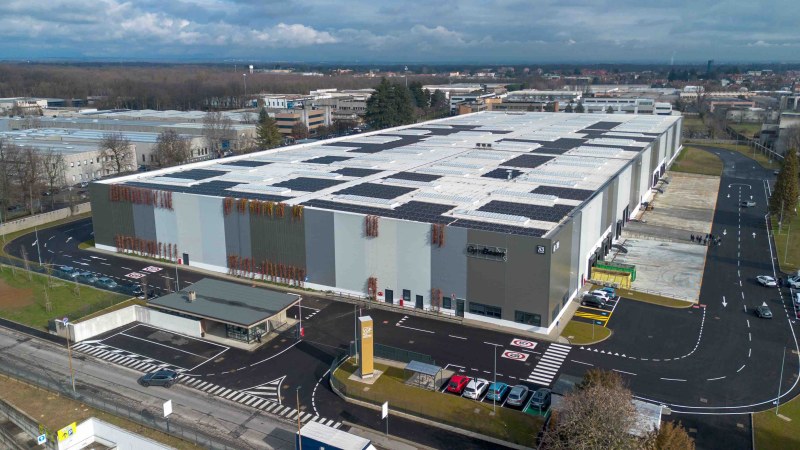
The mechanism relied on a tax warehouse in Sesto Fiorentino that served as a logistical hub to conceal the real destination of the goods. Through a network of shell companies in Italy and abroad, the criminal organisation created simulated triangular operations attributing batches of goods to foreign destinations that were never reached. The investigation also identified a similar misuse of procedure 45, which concerns VAT warehouses: goods were extracted with self-invoices that were valid only on paper, followed by fake intra-EU sales. The products were then distributed off the books across Italy, meaning the tax was never paid.
According to investigators, the Tuscan warehouse was a strategic point for obscuring actual flows, with direct consequences for logistics and the national market. The availability of goods at anomalously low prices affected supply chains and sectors particularly exposed to price-driven competition, notably textiles and fashion, leather goods and e-commerce, areas characterised by high import volumes and strong reliance on Central Italy’s distribution hubs.
International cooperation coordinated by Eppa, the European Public Prosecutor’s Office, involved customs and police authorities in Germany, Poland, Bulgaria, Spain, the Czech Republic and Hungary. Checks carried out at the premises of the companies formally listed as recipients of the goods confirmed the absence of any suitable logistics infrastructure, revealing only virtual offices and nominal addresses. This evidence highlighted the transnational dimension of the fraud and the artificial nature of the commercial network used to justify the triangular transactions.
During customs inspections, around half a million items of contraband clothing were seized, and investigators uncovered severely undervalued customs declarations for shipments of electric bicycles, entered at declared prices between €50 and €110 per unit, in some cases as little as one tenth of their actual market value. The documentation obtained, including digital records, will now be used to complete the reconstruction of the supply chain and establish any further liabilities.
The logistical dimension emerges as a central element in the entire affair. The distorted use of special customs regimes affected the tracking of flows, the proper application of border taxation and overall market dynamics. According to investigators, the manipulation of customs routes and the illicit entry of goods into Italy generated an unfair competitive advantage for the operators involved, with repercussions for compliant businesses and distribution networks that depend on traceability.