







In November 2025 the European Commission shifted focus from climate action to rearmament with the presentation of the Military Mobility Package, announced on 19 November 2025. The initiative aims to establish by 2027 a unified framework for the rapid and coordinated movement of troops and military equipment across the EU. According to the joint communication of the Commission and the High Representative, it is the most extensive regulatory intervention ever launched in this field, with direct implications for infrastructure, logistics and strategic planning.
The package consists of a draft Regulation and a communication outlining its objectives. Upgrading the European network will require an estimated investment of around €100 billion. Under the 2028–2034 multiannual financial framework, €17 billion has already been earmarked, while the remaining funds will have to be drawn from existing programmes or through the Safe instrument. The structure of the Regulation replaces the action-plan model used in 2018 and 2022, overcoming the limits of their non-binding nature.
The draft Regulation introduces a uniform framework for authorising cross-border military transport. Under the proposal, Member States will have to respond within three days in peacetime and within six hours in emergencies, compared with current procedures that can take weeks. Permanent permits and operation-specific authorisations are foreseen, using standardised Eu Form 302 documentation aligned with NATO guidelines. The aim is to harmonise procedures and timelines, an essential requirement for integrated logistics.
The Commission also plans to establish Emers, a reinforced European response mechanism activated in periods of increased military movements. Once triggered, for up to twelve months, it would introduce exceptional measures such as priority access to infrastructure, faster customs procedures and temporary waivers on cabotage restrictions. This emergency framework marks one of the main departures from the previous action plans.
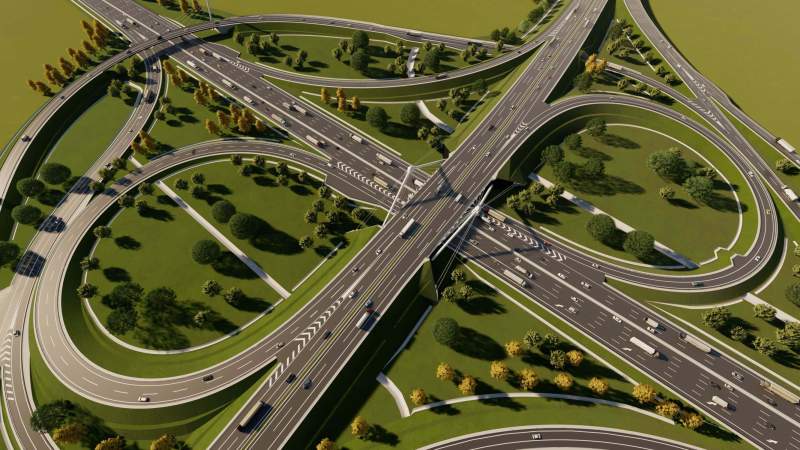
The Regulation also addresses the readiness of European infrastructure. In line with Council-approved requirements and the Commission’s technical documentation, 500 critical projects have been identified along four strategic corridors linking Northern Europe to the Mediterranean. Bridges, tunnels, ports, airports and railway lines will be upgraded to support the weight and dimensions of military vehicles, including the 60 tonnes of a standard battle tank mentioned by the High Representative. The concept of dual-use strategic infrastructure becomes binding, imposing higher standards of safety and resilience.
Another pillar is the Solidarity Pool, a tool for pooling EU-funded transport capacity. Member States may request access to resources registered in the Pool, while operational control remains with the owning country. The objective is to address structural shortages in heavy rail, maritime and airlift capacity, frequently highlighted in European Court of Auditors reports.
Military mobility management will be reorganised through the appointment of national coordinators who must be continuously reachable. A technical group comprising the Commission, the European External Action Service, the European Defence Agency and Member States will operate alongside a digital information system to be made operational by 2030. According to Special Report 04/2025 of the European Court of Auditors, the absence of a single point of contact had so far limited coordinated response capacity, a gap the new framework is intended to close.
The geopolitical context has accelerated the initiative. Russia’s invasion of Ukraine exposed the limits of the current system, as noted by the Court of Auditors in February 2025. Earlier funding of €1.69 billion under the Connecting Europe Facility for 2021–2027 was exhausted by late 2023, indicating demand far above initial forecasts. Difficulties in transporting heavy equipment, due to structural weaknesses in civilian infrastructure, remain one of the most critical issues.
Cooperation with NATO is explicitly embedded in the Regulation. Within the Pesco framework, the project on military mobility involves 29 countries and has defined priority corridors later incorporated into the 2024 revision of the Ten-T network. Member States belonging to the Alliance will have to treat other NATO allies as equivalent to EU countries when granting transit authorisations, a provision designed to ensure operational continuity between the two organisations.
EU political leaders emphasise the link between regulatory clarity and operational capability. Commissioner Apostolos Tzitzikostas stressed that the system’s effectiveness depends crucially on the speed of procedures. High Representative Kaja Kallas underlined the need to upgrade bridges, runways and rail lines to enable rapid movements from west to east. In this context, the Regulation represents a step towards integrating civilian and military networks, with direct effects on planning, freight transport and intermodal routes.