








The long and complex approval process for the revision of Directive 96/53/EC on the weights and dimensions of industrial vehicles took a step forward in November 2025. The Danish Presidency secured the political backing of EU ambassadors for its compromise text, unblocking a dossier stalled for more than a year. The Transport Council on 4–5 December 2025 must now formally adopt the general approach, a necessary condition to begin negotiations with the European Parliament.
The proposal for revision was presented by the European Commission in July 2023 as part of the sustainable and smart mobility strategy of the European Green Deal. Parliament defined its position on 12 March 2024 with 330 votes in favour, 207 against and 74 abstentions, but disagreements among Member States – and between road and rail lobbies – over modular combinations, weight limits and infrastructure impacts had so far prevented an agreement in Council.
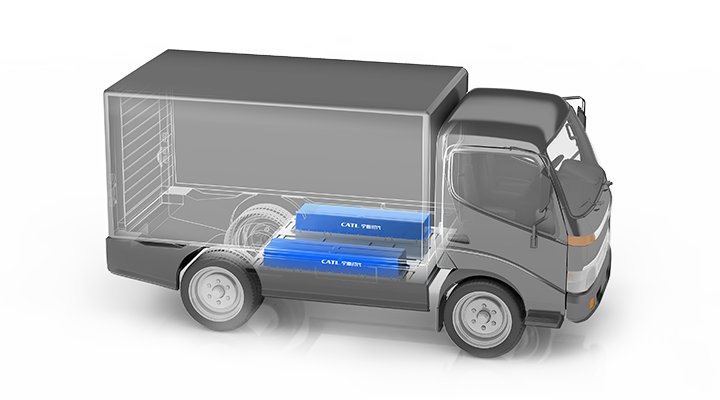
The text approved at Coreper level intervenes in three key areas. The first is support for zero-emission vehicles, with an increase in the weight limit from 42 to 44 tonnes and a higher maximum drive axle load from 11.5 to 12.5 tonnes to compensate for the weight of batteries and fuel cells. Parliament’s position stipulates that the extension to 44 tonnes should apply to diesel vehicles only until the end of 2034, after which it becomes exclusive to zero-emission trucks. The Council’s discussion has largely centred on this balance between incentives and technical compatibility with infrastructure.
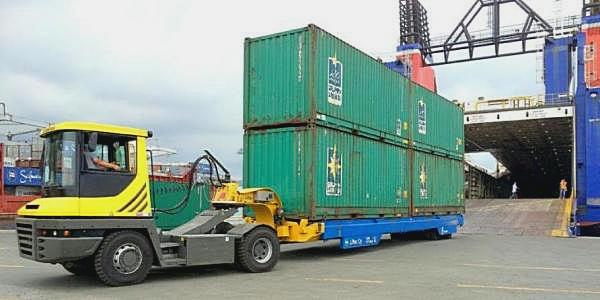
The second area concerns intermodal transport. The Commission proposes additional load allowances for vehicles operating in road–rail combinations, along with specific height tolerances to facilitate the handling of high-cube containers with standard road vehicles. In the compromise approved by the ambassadors, these flexibilities are confirmed as tools to encourage modal shift towards lower-impact options and improve the efficiency of logistics chains.
The third element is the simplification of the legal framework for European modular combinations. The current rules allow convoys up to 25.25 metres and 60 tonnes to circulate only in certain countries, each with its own national provisions. The revision extends this possibility to international transport between neighbouring States that accept the modular system, eliminating the need for bilateral agreements. The issue has raised concerns from Austria and other Member States, which fear effects on infrastructure and on the modal balance in favour of rail.
The compromise drafted by the Danish Presidency also introduces an emergency response clause, allowing temporary flexibilities to safeguard the continuity of essential supplies in times of crisis. This measure has been welcomed by operators, who see it as a useful tool for managing exceptional circumstances, as already experienced during the pandemic.
Sector associations have reacted differently to the Coreper agreement. The International Road Transport Union stressed that after years of complex negotiations, Member States now seem ready to move forward. EU Director Raluca Marian highlighted that the Danish Presidency played a decisive role in finding a balance between transport efficiency, the introduction of zero-emission technologies and infrastructure compatibility. According to the organisation, the provision for 44 tonnes for zero-emission vehicles gives operators a stable basis for large-scale investment without payload penalties.
The European vehicle manufacturers’ association Acea and Europe’s road transport associations had also called, in a letter dated 17 July 2025, for an acceleration of the legislative process, arguing that lengthy delays were hindering the uptake of zero-emission vehicles. On the opposite side, Transport & Environment reiterated the need to limit weight increases to reduce the impact on the road network and preserve competition between diesel and zero-emission vehicles. The organisation proposes a maximum increase of three tonnes for five-axle combinations and a reduced drive axle limit of 11.75 tonnes.
Once the Council adopts its general approach, the institutions will be able to launch trilogue negotiations. Parliament has already confirmed its readiness to start talks immediately, with the aim of reaching a final text that ensures regulatory certainty for transport and logistics operators.