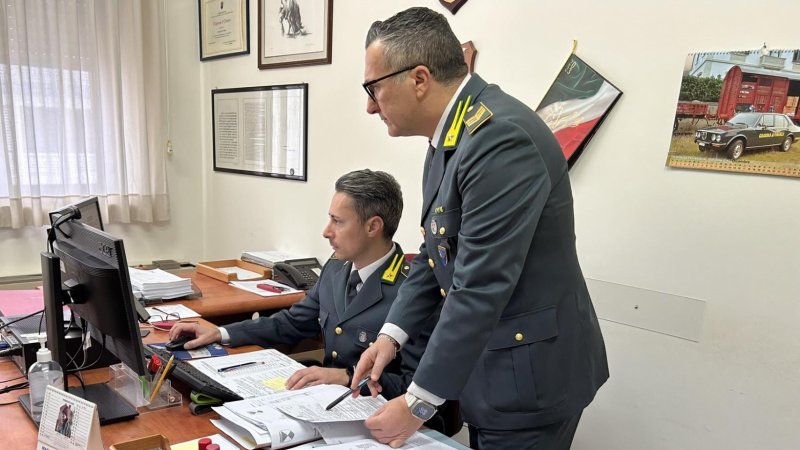



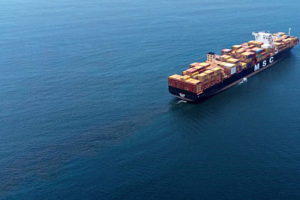
On 26 June 2025, the Genoa Coast Guard ordered the administrative detention of the container ship PL Germany after an inspection uncovered significant technical irregularities. The most critical issues concerned all four generators, a condition inspectors deemed a threat to both crew safety and the vessel’s structural integrity. Malfunctions were also identified in the automatic control systems. The inspection was extensive, covering the bridge, engine room, crew quarters and cargo areas. A safety drill was also conducted during the inspection to assess the crew's emergency preparedness.
The thoroughness of the inspection was also due to the ship's classification as a “priority 1” vessel in the European database Thetis, a status linked to the fact that it had not been inspected in over fifteen years due to its operations mainly outside European Union waters. Built in 2003, the ship sails under the flag of Singapore and is owned by the Singapore-based Asian company HK Queen Shipping, active for the past four years. It measures 280 metres in length and has a capacity of 5,888 TEU.
Operational management of the PL Germany is handled by Northstar Ship Management, and it operates on behalf of Maersk within the Atlantic Loop 6 service, a route developed in partnership with the German company Hapag-Lloyd under the Gemini Cooperation alliance. This service connects ports on the eastern seaboard of the United States with those in the Mediterranean, including Genoa and Tanger Med. According to maritime tracking data, the ship had departed from the Moroccan port on 24 June and was en route to Newark, United States, with an estimated arrival date of 2 July 2025.
Following the completion of required repairs, verification by the Classification Society and a second successful inspection by the Coast Guard, the PL Germany was cleared to continue its journey. The inspection was conducted under the international Port State Control regime, which selects vessels for inspection using advanced algorithms and a Europe-wide shared database. The Thetis database, in particular, ranks ships according to risk, with those in “priority 1” requiring the most rigorous checks.