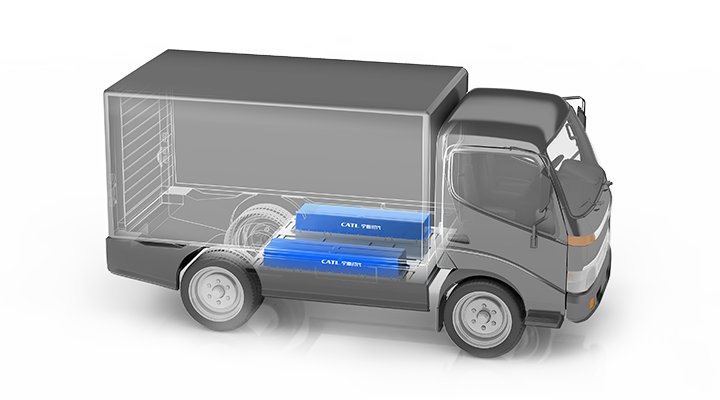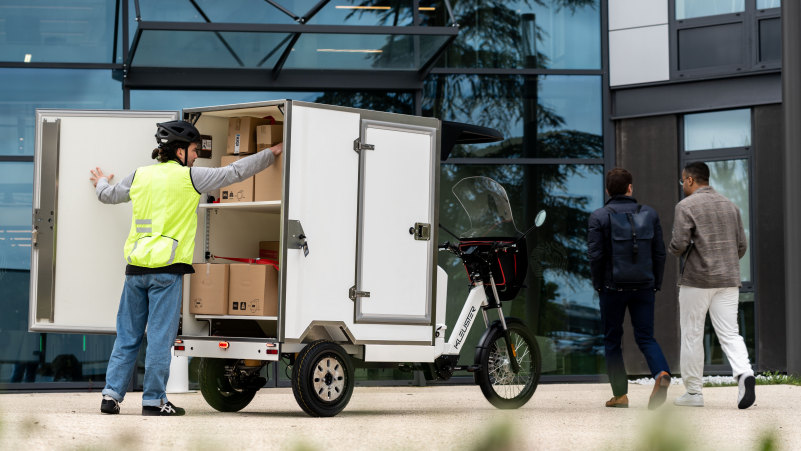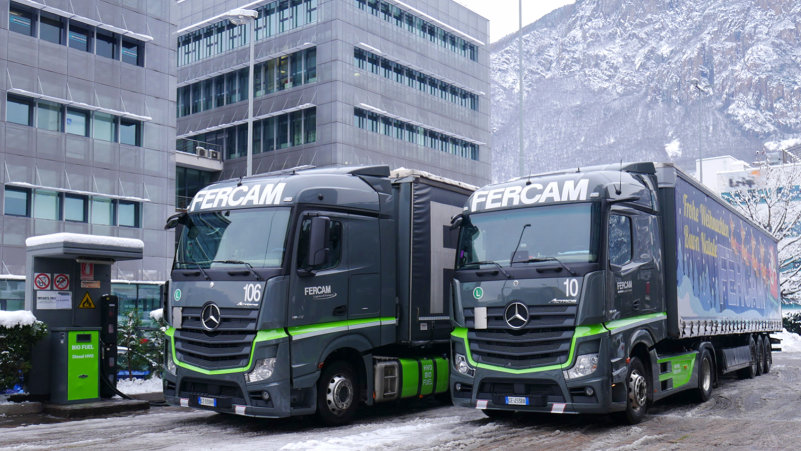








CATL, the Chinese manufacturer of batteries for electric vehicles, presented the new Tianxing II series on 22 January 2026 in Guangzhou. The range is designed for light commercial vehicles and for typical applications in urban distribution, regional transport and multi-shift fleet operations. At its core is the introduction of a sodium-ion battery configuration intended for mass production in this segment, with a design focused on service continuity, high-power charging and long cycle life. These factors have a direct impact on the day-to-day operations of couriers, last-mile operators and third-party logistics providers.
For logistics operators, the most immediate advantage of sodium chemistry lies in its performance under challenging climatic conditions. In fleet operations, winter weather and outdoor parking can reduce the usable range and charging speed of lithium batteries, increasing downtime and complicating route planning. CATL aims to reduce this variability with a low-temperature-oriented version, claiming it can maintain high energy availability even in very harsh conditions and allow charging without preliminary heating phases when vehicles are parked in yards. At the same time, the series includes variants designed for hot climates and intensive duty cycles, featuring more advanced thermal management to preserve stability during the repeated charging typical of closely spaced shifts.
A second key benefit concerns charging times and, consequently, vehicle utilisation. The Tianxing II platform includes configurations dedicated to fast charging, with declared times of a few tens of minutes to restore the state of charge to a level suitable for continuing operations. Durability is equally central: CATL states that the new sodium-ion batteries offer a long service life, with multi-year warranties and high mileage thresholds for certain variants. The stated aim is to align battery life with vehicle life, even in the most demanding applications.
Sodium is a more abundant and less costly resource than lithium, and its supply chain may be less exposed to geographical concentration and sharp fluctuations in critical raw materials. In terms of safety, CATL has designed the new batteries to limit thermal propagation in the event of a failure and to achieve protection levels suitable for heavy-duty use.