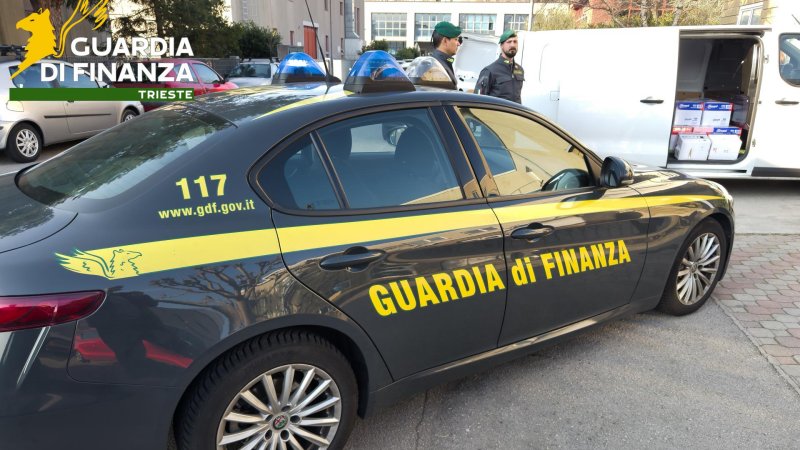







On 1 July 2025, the Florence branch of the Guardia di Finanza broke up a criminal organisation that for years had operated a complex tax fraud scheme, with a network spanning six Italian regions and focused primarily on logistics, transport and related services. The operation, launched in 2020 and led by the Florence district anti-mafia directorate, resulted in the arrest of fifteen individuals. Three were taken into custody, while twelve were placed under house arrest. Searches were conducted in Tuscany, Lazio, Emilia-Romagna, Lombardy, Veneto and Campania.
At the heart of the investigation was a mechanism based on so-called shell companies, or “paper mills”, created solely to issue false invoices. These companies, which on paper operated in transport or haulage, had no staff or equipment. Their only purpose was to generate fictitious tax credits, which were then used to unlawfully eliminate taxes and social contributions, amounting to over 11 million euros. The names of those involved have not yet been disclosed.
The scheme was made more credible through the involvement of seemingly respectable professionals, including accountants, bookkeepers and even an engineer who played a central role. He was responsible for designing entirely fabricated research and development projects, ranging from artificial intelligence to blockchain, and from innovative materials to holographic technologies, all aimed at securing tax benefits intended for start-ups. One accountant from Prato managed the company accounts, carefully falsifying them to ensure the businesses appeared compliant with regulations.
To shield the real masterminds of the fraud, companies were formally registered under frontmen, who also acted as legal representatives. This strategy avoided direct links to the organisation’s leadership, one of whom has a criminal record for financial offences. Investigations revealed a well-structured and highly organised system, with defined roles, coded language and even internal security protocols. Threats were also part of the picture: according to investigators, the group’s leader went as far as threatening to use contract killers to intimidate reluctant entrepreneurs.
Once invoices were issued, the money circulated through a network of Italian and foreign companies, often via fake consultancy services and sham contracts, eventually returning to the organisation, sometimes in cash. Key to this network were entities registered in Bulgaria, the Czech Republic and Malta, used to route and launder funds. The investigation also uncovered a second layer of fraud linked to the Covid emergency. Some of the companies involved allegedly exploited government bonuses for premises sanitisation during the pandemic to obtain further tax credits using false invoices.