


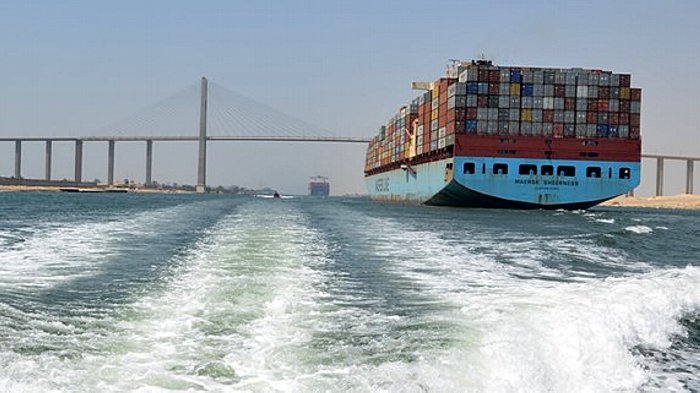






Global container shipping continues to become increasingly concentrated: Alphaliner's figures for 9 November 2026 show that the ten largest shipping groups control around 85% of the world's liner fleet capacity, while the top five alone account for 65.5%. The ranking measures the capacity in TEU of vessels operated by carriers, including chartered ships. MSC remains firmly in first place with 1,023 vessels and a total capacity of 7,483,832 TEU, representing 21.5% of the global fleet, ahead of Maersk with 4,710,206 TEU (13.6%) and CMA CGM with 4,479,634 TEU (12.9%). The gap between the Geneva-based carrier and the Danish group has therefore reached 2,773,626 TEU, exceeding the entire fleet of Hapag-Lloyd, which ranks fifth with 2,413,056 TEU. Meanwhile, the battle for second place remains close, with Maersk ahead of CMA CGM by just 230,572 TEU.
MSC also leads in terms of containership orders, with an orderbook of 3,377,390 TEU, equivalent to 45.1% of its operated fleet, compared with 1,802,522 TEU for Maersk (38.3%) and 1,887,518 TEU for COSCO (51.2%). The global orderbook exceeded 15 million TEU at the end of October and, according to Alphaliner, could approach 16 million by the end of 2026. Compared with a global fleet that Drewry estimates at 34 million TEU, outstanding orders represent around 45% of capacity currently in service. Shipbuilding is concentrated in China, whose yards hold 81% of containership orders and 64% of the global shipbuilding orderbook, which reached 203.2 million compensated gross tonnes on 1 September 2026, up 13% year on year. In its late-October update, Drewry forecasts container fleet capacity growth of 8.8% in 2027, followed by 12.1% in 2028 and 10% in 2029, with these figures already accounting for scrapping and delivery delays.
M.G.