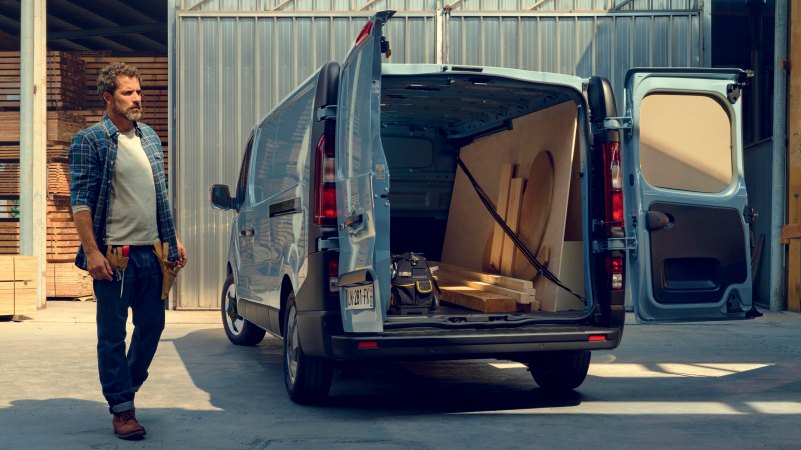





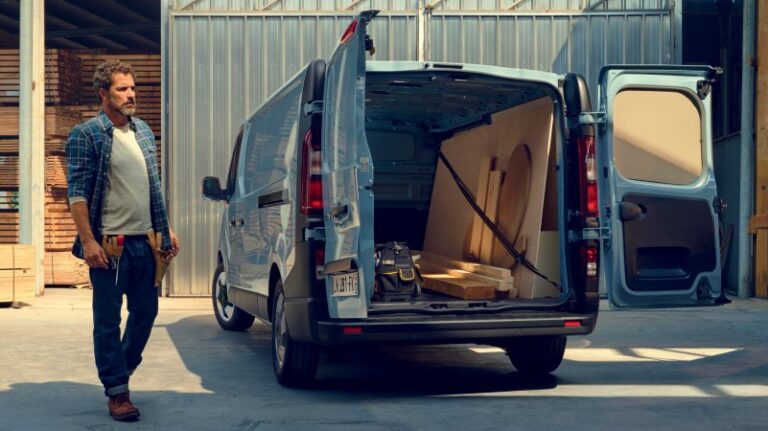
Renault has updated its diesel Trafic and Trafic Van range, alongside the launch of the Trafic E-Tech electric. The changes cover steering, braking, safety equipment and the multimedia system, together with a new application designed for vehicle converters. The model ranks first in its segment in France and second in Europe, and continues to serve as a platform for passenger and goods transport, as well as numerous specialist conversions. The Trafic now features new electric power steering with specific calibration designed to make manoeuvring smoother and more precise. Reduced steering effort makes urban driving and parking easier, while greater stability around the centre position helps drivers maintain their course on roads outside built-up areas. Renault has also optimised the steering ratio to balance agility and stability.
The braking system now features twin-piston front callipers and larger discs, increased from 296 x 28 mm to 320 x 30 mm, to reduce pedal effort, provide more progressive braking and give drivers greater control in different operating conditions. Safety equipment includes an upgraded driver monitoring camera and a reversing camera fitted as standard across the range, particularly useful when manoeuvring in confined spaces. Other changes include 17-inch steel wheels with more aerodynamic wheel trims and new dark grey seat upholstery with blue stitching and improved wear resistance.
The cabin has also been updated, particularly its digital interface. The new OpenR Link multimedia system features a 10-inch touchscreen, replacing the previous 8-inch display, with a larger viewing area and twice the responsiveness. Two configurations are available, with or without built-in navigation, both supporting wireless Apple CarPlay and Android Auto. The navigation-equipped version uses Here maps. The number of USB-C ports has also increased, with two in the Trafic Van and four per row in versions featuring a second or third row of seats, offering charging power of up to 80 W. LED lighting is now standard in both the cabin and load compartment, making operations easier in poor lighting conditions.
The range is available in two lengths, L1 and L2, with a manual gearbox or a nine-speed EDC automatic transmission, and in configurations for passenger transport, reduced-mobility access, crew cabs and leisure use. Through the Converted by Renault programme, factory conversions are managed through a single point of contact, with one invoice and one warranty. Renault has also introduced Convertor Companion, an application integrated into the multimedia system that allows drivers to control installed equipment directly from the screen. This can include adjusting the temperature in a refrigerated vehicle, operating the lighting in a mobile workshop or controlling certain devices in a rescue vehicle, reducing the need for additional dashboard switches.
Massimiliano Barberis