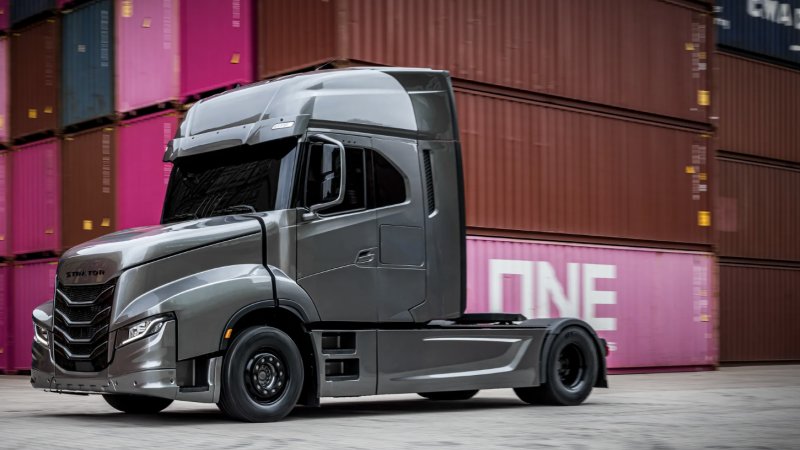








A total of 131,095 Mercedes-Benz Trucks are covered by the service campaign launched by Daimler Truck worldwide over a risk of overheating and, in the most serious cases, fire linked to corrosion of the contacts of a component installed next to the AGM (Absorbent Glass Mat) battery. The campaign is identified by the Kraftfahrt-Bundesamt (KBA, Federal Motor Transport Authority) under the manufacturer code AGM-Batt and KBA reference 16569R, and was confirmed by Daimler Truck itself at the end of July 2026.
The defect stems from the synthetic resin sealing of the ACE (Advanced Connected Energy) chip, the unit connected to the auxiliary AGM battery, which was not always carried out by the supplier with the required precision. In some cases, the flaw allows moisture to reach the electrical contacts, causing corrosion. This corrosion can in turn increase electrical resistance and the heat generated by the component, creating a risk of vehicle fire in the worst-case scenario. The issue does not affect the high-voltage battery packs used to power eActros vehicles, but a separate system connected only to the auxiliary AGM battery. The corrective workshop intervention is therefore limited to disconnecting the ACE chip, with no battery replacement required.
The campaign covers Actros series 963, Arocs series 964 with full rear-section cab, and the first generation of eActros 300 and eActros 400 vehicles equipped with an AGM battery, produced between the end of March 2021 and the end of October 2025. The recall is global in scope: the KBA database lists 27,084 vehicles affected in Germany out of a worldwide total of 131,095. No disaggregated figures are available for individual European markets, so fleet operators with potentially affected vehicles can check their status using the vehicle identification number, as the KBA publishes only the worldwide aggregate figure and the German national figure.
Daimler Truck says it is aware of only a limited number of incidents linked to the anomaly and stresses that no injuries or property damage have been recorded, a figure also confirmed by the KBA database. The potentially serious nature of the risk has nevertheless led to the launch of a precautionary global campaign, with oversight that the company describes as closely coordinated with the German authority.
P.R.