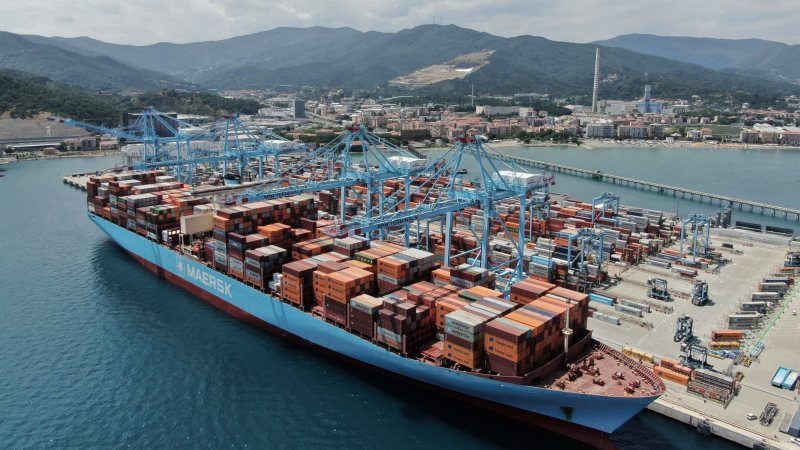








French state-owned rail group Sncf has launched an exploratory process to sell a minority stake in Rail Logistics Europe (RLE), its division dedicated to rail freight and integrated logistics services. According to Bloomberg, Lazard has been appointed as financial adviser to structure the deal and sound out market interest. RLE is reportedly valued at around €800 million overall, but neither the size of the stake to be sold nor the final price has been officially disclosed. Reports are already circulating about potential bidders, including shipping companies Cma Cgm and Maersk and logistics giant Dsv, but none of the three has issued an official statement on the matter, and Sncf has not confirmed the identity of the interested parties.
The transaction forms part of a major reorganisation of Sncf’s freight business, launched following an in-depth investigation by the European Commission into state aid received by Fret Sncf between 2007 and 2019, amounting to €5.3 billion. The agreement reached with Brussels provides for the liquidation of Fret Sncf and its replacement by new entities, named Hexafret for freight transport and Technis for maintenance, with part of the activities transferred to competing operators to ensure economic discontinuity and more balanced market conditions. The plan involves the sale of some routes, a reduction in the scope of activity equal to around 30% of traffic, and a workforce cut of about 10%.
Rail Logistics Europe is the umbrella structure for Sncf’s freight activities during this reorganisation phase, bringing together Fret Sncf and other rail and intermodal logistics divisions within the French group. Bringing a private shareholder into RLE’s capital would allow the company to secure external resources without giving up control, while tying the division to international and structurally stable traffic flows and reducing its dependence on the French domestic market. A mixed public-private governance model could also strengthen the credibility of the restructuring process in the eyes of the European Commission, provided the new structure does not replicate, in another form, the loss-covering mechanisms that triggered the state aid procedure.
Several questions remain open, however. The first concerns the stake to be sold, with only an unconfirmed 49% figure so far being discussed. Such a shareholding would give the private partner an almost equal position without granting it control. The second issue concerns governance: even with a minority stake, the structure of the shareholders’ agreements, the allocation of veto rights and the composition of the Board of Directors will determine the new shareholder’s real ability to influence RLE’s strategy. Finally, there is the competitive impact, as the entry of a major shipping or logistics company into the capital of a national rail operator could raise questions over network access neutrality and the position of other rail and intermodal operators active on the same corridors.
Antonio Illariuzzi