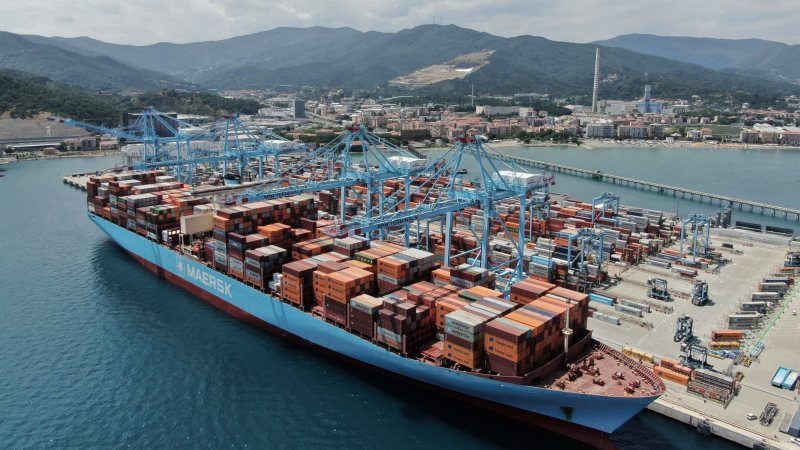







The first consequences of the international dockworkers’ strike on 6 February 2026 are already being felt at sea. In Italy, The container ship Zim Virginia remained offshore along the coast of Livorno, unable to berth due to participation in the strike by dockworkers affiliated with the Unione Sindacale di Base (Basic Trade Union). A similar situation affected the Zim New Zealand, expected to arrive in the port of Genoa in the morning, and the Zim Australia, which was scheduled to call at Venice today and Ravenna the following day. The Msc Eagle III, bound for Israel, also postponed its arrivals planned for yesterday in Ravenna and today in Venice, adjusting its rotation.
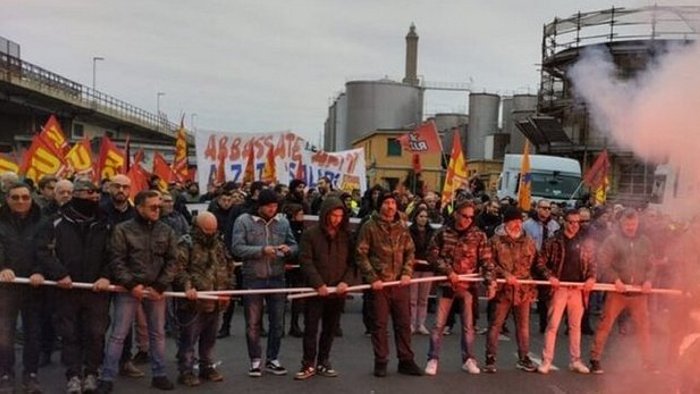
These are the immediate effects of the coordinated international strike involving dockworkers in numerous countries, protesting against arms trafficking, the privatisation of quays and the progressive militarisation of civilian ports. The mobilisation, initially announced in 21 ports across the Mediterranean and Northern Europe, spread to additional ports and received expressions of solidarity beyond Europe, according to trade union communications and sector analyses released on 6 February.
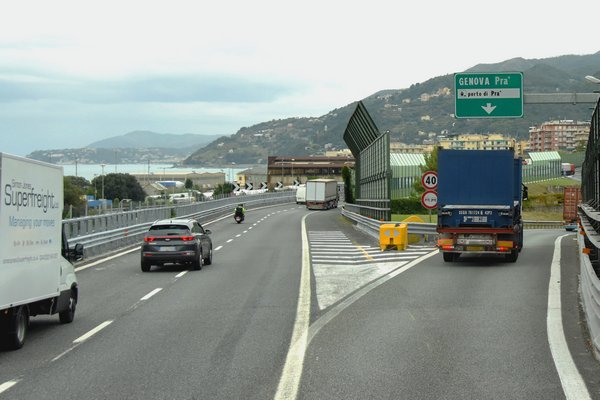
In Italy, the 24-hour strike affected the entire port supply chain. In Genoa, the blockade was concentrated around the San Benigno gate, a crucial access point for container and ro-ro terminals. The Ligurian port experienced a paralysis that disrupted the continuity of rail and road flows towards Northern Italy and Northern European markets. The presence at anchor of vessels forced to delay berthing worsened an already complex situation, compounded by ongoing infrastructure works and the high saturation of yards in nearby ports within the Ligurian system, such as La Spezia and Vado Gateway.
At La Spezia, yard occupancy, estimated at around 78%, further reduced the ability to manage residual traffic, making it difficult to absorb delays accumulated during the stoppage. Vado Gateway in Savona, which had already been affected by labour unrest in recent months, also felt the impact of the interruption, with consequences for transhipment services and feeder connections.
On the Adriatic side, Trieste saw protests concentrated at the headquarters of the Autorità di Sistema Portuale (Port System Authority). The suspension of activities had a direct impact on rail corridors towards Austria and Germany, already slowed by adverse weather conditions. Delays at the Julian port rippled through the entire intermodal chain of the eastern Adriatic, particularly penalising industrial traffic bound for Central Europe.
In Venice and Ravenna, the strike’s effects were most visible in the rescheduling of vessel arrivals. The postponement of calls by ships such as the Msc Eagle III and the Zim Australia created a misalignment of operational windows, with repercussions for quays dedicated to general cargo and industrial traffic. In Ravenna, the stoppage also affected fertiliser and grain logistics, sectors particularly sensitive to delays due to the rigidity of their supply chains.
On the Tyrrhenian coast, Livorno recorded one of the most evident cases of a vessel blocked at anchor, with the Zim Virginia unable to berth. The Tuscan port, specialised in automotive and forestry cargo, suffered a slowdown in operations that directly involved distribution chains for finished vehicles and export-bound products. In Civitavecchia, meanwhile, participation in the strike created critical issues for ro-pax connections with Sardinia, with delays in embarkation operations and congestion in areas outside the port.
In southern Italy, the strike also hit Gioia Tauro. In a port characterised by very tight turnaround times, the 24-hour interruption of loading and unloading operations generated a backlog of vessels awaiting service that will take several days to clear. Mobilisations and slowdowns were also reported in Salerno, Bari, Cagliari and Palermo, affecting agri-food supply chains, traffic towards the Balkans and general cargo handling.
The international dimension of the protest extended the logistical impact beyond national borders. In Greece, the port of Piraeus remained largely at a standstill throughout the day, blocking one of Europe’s main container terminals at a time already marked by congestion and yard saturation. In Spain’s Basque Country, actions at the ports of Bilbao and Pasaia disrupted flows towards the North Atlantic, while in Turkey slowdowns in Mersin and Antalya affected agricultural and textile exports. Ports such as Tanger Med, Hamburg and Bremen also felt the effects of the day of mobilisation, adding to an already critical situation shaped by winter weather and seasonal traffic peaks.