






- Panama’s Supreme Court has declared unconstitutional the contracts that since 1997 had entrusted the management of the Balboa and Cristóbal terminals to Panama Ports Company, controlled by CK Hutchison. The judgment also annuls the 2021 renewal, opening a phase of transitional management and a future public tender.
- The decision directly affects Hutchison’s global sale of port assets, valued at 22.8 billion dollars, which had already been hindered by pressure from China. The exit of the Panamanian ports could reshape the deal with BlackRock and MSC, reducing the weight of the most politically sensitive assets.
- The case has broad geopolitical significance. The United States has welcomed the ruling as strengthening Canal security, while Beijing has denounced political pressure. Panama aims to ensure operational continuity and protect employment, while reaffirming public control over strategic infrastructure.
The ruling by Panama’s Supreme Court was delivered on the evening of 29 January 2026 and marked a turning point in the management of two of Latin America’s main logistics hubs. Judges declared unconstitutional Law No. 5 of 1997, which had approved the concession to Panama Ports Company – controlled by Hong Kong-based CK Hutchison – for the development and operation of the Balboa container terminal on the Pacific side and Cristóbal on the Atlantic side of the Panama Canal. The same decision also annulled the automatic 2021 renewal, which had extended the concession for a further 25 years without a new tender.
According to the Court, the legislation and related contracts granted the private operator advantages deemed incompatible with the Constitution, affecting the public interest and the proper management of strategic state assets. The ruling also draws on the findings of an audit conducted by Comptroller General Anel Flores, which estimated lost revenues for the State of around 1.2 billion dollars since 1997, with a further 300 million dollars linked to the 2021 renewal, due to unpaid fees and exemptions considered excessive. Panama Ports Company recalled that it had invested 1.8 billion dollars in the two terminals over 28 years, adding that the decision lacks legal basis and that it reserves the right to pursue international appeals.
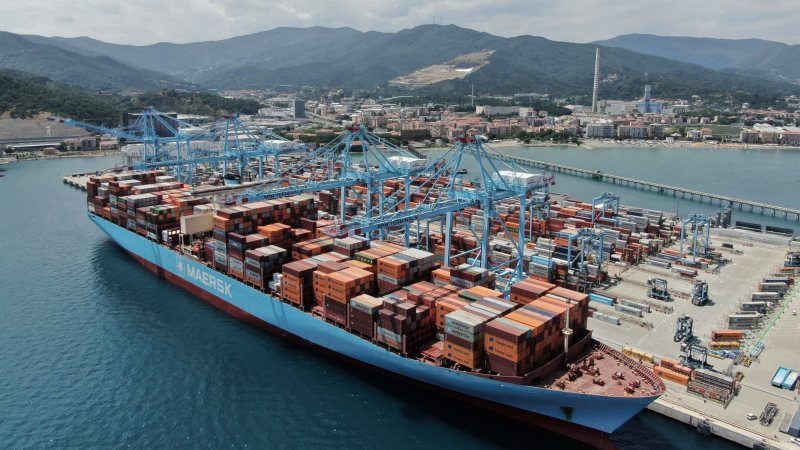
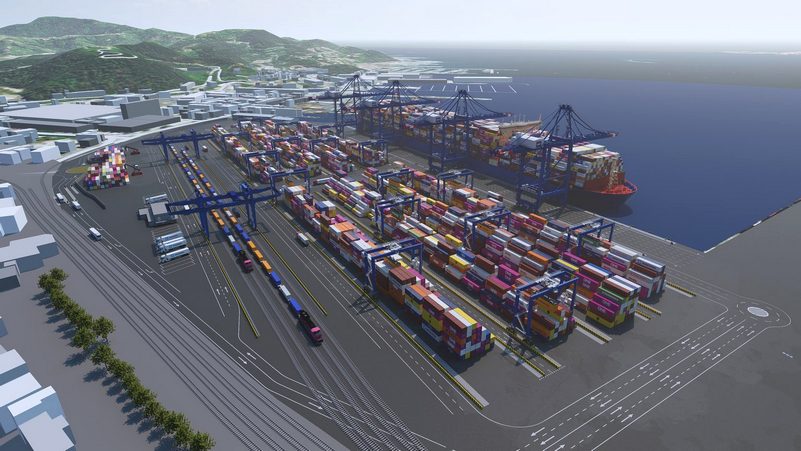
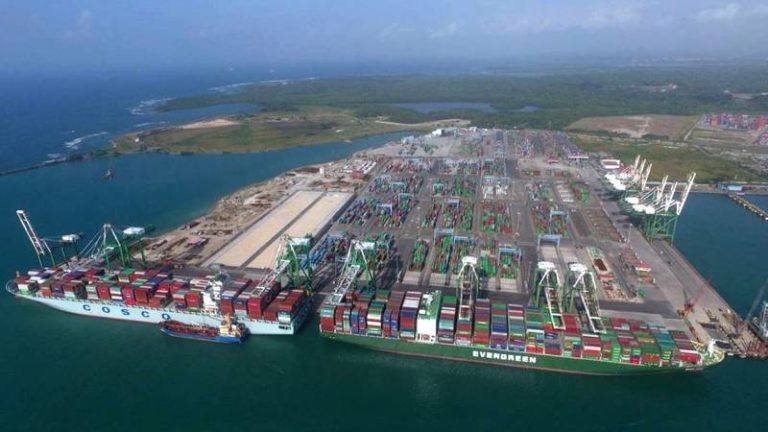
The immediate operational impact concerns two terminals that are central to Panama’s and the region’s logistics system. Balboa is Latin America’s main container transhipment hub, with annual capacity of around 3 million TEU, while Cristóbal exceeds 2 million TEU. In 2025, the country’s entire port system handled 9.9 million TEU, up 3.6% year on year. To avoid disruption to operations, President José Raúl Mulino ordered a transitional management arrangement entrusted to APM Terminals (Maersk Group), supported by a technical team coordinated by Alberto Alemán Zubieta, former administrator of the Panama Canal.
The ruling also directly affects CK Hutchison’s complex global divestment operation. In March 2025, the group had reached a preliminary agreement with a consortium led by BlackRock and Mediterranean Shipping Company for the sale of 43 ports in 23 countries, with a total value of 22.8 billion dollars, equivalent to around 21.1 billion euros. The ports of Balboa and Cristóbal were included in the transaction through the sale of 90% of Panama Ports Company.
Even before the Court’s decision, the transaction had been slowed by pressure from China, which was seeking the entry of Cosco Shipping as a strategic investor with enhanced rights up to majority control. The cancellation of the Panamanian concessions removes one of the most politically sensitive assets from the package. According to financial analysts, the Panamanian terminals account for around 5% of Hutchison’s port division EBITDA, a factor that could facilitate a restructuring of the deal by separating Panama from the other global assets.
From a geopolitical perspective, the decision can be seen as strengthening the United States’ position in the indirect control of infrastructure around the Canal. Washington welcomed the ruling, underlining the strategic importance of a waterway through which around 5% of global maritime trade passes and an estimated 40% of US container traffic. Members of the administration and Congress described it as a step to protect national security and the Canal’s neutrality.
Beijing and the government of the Hong Kong Special Administrative Region reacted in the opposite direction. China’s Ministry of Foreign Affairs denounced the use of political pressure and announced its intention to safeguard the interests of Chinese companies. From Hong Kong came a strong statement against what was described as external interference undermining legal certainty for investors.
In Panama, the government has sought to maintain a pragmatic stance. Mulino guaranteed the continuity of port operations and the launch of a new public tender for a long-term concession, with terms defined as more favourable to the State. Particular attention has been paid to employment: trade unions representing workers at Balboa and Cristóbal called for guarantees for around 5,000 employees, securing a formal commitment from the government to avoid redundancies during the transition phase.
In the broader context, the case fits into the relaunch of Panama’s infrastructure plans. The Autoridad del Canal de Panamá (Panama Canal Authority) has launched a competitive process for the development of new container terminals, with the aim of increasing the country’s overall capacity to 16 million TEU per year by the end of the decade, strengthening Panama’s role as a global logistics platform.
Overall, the annulment of CK Hutchison’s concessions combines legal, economic and strategic elements. The ruling redefines relations between the State and private operators, affects one of the world’s largest port sector transactions and confirms how control over logistics infrastructure, particularly around the Panama Canal, is increasingly intertwined with international geopolitical balances. In the short term, it remains to be seen whether and how this action will unlock the sale of CK Hutchison’s port assets, while in the medium to long term questions remain over its impact on China’s presence in Latin America. In this context, it is worth recalling that China’s Cosco operates the new large Peruvian terminal of Chancay, which could become the next target of US pressure in the region.
M.L.