






In 2025, delivery reliability in global air cargo declined sharply. The average Dap (delivery as promised) index stood at 62.7%, down on 2024, with a low point of 58% recorded in December. The figures come from the Air Cargo Quality Annual Report 2025 by Cargo.ai, published in January 2026, based on the analysis of thousands of shipments and data from more than 200 airlines. The Dap metric measures the share of shipments “ready for delivery” within six hours of flight arrival, using the Nfd (notify for delivery) timestamp as a reference, ensuring comparability across carriers and routes through a uniform criterion.
The deterioration was not linear over the year. Nine months out of twelve performed worse than the previous year, while only February and August recorded slightly higher values. The most unstable phase occurred between May and July, with declines of around 4–5 percentage points compared with 2024, coinciding with a reshaping of flows and capacity linked to uncertainty over US tariffs and the resulting operational adjustments by carriers.
Geographically, the analysis highlights a clear divide between intra-Asian corridors and intercontinental routes to Europe. The Taipei–Incheon and Incheon–Narita routes rank among the most reliable, supported by short distances, digitalised customs processes and a more standardised airport supply chain, with Incheon acting as a hub for high-rotation flows such as electronic components and e-commerce shipments. At the other end of the spectrum, the Chengdu–Frankfurt, Shanghai–Frankfurt and Zhengzhou–Frankfurt routes concentrate the weakest performance in 2025, reflecting long transit distances, greater exposure to operational and weather-related delays, customs complexity on entry into the European Union and congestion at destination airports.
Frankfurt illustrates the pressures facing Europe. Germany’s main cargo hub handled 2.1 million tonnes in 2025, up 1.1% year on year. Against rising movements, ground operations did not always absorb peak volumes: longer handling times affected how quickly goods became available after landing, prompting forwarders and shippers to build additional time buffers into delivery plans, particularly for time-sensitive supply chains. Similar dynamics are also evident at Amsterdam Schiphol, where capacity limits and operational constraints contribute to irregular processing cycles during peak periods.
In Asia, by contrast, some hubs showed greater resilience. Incheon has invested in digital processes and online customs clearance via its smart digital cargo platform, cited as an efficiency lever to reduce time and manual steps, alongside a focus on special cargo supported by Iata Ceiv pharma and Iata Ceiv fresh certifications. Taiwan also benefited in 2025 from growing flows of electronics and semiconductors to the United States, underpinned by investment in automation and document traceability, including e-AWB and digital solutions for shipment data management.
Differences between carriers follow the same “two-speed” pattern. Emirates SkyCargo emerges as the most reliable airline in the Cargo.ai panel, with a Dap of 71.2%, despite a decline of 4.4 percentage points compared with 2024. In the first half of 2025, the airline carried 1.25 million tonnes, with volumes up 4% and cargo revenues down 6%, while on the capacity side it added three Boeing 777 Freighters and launched new cargo destinations, including Copenhagen, Narita, Bangkok and Hanoi.
Air China, again according to Cargo.ai data, recorded the strongest improvement, with a Dap increase of 36.9 percentage points, in a half-year in which cargo revenues rose by 7.48% to RMB 3.577 billion. At the same time, however, Chinese routes to Frankfurt remain among the least reliable, indicating that final quality depends not only on the airline but also on the robustness of the arrival chain, including terminals, customs and handlers.
The main causes of the deterioration converge on three factors: regulatory shocks affecting flows to the United States, capacity realignments, and bottlenecks in handling services. On the first point, the impact of US tariff policies and the resulting “frontloading” – the bringing forward of shipments ahead of the introduction or full rollout of new rules – has been significant. In the first part of 2025, for example, Italian air cargo recorded a modest change of -0.4% after the +15% seen in 2024.
In the second half of the year, regulatory tightening altered demand patterns. The removal of the US de minimis exemption for shipments under $800 from 29 August 2025 imposed full customs clearance and greater reliance on customs brokers, with slowing effects and a contraction in small e-commerce consignments. In October, volumes from China to the United States were down 51%, while alternative sourcing options gained ground, with Taiwan cited among the beneficiaries, in line with increased flows of components and semiconductors.
The second factor relates to carriers’ capacity decisions. Market sources point to longer booking lead times, extending from 1–2 weeks to 2–3 weeks on some routes, with less spot availability and more complex planning for urgent cargo. On pricing, levels of $4.5–5.5/kg were reported on Asia–North America routes in August–September, down 4% year on year, equivalent to around €2.34/kg at an indicative average exchange rate of €0.92 to the dollar. At the same time, a structural constraint is emerging in fleet availability and the aerospace supply chain: Iata highlights costs and delays linked to new aircraft deliveries and the availability of engines and spare parts, factors that limit how quickly capacity can adapt to demand shocks and flow diversions.
The third factor is labour availability and ground processes. Handling constraints emerge as an amplifier of Dap variability, because the index measures how quickly a shipment becomes effectively deliverable after flight arrival. In a context of widespread labour shortages across logistics, seasonal peaks are harder to absorb and processing times lengthen, especially at Europe’s most congested hubs, with direct impacts on “delivery as promised” performance.
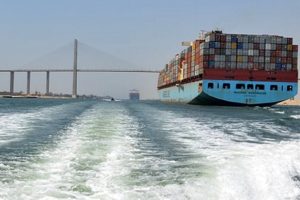
Market conditions are further complicated by external factors pushing cargo towards air transport. The Red Sea crisis, which began at the end of 2023, has continued to affect Asia–Europe supply chains: diversions via the Cape of Good Hope have lengthened maritime transit times by around 10–14 days and increased costs and port congestion, prompting part of demand to seek sea–air solutions or a direct shift to air freight to meet delivery windows. In this context, Iata revised its air cargo forecasts in 2025, lowering expectations for volumes and revenues compared with projections made at the end of 2024, citing “significant uncertainties” in global markets and ongoing geopolitical and trade pressures.
Anna Maria Boidi