



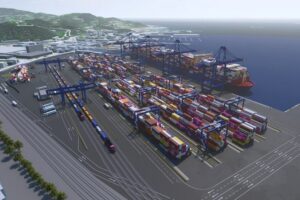
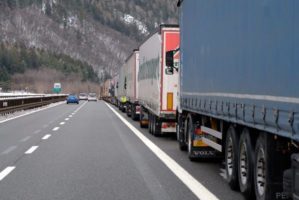
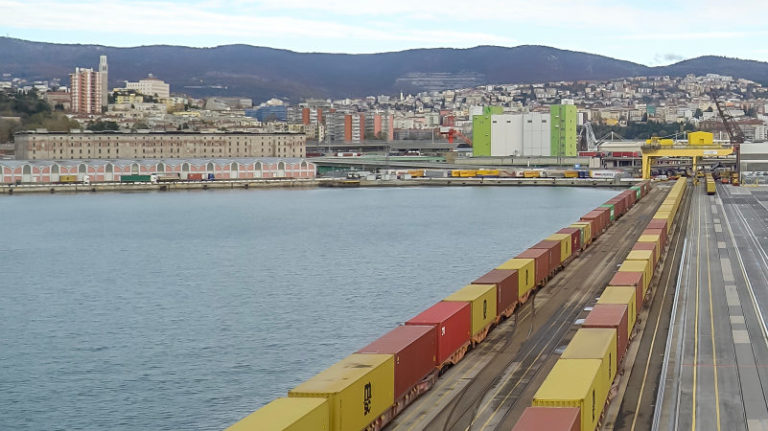
The European Commission authorised Italy on 6 January 2026 to introduce a State aid scheme dedicated to rail shunting services in port areas. This is the first EU approval specifically targeting these operations in Italian ports, with an approach modelled on the Ferrobonus scheme. The decision allows the Autorità di Sistema Portuale (Port System Authorities) to grant subsidies to operators carrying out shunting and last-mile rail services within ports, at a time of declining port rail volumes and strong pressure on network capacity due to works linked to the Pnrr (Piano nazionale di ripresa e resilienza – National Recovery and Resilience Plan).
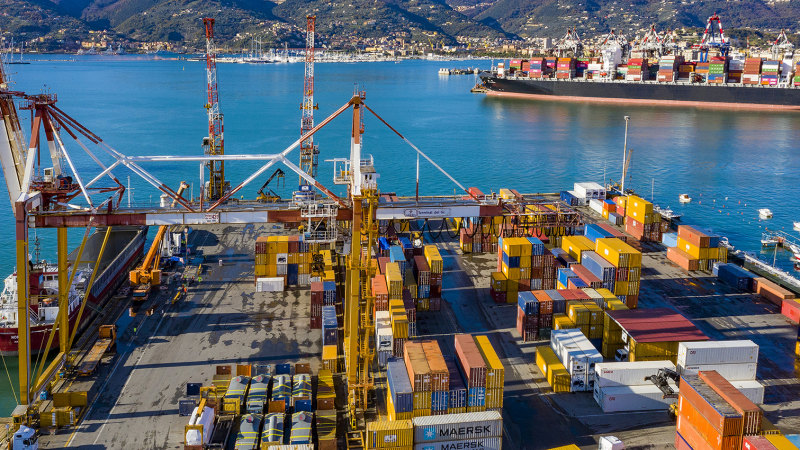
The measure applies to Italian ports managed by the 15 Autorità di Sistema Portuale and aims to reduce an operating cost that directly affects the competitiveness of the sea–rail supply chain. Shunting operations include, among other activities, the assembly and disassembly of trains, the movement of wagons on port tracks and routing between terminals and connections to the national rail network.
The total authorised budget amounts to €30 million over five years, with a maximum of €500,000 per year for each Port System Authority. This ceiling is lower than the initial cap set out in the 2025 Budget Law, where the measure had been designed with a higher limit per authority. The contribution will be calculated on a per-train basis according to the actual, documented costs of the shunting service, with the aim of avoiding overcompensation and ensuring proportionality.
The scheme requires that part of the benefit be passed along the supply chain. Shunting operators, as the direct beneficiaries of the subsidies, will have to transfer at least 50% of the aid to the commissioning railway undertakings, mirroring the structure already used for the Ferrobonus. The objective is to reduce the overall cost of rail services for trains originating or terminating in ports, making connections with the hinterland more competitive than road transport, particularly on routes where terminal costs weigh heavily on total expenses.
The legal basis is the 2025 Budget Law, which provides for the adoption of an interministerial implementing decree by the Ministero dei Trasporti (Ministry of Transport), in agreement with the Ministero dell’Economia (Ministry of Economy and Finance), to define criteria, procedures and controls. Each port authority will then have to publish calls for tenders to allocate the subsidies to operators.
The context underpinning the measure shows declining figures. In 2024 Italian ports handled 55,400 freight trains, down 2% on 2023 and 5.46% compared with 2021. Traffic remains highly concentrated in a few ports, with Genoa handling 16,150 trains in 2024, La Spezia 7,900 and Ravenna 7,400.
Mara Gambetta