





The Rhenus Group has announced the acquisition of its first wholly owned intermodal rail terminal in Kazakhstan, marking a significant step in its strategy to strengthen in-house logistics capabilities in Central Asia. The transaction concerns an infrastructure located in the Almaty region, at Bayserke railway station, along the Trans-Caspian International Transport Route. The investment, announced on 19 January 2026, comes against a backdrop of increasing regionalisation of supply chains and growing attention to intermodal rail solutions.
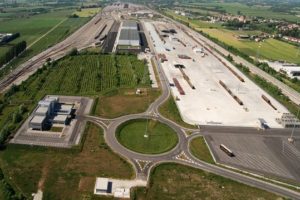
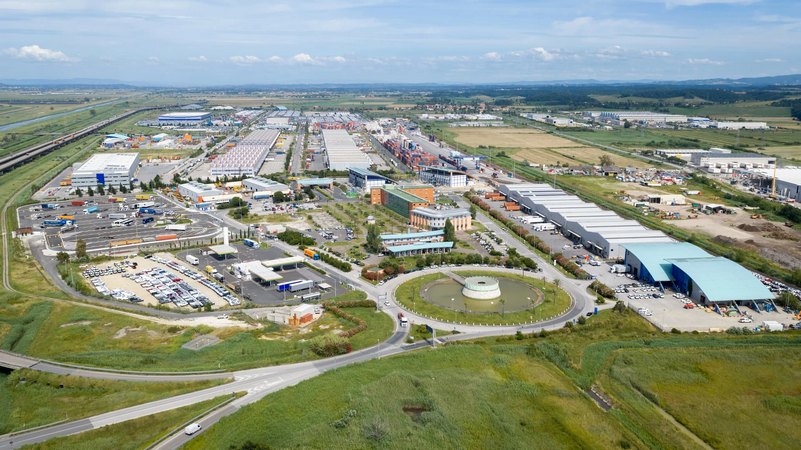
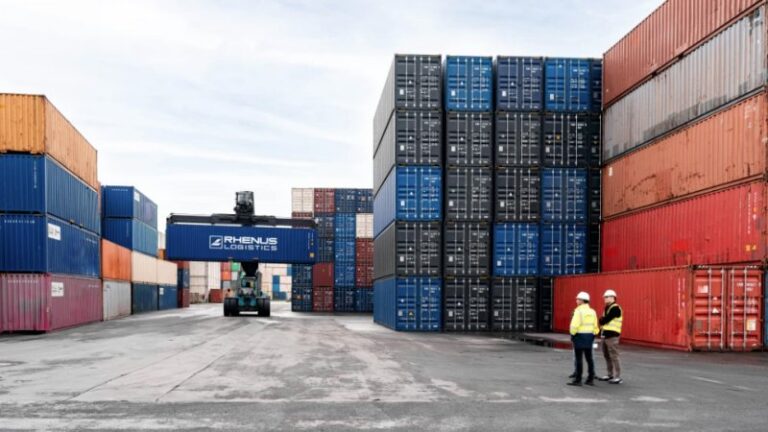
The terminal, operating under the name Qazcontargo Almaty, has direct connections to national and international rail networks and helps to increase regional container-handling capacity. The facility offers container depot services, bonded warehousing for imported goods, an open customs yard and the handling of full trainloads. It is also equipped for the transhipment of bulk cargo from rail wagons into containers, further expanding the scope for integration between transport modes along the Trans-Caspian corridor. Operations are managed by the Contargo Group, a long-standing partner of Rhenus with established expertise in international container logistics.
Rhenus has been present in Kazakhstan since 1996 with forwarding and logistics activities through its branches in Almaty, Astana and Karaganda. The integration of the new rail terminal makes it possible to complement forwarding services with dedicated infrastructure, strengthening multimodal connectivity and the ability to manage import, export and transit flows. With this acquisition, the group now operates its second container terminal in Central Asia, following the launch in 2025 of a rail terminal in Andijon, Uzbekistan, in a joint venture with Uzbek railways.
The decision to invest in inland rail capacity reflects structural trends affecting logistics. Growing demand for route flexibility and alternatives to traditional maritime transport is increasing the strategic value of such infrastructure. Andreas Stöckli, a member of Rhenus’ management board, explained that the acquisition of the Almaty terminal enables the group to respond directly to these market developments and to support the transformation of supply chains from 2026 onwards, confirming a long-term commitment to the sustainable development of logistics infrastructure in Central Asia.
Alongside its infrastructure expansion, the group has also communicated a further element of its strategy related to human resources management. On 15 January 2026, Rhenus announced that it had obtained the Top Employer 2026 certification in several European markets, including Italy, Spain and Germany, confirming its focus on people-oriented policies. The certification, awarded by the Top Employers Institute on the basis of an assessment of best practices in human resources, evaluates six key areas and 20 thematic fields, including people strategy, working environment, talent acquisition, training, wellbeing, and diversity and inclusion.
The recognition covers more than 41,000 employees globally and reflects ongoing investment in targeted development programmes, digital solutions for managing work processes and initiatives supporting organisational wellbeing. In Italy, the Overland division obtained the certification for the fourth consecutive year, recording improvements of +12.5% in leadership and +10.9% in organisational performance. In Spain, where the certification was awarded for the third year in a row, progress was noted in diversity and inclusion at +4.96%, alongside positive results in wellbeing, reward systems and sustainability. In Germany, where the recognition was confirmed for the second year, the most significant advances concerned digital HR initiatives, with an increase of +27.17%, and leadership development, up by +24.08%.