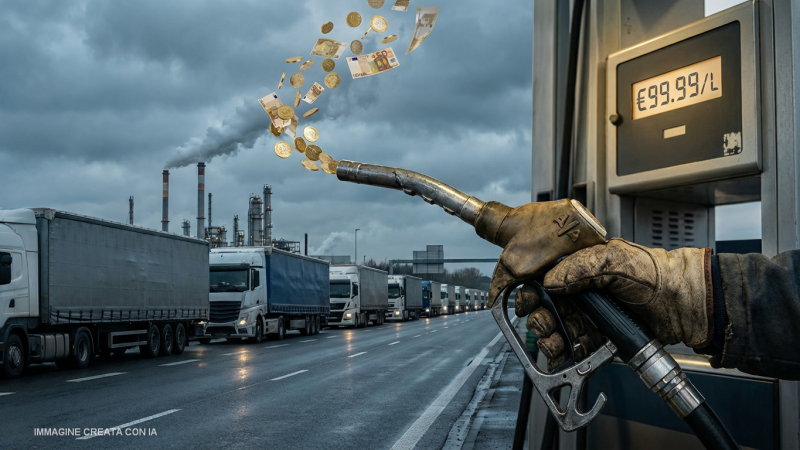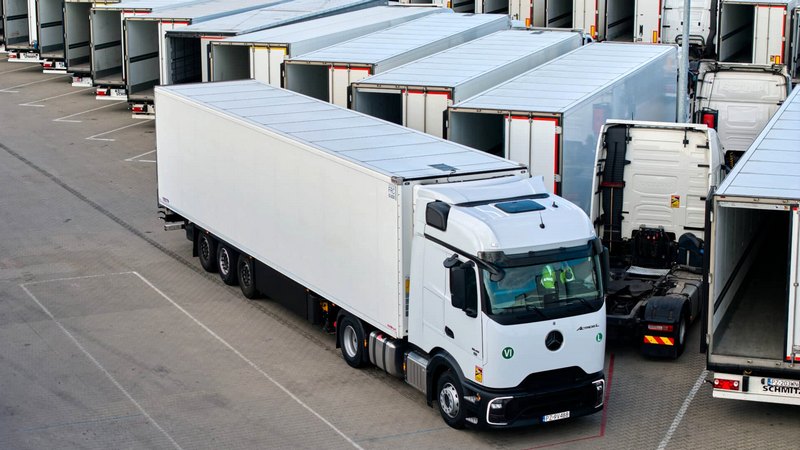






Between 8 and 14 January 2026, farmers’ protests in France had a direct and significant impact on freight transport, with strategic motorways and ports brought to a standstill and hundreds of lorries forced into long waits or diversions. The mobilisation, linked to opposition to the EU–Mercosur agreement – despite the formal opposition of the French government – and to the management of contagious bovine nodular dermatitis, has particularly affected the continuity of national and international logistics flows, making road haulage one of the sectors most heavily penalised.
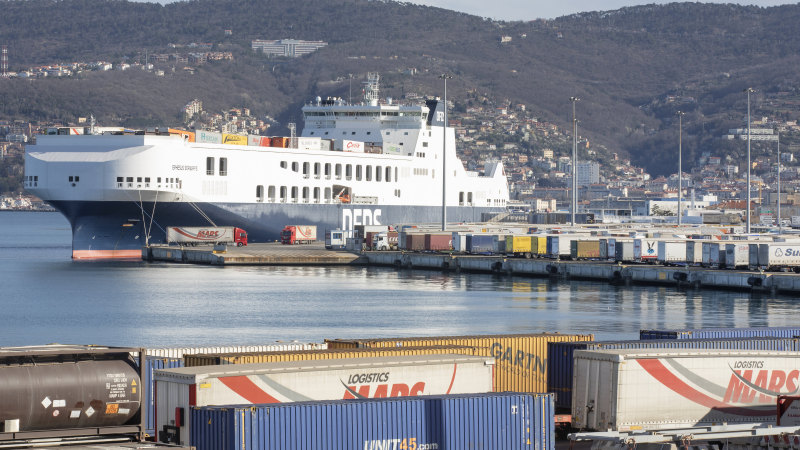
The blockades have affected the main nodes of the French network. The A1 motorway in Pas-de-Calais, an essential corridor towards northern Europe, remained subject to filtering for several days at a point where around 20,000 lorries normally pass each day. In the south-west, the A63 corridor between France and Spain and the A64 around Toulouse experienced repeated interruptions, with immediate effects on cross-border connections and supply chains. These problems were compounded by blockades at the ports of Le Havre, La Rochelle and Bayonne, where checks on inbound and outbound lorries slowed operations at some of the country’s main freight hubs.
According to initial estimates released by road haulage organisations, average delivery times were delayed by between 20% and 30%. Transport companies were forced to use alternative routes on secondary roads, often unsuitable for vehicles of up to 44 tonnes, leading to an estimated 15% increase in operating costs. The impact has been particularly critical for the transport of perishable goods and for large-scale retail logistics, where failure to meet delivery windows has also created a risk of product deterioration.
Alongside operational difficulties, the sector has reported illegal incidents. The Organisation des Transporteurs Routiers Européens reported forced stoppages of refrigerated lorries, unauthorised opening of semi-trailers to inspect loads and cases of goods being destroyed. According to the association, some of these actions took place without immediate intervention by law enforcement, raising questions about the State’s ability to guarantee freedom of movement and the security of goods in transit.
The positions taken by road haulage associations have developed along two lines. The Fédération Nationale Des Transports Routiers has adopted an operational approach, maintaining constant contact with the Ministère des Transports (Ministry of Transport) and with the prefectures, and issuing daily updates on critical points in the network. The aim is to allow companies to adapt routes and, as far as possible, limit economic losses.
The stance of the Organisation Des Transporteurs Routiers Européens, which mainly represents small and medium-sized companies, has been more forthright. While acknowledging the difficulties faced by the agricultural sector, the association has stressed that freight transport is also under intense economic pressure, marked by rising costs, shrinking margins and increasing insolvencies. In this context, Otre has called for the immediate removal of blockades, guarantees of freedom of movement across the entire national territory and an end to any unauthorised inspection or damage to lorries. In the absence of effective intervention by the authorities, the organisation has raised the prospect of compensation mechanisms for affected companies, introducing the new issue of possible State liability for damage suffered by the sector.
The overall situation shows a partial easing of tensions, but without a return to full normality. The main blockades on the A1 were lifted on the evening of 14 January, while tractors left Paris in the early hours of the day. However, pockets of instability remain in the south-west, particularly around Toulouse, where new actions on the A64 and near Blagnac airport have required intervention by law enforcement. On the political front, the government has announced a €300 million support package for the agricultural sector, subject to approval of the 2026 budget still under discussion in Parliament, along with an emergency bill. These measures, however, have not produced immediate effects on the mobilisation.
Pietro Rossoni