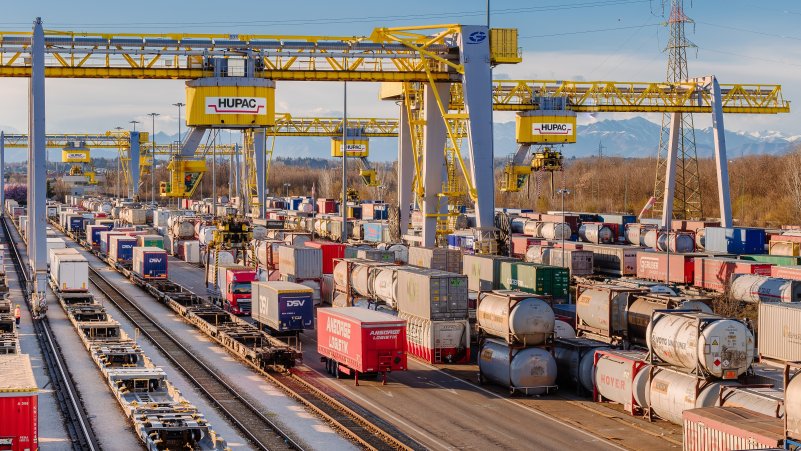





CargoBeamer launched a new intermodal rail link between Liège and Domodossola in the first week of January 2026. The service marks the operator’s operational entry into the Belgian market, as well as a further strengthening of its presence along the transalpine axis. The new route comes at a time of adjustment in the intermodal market, following the termination at the end of 2025 of the rolling motorway service between Novara and Freiburg, which reduced available capacity for the rail transport of non-craneable semi-trailers across the Alps.
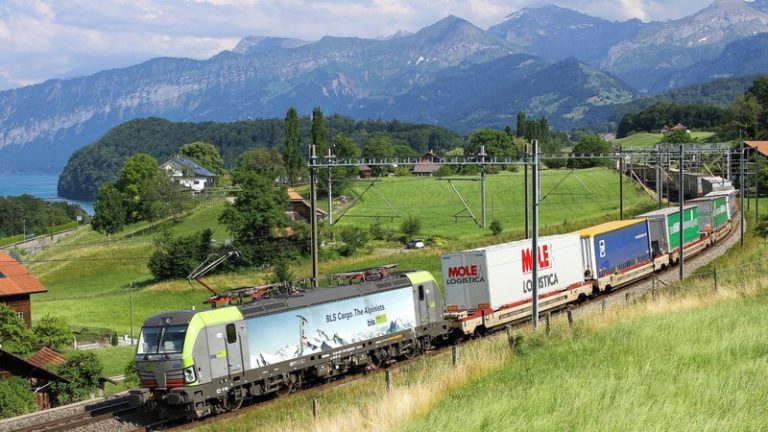
The Domodossola–Liège connection starts with three weekly round trips, with a planned increase to six weekly pairs by the second quarter of 2026. Over the same period, the service is also expected to be extended to additional destinations in northern Italy. Rail traction is provided by BLS Cargo, while terminal operations take place at the Liège Logistics Intermodal Terminal in Belgium and the DB Cargo Transa/FLS terminal in Domodossola.
The service is open to the main loading units: semi-trailers, including non-craneable ones, refrigerated units, ADR, tank units, containers, swap bodies and special equipment. According to the company, each shipment enables a CO2 emissions reduction of around 86% compared with road transport using diesel trucks, thanks to the use of rail and the unaccompanied transport mode.
The launch of the Domodossola–Liège route forms part of the strategy to increase capacity along the Rhine–Mediterranean corridor. With this activation, the Group now operates three transalpine connections and more than fifty trains per week across the Alpine arc, capturing part of the flows that previously relied on the rolling motorway between Novara and Freiburg. According to chief operating officer Boris Timm, the service responds to the need to offer scalable alternatives for the transport of non-craneable semi-trailers and represents a first step towards filling the gap left by the end of the rolling motorway.
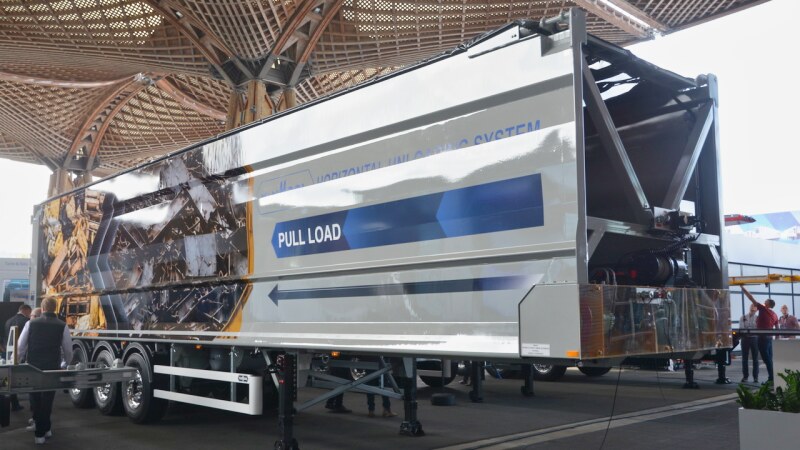
CargoBeamer closed 2025 with a dense series of new operational and industrial initiatives that further expanded its network and strengthened its infrastructure base. In the early months of the year, it launched a rail connection between Stuttgart Kornwestheim and Domodossola. Announced on 30 January 2025 and entering service on 11 February, the link offers three weekly round trips and is described as CargoBeamer’s second line between Germany and Italy, alongside the Kaldenkirchen–Domodossola route, which already handles several thousand semi-trailers per month. This is also an unaccompanied service, open to craneable and non-craneable semi-trailers, refrigerated units, ADR, tank units, containers and swap bodies, thanks to the horizontal loading system developed by the company.
Also in February 2025, CargoBeamer announced the raising of €65 million from Orion Infrastructure Capital through a combination of equity and debt. This followed €50 million subscribed by existing shareholders and €90 million in public funding obtained in 2024 from EBA and BAV, bringing total growth resources to €205 million over a twelve-month period. The funds are primarily earmarked for the construction of the Kaldenkirchen and Domodossola terminals, with works starting in 2025 and completion expected by 2026. The two facilities will become CargoBeamer’s second and third terminals in Europe after Calais, which entered service in 2021. The company estimates that its technology allows up to 38 semi-trailers to be transferred in under 20 minutes, with transhipment times around nine times shorter than those of a conventional crane-based terminal.
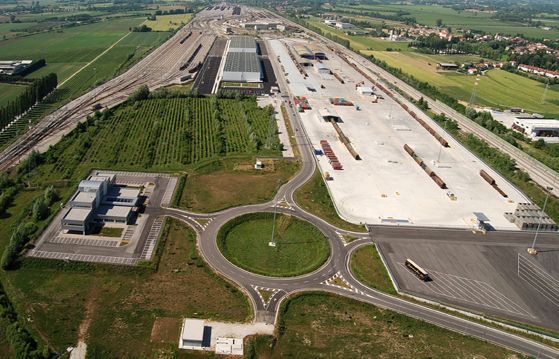
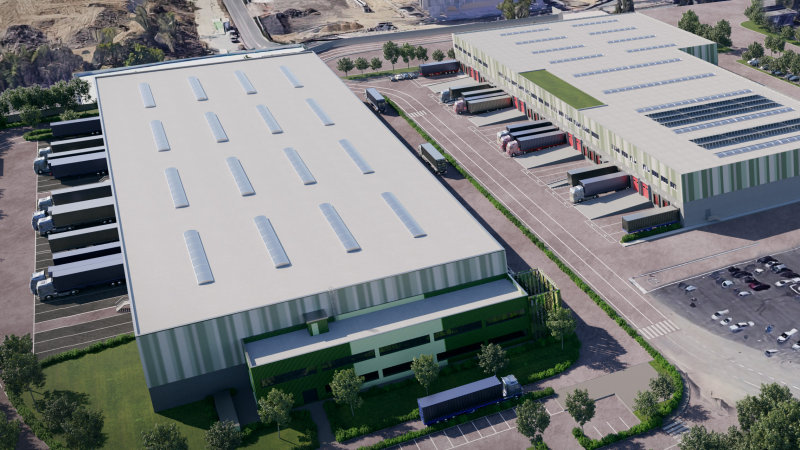
The Kaldenkirchen facility will be built on the site of the current Cabooter Group terminal, near the Venlo logistics hub in Germany, and is designed for the automated loading of non-craneable semi-trailers. After the planned start-up in the second half of 2026, the total surface area will be expanded from 133,000 to 159,000 square metres. Estimated capacity is 228,000 loading units per year, with more than 270 semi-trailer parking spaces and automated check-in and check-out systems. Most of the costs are covered by funding from the Eisenbahn-Bundesamt (German Federal Railway Authority), under support programmes for combined transport.
At the Domo 2 terminal in Domodossola, CargoBeamer already has an area of around 75,000 square metres. Total investment is estimated at between €30 million and €40 million and targets a capacity of up to 185,000 units per year. Authorisation procedures, slowed by environmental assessments, are progressing with positive feedback from the Ministero dell’Ambiente (Ministry of the Environment), while the company’s industrial plan remains unchanged and focused on increasing rail flows towards northern Europe and other Italian destinations. Funds raised in 2025 will also contribute to completing Domo 2 by the end of 2026.
In the final part of 2025, CargoBeamer also announced the opening of the new Venlo–Oradea route, integrated into the intermodal offering from the end of September and officially communicated on 7 October. The service provides six weekly round trips, with a transit time of around 60 hours between the Netherlands and Romania. Departures take place from Venlo from Sunday to Friday and from Oradea from Friday to Wednesday. The route is open to craneable and non-craneable semi-trailers, refrigerated units, ADR, tank units, containers and swap bodies. Romanian operator Routier European Transport uses most of the available slots and provides rail traction.