






The year 2026 will open in a context of accelerated innovation, while economic and geopolitical uncertainties will continue to shape operational choices. This is how Transporeon introduces its outlook on how logistics will evolve next year, when companies will have to balance the need for rapid adaptation with a digital transformation that is becoming an integral part of everyday processes. In this scenario, the combination of human intuition, data quality and the ability to integrate heterogeneous systems emerges as a decisive factor in building resilience and competitiveness.
Applications of artificial intelligence are entering a mature phase after years of testing. In 2026 they will be fully operational in predictive maintenance, dynamic pricing and network planning. The idea of “AI as a colleague” is becoming increasingly common in the sector, with tools that work alongside staff to speed up analysis and decision-making. The gap between large and small companies is narrowing thanks to more accessible technologies, while data quality is recognised as an essential prerequisite for reliable automation. Cost pressure is prompting companies to invest in data cleaning and consistency, which are indispensable for truly autonomous systems.
The human dimension of transformation remains central. The persistent shortage of drivers is combined with the need to introduce new digital skills in a sector accustomed to established processes. Companies are introducing dedicated internal roles to facilitate change and guide colleagues in adopting digital tools. The “human plus AI” model is proving effective in improving customer service thanks to language assistants, automatic communication-sorting tools and systems able to detect irregularities in real time. Shippers’ expectations, influenced by experiences in other sectors, now demand immediate responses and proactive solutions, moving beyond the logic of simply reporting problems.
Sustainability is advancing in a pragmatic way. The adoption of electric vehicles in heavy transport remains limited by insufficient infrastructure and costs that do not yet guarantee widespread profitability. However, in some European urban areas, certain segments are finding a balance between sustainability and economic convenience thanks to a more favourable total cost of ownership. For larger fleets, low-investment, high-impact measures prevail, such as dynamic route planning, intelligent tyre pressure monitoring and the dematerialisation of documentation. Overall, sustainability and profitability are converging into a single operational strategy.
Intermodality continues to grow more slowly than expected due to process complexity and the higher number of actors involved compared with road transport. Fragmented IT standards across maritime, rail, road and air modes limit interoperability and end-to-end visibility. Artificial intelligence can act precisely on this front, harmonising information flows and facilitating smoother exchanges. Ageing infrastructure and delayed investments — from congested rail hubs in Europe to roadworks in North America — nevertheless remain obstacles to capacity and reliability.
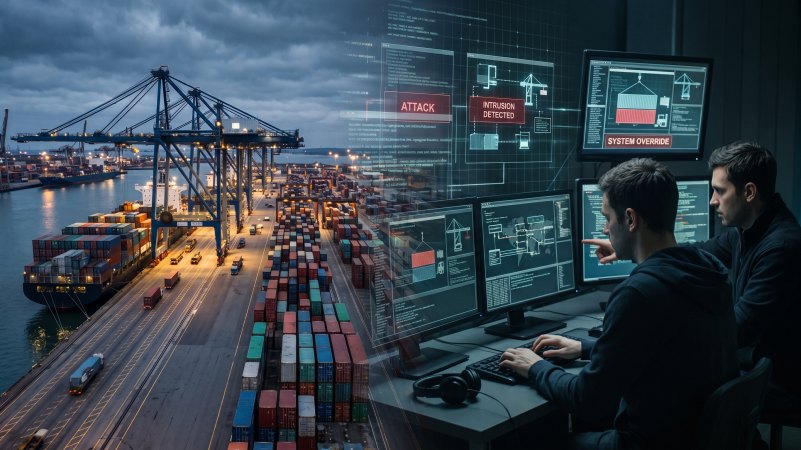
Resilience has become a structural condition. International tensions are fuelling unpredictable scenarios, while rates seem more stable also thanks to new protection clauses introduced by companies. Cyber risk is rising rapidly and the sector considers a global incident linked to misuse of artificial intelligence to be likely, an event that could accelerate the definition of specific security standards.
In freight transport, meanwhile, fraud and cargo theft are increasing, especially in North America, where impersonation schemes and fake websites are widespread. This is pushing the industry towards more rigorous verification systems and carrier qualification processes supported by algorithms capable of preventing anomalies. The shift to AI-based cloud architectures is seen as a lever to strengthen security without excessively increasing costs, although even large organisations remain vulnerable due to outdated infrastructures.
Building a connected ecosystem is the decisive step. Many inefficiencies stem from limited data sharing along the supply chain, while international competitiveness is driving greater openness. Some carriers still hold back information they consider sensitive, but the benefits of transparency are becoming evident. Digital integration among different players can unlock the potential of real-time visibility and enable faster operational decisions aligned with economic and environmental sustainability goals. The greater the interconnection, the greater the shared value generated.