





Array ( [0] => 8 [1] => 40 )

Podcast K44

Cronaca

  • Incendio in un deposito di autotrasporti a Pozzolo Formigaro

    Incendio in un deposito di autotrasporti a Pozzolo Formigaro

    Pneumatici esausti e residui oleosi all'origine del rogo scoppiato nella mattina del 3 giugno 2026 nella zona industriale in provincia di Alessandria. Nessun ferito, ma danni ingenti alla struttura e preoccupazioni ambientali per la nube di fumo nero sprigionatasi per ore.

Transpotalk

Normativa

Mare

  • Il blocco del Golfo Persico porta traffico al Canale di Suez

    Il blocco del Golfo Persico porta traffico al Canale di Suez

    Il blocco dello Stretto di Hormuz innescato dalla guerra tra Usa e Israele contro l'Iran ha spinto Arabia Saudita e altri Paesi del Golfo verso rotte alternative attraverso il Mar Rosso, facendo salire ad aprile i transiti nel Canale di Suez di petroliere del 28%. Transitano anche alcune portacontainer di …

Autotrasporto

    Italy highly exposed to cybercrime in transport and logistics

    Cargo theft is no longer solely a physical crime. Increasingly, criminal operations begin well before a lorry leaves the yard, through the unlawful acquisition of the digital credentials and identities that control logistics flows. This is the most significant transformation affecting the European supply chain: the convergence of cybercrime and cargo fraud, two phenomena that until a few years ago developed in parallel but now overlap structurally, making traditional defences increasingly ineffective.

    In Italy, the transport and logistics sector is one of the most vulnerable links in the digital chain. According to the Agenzia per la Cybersicurezza Nazionale (National Cybersecurity Agency, ACN), malicious cyber incidents affecting the country rose by 38% in a single year. This trend prompted the authorities to classify more than 500 Italian transport operators as national critical infrastructure under the new NIS2 Directive. The picture is no less concerning when it comes to physical crime: Germany and Italy record the highest levels of cargo fraud and logistics crime in Europe, with Germany reporting one theft every three days and Italy close behind.

    The scale of the problem is also documented at continental level. According to the Threat Landscape Report 2025 published by the European Union Agency for Cybersecurity, ENISA, transport is the second most heavily targeted sector in the EU, with ransomware responsible for more than 80% of recorded incidents. The growing use of artificial intelligence in cyberattacks is adding to the threat: one in six breaches now involves AI technologies, with major implications for the speed and sophistication of attacks.

    The mechanism through which the two threats intersect is now well established. Criminal groups no longer target only the goods themselves, but also the credentials controlling their movement. Compromising access to a transport management platform makes it possible to manipulate lists of available loads, redirect shipments or divert payments to fraudulent accounts. By the time the anomaly is detected, the goods have often already crossed the border. This model also encourages the spread of so-called phantom carriers, which clone the identities of legitimate hauliers to secure loads before disappearing.

    A structural factor further increases this exposure: the fragmentation of information systems that continues to characterise much of the European logistics ecosystem. Data and operational flows remain distributed across non-integrated platforms, creating information silos that reduce shared visibility and prevent risk signals from being detected promptly. In this environment, reactive approaches to cybersecurity struggle to counter highly organised and increasingly automated criminal groups.

    The European regulatory response is focused precisely on this issue. Under the NIS2 Directive, essential and important entities must now integrate supply chain security into their risk management processes, extending assessments to suppliers, service providers and networks of partners. European cybersecurity guidelines establish a principle that changes the scope of responsibility: a supplier does not need to be frequently targeted by attacks to pose a critical risk. If its compromise could have significant downstream consequences, it still represents a strategic vulnerability. In such a scenario, a single compromised operator could disrupt thousands of shipments.

    The technical response to this challenge consists of three separate but interdependent elements. The first is the continuous verification of identities and access rights. Hauliers and suppliers must be validated not only when they first enter the network, but also whenever payment or delivery details are changed, preferably through channels separate from those used for routine communications. The human factor remains one of the main sources of vulnerability. Many breaches still result from compromised credentials or operational errors, making staff training a structural rather than optional element of security strategy.

    The second element is continuous network monitoring, based on anomaly detection systems capable of operating in real time and faster than human supervision alone. AI-based analytical technologies examine network behaviour to identify unusual routes, suspicious access attempts or unexpected changes in load management, such as a sudden alteration to a carrier’s profile or the last-minute reassignment of a shipment. For these tools to deliver tangible results, however, detected signals must trigger operational action. Anything that appears unusual must be capable of being checked or blocked before the load is moved. From this perspective, security cannot be added later as a separate layer, but must be integrated into operational flows from the system design stage.

    The third element is information sharing between participants in the logistics network. An anomaly detected by a single operator can help protect the entire ecosystem if it is shared promptly. This approach requires common digital identity frameworks, standardised verification processes and platforms capable of circulating threat intelligence throughout the supply chain, rather than only within the boundaries of an individual company.


    © TrasportoEuropa - Riproduzione riservata - Foto di repertorio
    Segnalazioni, informazioni, comunicati, nonché rettifiche o precisazioni sugli articoli pubblicati vanno inviate a: redazione@trasportoeuropa.it


      Puoi commentare questo articolo nella pagina Facebook di TrasportoEuropa

      bottone newsletter piccolo Vuoi rimanere aggiornato sulle ultime novità sul trasporto e la logistica e non perderti neanche una notizia di TrasportoEuropa? Iscriviti alla nostra Newsletter con l'elenco ed i link di tutti gli articoli pubblicati nei giorni precedenti l'invio. Gratuita e NO SPAM!


    CONTENUTI SPONSORIZZATI


Videocast K44

Aereo

Ferrovia

Persone

  • Fredrik Swartling sarà l’amministratore delegato d’Italscania

    Fredrik Swartling sarà l’amministratore delegato d’Italscania

    Fredrik Swartling, attuale responsabile Services d’Italscania, succederà a Enrique Enrich alla guida della filiale italiana di Scania dal primo settembre 2026. Un passaggio interno che punta a consolidare i risultati ottenuti negli ultimi anni, valorizzando la continuità di gestione e la conoscenza diretta del mercato italiano.
Isuzu presenta in Italia la terza generazione del pick-up da lavoro

TECNICA

Isuzu presenta in Italia la terza generazione del pick-up da lavoro
Renault Trucks rinnova la catena cinematica dei camion diesel

TECNICA

Renault Trucks rinnova la catena cinematica dei camion diesel
Scania investe 70 milioni in Francia per i camion elettrici

TECNICA

Scania investe 70 milioni in Francia per i camion elettrici
Scania lancia il modulo batteria sotto cabina e la ricarica Mcs

TECNICA

Scania lancia il modulo batteria sotto cabina e la ricarica Mcs
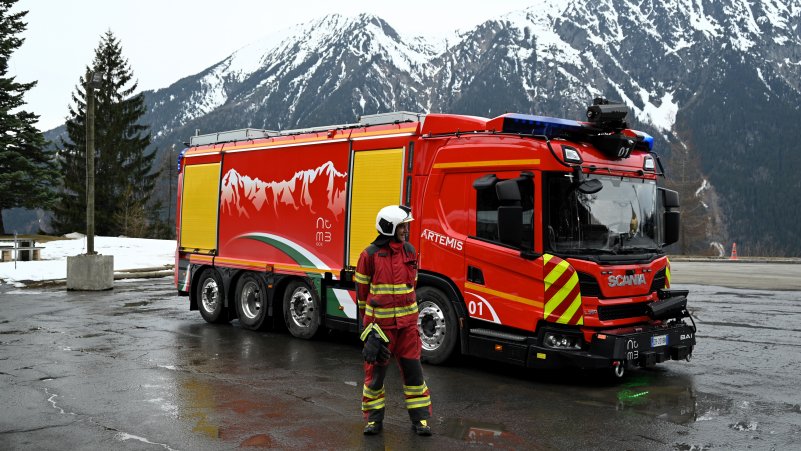
Artemis per la sicurezza del Monte Bianco

TECNICA

Artemis per la sicurezza del Monte Bianco
previous arrow
next arrow
Geodis accelera su più fronti con nuova strategia e investimenti

LOGISTICA

Geodis accelera su più fronti con nuova strategia e investimenti
Fusione nel trasporto merci olandese tra Ewals e Vos

LOGISTICA

Fusione nel trasporto merci olandese tra Ewals e Vos
Dkv Mobility rafforza la rete europea di ricarica con Optimile

LOGISTICA

Dkv Mobility rafforza la rete europea di ricarica con Optimile
L’idrogeno può essere competitivo nell’autotrasporto oltre 300 km

LOGISTICA

L’idrogeno può essere competitivo nell’autotrasporto oltre 300 km
Sciopero nella FedEx ligure per cambio appalto logistica

LOGISTICA

Sciopero nella FedEx ligure per cambio appalto logistica
previous arrow
next arrow
Bruxelles approva il regime italiano da 23 miliardi per le rinnovabili

ENERGIE

Bruxelles approva il regime italiano da 23 miliardi per le rinnovabili
Operazione Red Gold contro frode nei carburanti in Abruzzo

ENERGIE

Operazione Red Gold contro frode nei carburanti in Abruzzo
Quattro indagati per uso stradale di gasolio agricolo nel Salento

ENERGIE

Quattro indagati per uso stradale di gasolio agricolo nel Salento
Il taglio delle accise è prorogato fino al primo maggio

ENERGIE

Il taglio delle accise è prorogato fino al primo maggio
Petrolio sopra 110 dollari al barile dopo dichiarazioni di Trump

ENERGIE

Petrolio sopra 110 dollari al barile dopo dichiarazioni di Trump
previous arrow
next arrow
L’innovazione di Geotab punta su sicurezza e Pmi

SERVIZI

L’innovazione di Geotab punta su sicurezza e Pmi
Gaston Schul cresce nelle spedizioni genovesi con Parodi Forwarding

SERVIZI

Gaston Schul cresce nelle spedizioni genovesi con Parodi Forwarding
L’Italia è molto esposta nel cibercrimine nel trasporto e logistica

SERVIZI

L’Italia è molto esposta nel cibercrimine nel trasporto e logistica
Carta DKV per ricaricare il camion elettrico

SERVIZI

Carta DKV per ricaricare il camion elettrico
Video | Dkv al Transpotec oltre la carta carburante

SERVIZI

Video | Dkv al Transpotec oltre la carta carburante
Zucchetti presenta una logistica digitale integrata software e robot

SERVIZI

Zucchetti presenta una logistica digitale integrata software e robot
Golia360 punta sulla digitalizzazione per gli autisti

SERVIZI

Golia360 punta sulla digitalizzazione per gli autisti
Come la logistica può guadagnare dalle multe Antitrust

SERVIZI

Come la logistica può guadagnare dalle multe Antitrust
Tra Genova e Barcellona l’asse della formazione per la logistica

SERVIZI

Tra Genova e Barcellona l’asse della formazione per la logistica
Transporeon introduce la ricerca con l’intelligenza artificiale

SERVIZI

Transporeon introduce la ricerca con l’intelligenza artificiale
Nasce Synlog Alliance consorzio dati per la logistica

SERVIZI

Nasce Synlog Alliance consorzio dati per la logistica
Sogedim potenzia le spedizioni per America Latina con Eagle Service

SERVIZI

Sogedim potenzia le spedizioni per America Latina con Eagle Service
Leviahub cresce in Spagna con due acquisizioni

SERVIZI

Leviahub cresce in Spagna con due acquisizioni
Trans.eu cresce in Italia con la borsa carichi relazionale

SERVIZI

Trans.eu cresce in Italia con la borsa carichi relazionale
L’evoluzione della borsa carichi autotrasporto è relazionale

SERVIZI

L’evoluzione della borsa carichi autotrasporto è relazionale
previous arrow
next arrow