





DHL rates the electrification of heavy-duty vehicles as having a high impact on logistics, with widespread adoption expected within five to ten years. Global sales of medium- and heavy-duty electric trucks exceeded 90,000 units in 2024, up 80%. Megawatt Charging System (MCS) technology can take batteries from 20% to 80% charge in 40 minutes, although reduced payload capacity and electricity-grid constraints remain challenges.
Electrification is more mature in light commercial vehicles: more than 600,000 electric commercial vehicles were sold in 2024, up 40%, while 46.2% of DHL’s last-mile fleet is electric. Sodium-ion batteries cost around $59 per kWh (€51), compared with $74 (€64) for lithium-ion batteries, and CATL says its cells retained 90% of their range at -40°C in tests.
Drones and packaging are also expected to have a considerable impact. Unmanned aircraft systems are moving towards scheduled corridors of between 20 and 120 km linking hospitals, laboratories and industrial sites, although regulation and public acceptance remain obstacles. Active packaging accounts for 40% of the market, while the PPWR requires packaging reductions of up to 15% by 2040.
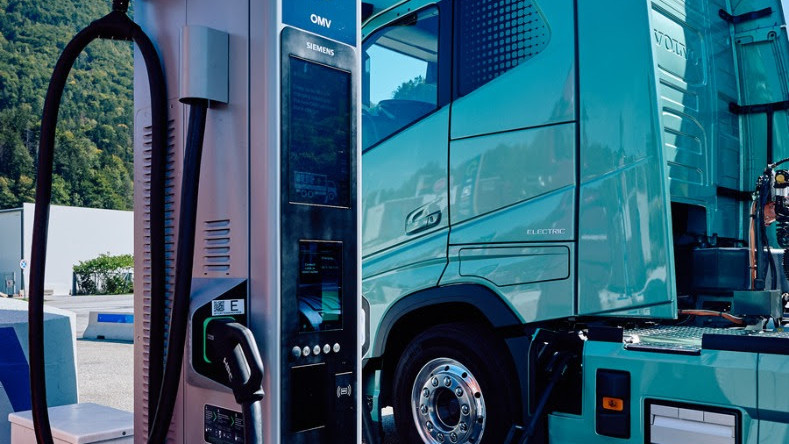
A claimed range of 700 kilometres from some heavy-duty vehicle manufacturers in 2026 and 40 minutes to charge batteries from 20% to 80% using megawatt charging are the two developments DHL cites to explain why battery-electric trucks are moving beyond regional operations. They feature in the eighth edition of the Logistics Trend Radar, published in September 2026, a study that the group updates every two years to classify logistics technologies according to their expected impact and adoption timescale. Four sections of the report concern energy and vehicles: the electrification of heavy- and light-duty vehicles, unmanned aircraft systems and next-generation packaging. Heavy-duty vehicle electrification is rated as having a high impact with a five-to-ten-year horizon, while the other three are classified as having a considerable impact, with adoption expected within five years for light vehicles and packaging and within five to ten years for drones.
The global market for medium- and heavy-duty electric trucks exceeded 90,000 vehicles sold in 2024, an increase of nearly 80% and the third consecutive year of growth. Transport’s contribution to greenhouse gas emissions explains the focus on the technology, as the report says heavy road freight accounts for between 8% and 10% of global emissions. For regional and long-distance operations, the report identifies battery-electric vehicles as the main solution, alongside hydrogen fuel-cell vehicles and rapid battery swapping. From a technical standpoint, the key development is the Megawatt Charging System, combined with increasing battery capacity. Megawatt charging reduces stopping times, paid waiting time and vehicle downtime and can coincide with mandatory driver breaks. On range, the study cites an analysis by EV Curve Futurist showing that most road freight journeys remain below 500 kilometres, meaning the often-cited 600-kilometre threshold is unnecessary for most operators.
Hydrogen-powered electric vehicles offer faster refuelling and more stable performance in cold climates, where battery efficiency declines. However, the refuelling network remains far less extensive than the electric charging network and costs are still uncompetitive, while hydrogen conversions remain experimental. DHL expects a mixed system: batteries for cities, regional routes and corridors equipped with megawatt charging, and hydrogen for niches such as remote routes or extreme climates. In all cases, the report points to significant remaining constraints on electric vehicles. Batteries reduce payload capacity and spending shifts from fuel to infrastructure, turning operating costs into upfront investment. Connections ranging from megawatt to gigawatt scale, new substations and harmonised standards across transport modes are required. The report also notes that electric drivetrains perform best on fixed routes with predictable schedules and planned downtime, conditions that are not always available in heavy road transport.
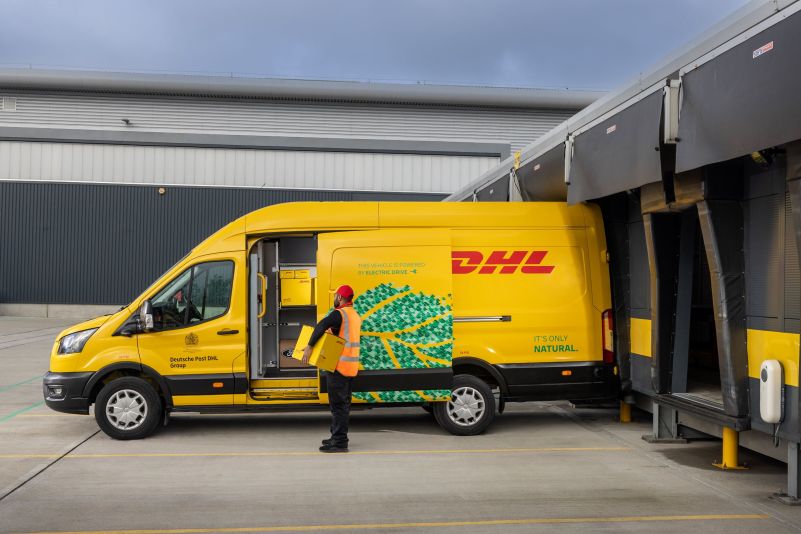
The transition is further advanced in commercial vehicles, where global sales of electric models rose by more than 40% in 2024 to over 600,000 units and a market share of around 7%, driven by China and Europe. Growth reached 45% in 2025. DHL says 46.2% of its last-mile fleet has been electrified. An electric van typically covers up to 300 kilometres a day in urban use, a distance that can be handled by the latest batteries, which provide up to 400 kilometres per charge. Since 2025, sixteen Dutch cities have introduced zero-emission zones for freight vehicles, while Paris and Amsterdam plan to introduce them by 2030. New battery chemistries are targeting both cost and low-temperature performance. Sodium-ion cells cost an average of around $59 per kWh, or about €51, compared with $74, or about €64, for lithium-ion cells. In winter testing, CATL says its Naxtra sodium-ion battery retained 90% of its range at -40°C and delivered stable power down to -50°C. Solid-state batteries are targeting a range of more than 1,000 kilometres per charge, compared with an average of 500 kilometres in 2024, and Dongfeng Motor has announced series production by the end of 2026.
In micromobility, the most electrified segment of road transport, more than 9% of two- and three-wheel delivery vehicles were electric in 2024. In Belgium, DHL Express uses Chariot FS2 cargo bikes with a volume of 1,500 litres, a payload of 200 kg and a daily range of 50 km, with a lower total cost of ownership than a fleet of electric vans. In logistics yards, electrification is expanding from forklifts to yard tractors, including Orange EV vehicles that DHL is adding to its US fleet, while in Singapore a driverless platform developed by Zelos moves pallets between two warehouses on the same site. For light vehicles, the report highlights the lag in electricity-grid development compared with charging-point deployment, lower payload capacity because of battery weight and higher purchase costs, offset by lower operating costs. Political uncertainty, tariffs and fuel subsidies can distort total-cost-of-ownership calculations, and internal-combustion vehicles will remain dominant in rural and low-density areas.
Electrification will take longer in other transport modes. On inland waterways and short-sea routes, Norway’s MF Ampere, MS Medstraum and MF Vargsund ferries demonstrate the viability of electric propulsion even in Arctic conditions, while China’s Ningyuan Diankun, the country’s first fully electric 10,000-tonne container vessel, combines high-voltage charging with battery swapping. In rail freight, BHP is testing Wabtec battery locomotives with 7 MWh systems on iron-ore routes in Australia, while Canadian Pacific Kansas City has introduced a high-power hydrogen locomotive into mainline service. The sector is moving towards discontinuous electrification, with overhead lines installed only where economically viable and onboard energy storage used elsewhere. In aviation, batteries provide around 300 Wh/kg compared with 12,000 Wh/kg for aviation fuel, a ratio that limits fully electric propulsion to very small aircraft operating over short distances. Hydrogen offers 33 kWh/kg but requires new aircraft designs and cryogenic tanks. Airbus has postponed its ZEROe programme until the second half of the 2040s, and DHL says fully electric cargo aircraft are unlikely to enter operation within the next decade.
Another major area is autonomous operation. For unmanned aircraft systems, DHL sees 2026 as marking a shift from isolated pilot projects to commercial-scale deployment, supported by approvals for beyond-visual-line-of-sight operations, unmanned aircraft traffic-management systems and U-space airspace, as well as integration with warehouse and transport management software. In the United States, the proposed FAA Part 108 rule is intended to regulate recurring beyond-visual-line-of-sight operations. Solid-state batteries and hydrogen fuel cells are also extending range, while combinations of GPS, Lidar, radar and onboard vision allow aircraft to avoid obstacles in real time even when signals are disrupted.
The nearest-term application is on medium-distance routes, where scheduled corridors of between 20 and 120 kilometres are being tested for urgent or high-value shipments. Healthcare networks in Europe and the United States already connect hospitals and regional laboratories using drones to transport blood samples and diagnostic materials, while other projects deliver priority spare parts from distribution centres to energy and manufacturing sites. In the last mile, drones are progressing mainly in rural and semi-urban areas, including in combination with vans. For heavier loads, MightyFly, Dronamics, Elroy Air and ST Engineering are developing autonomous cargo aircraft, while Hybrid Air Vehicles and Flying Whales are developing airships to carry oversized cargo to areas without infrastructure.
Drones are also used in intralogistics, where they can count stock on high-bay shelving without aerial work platforms, and DHL has adopted Hardis’s Eyesee solution for this purpose in several countries. Using sensors and high-precision satellite positioning, other models can measure stockpiles with deviations of less than a centimetre in a few hours, compared with days for manual surveying, while Dutch company Mainblades carries out automated aircraft inspections. The report identifies the absence of a global regulatory framework, associations with military and criminal uses, noise, privacy concerns and the high cost of professional equipment as critical factors. DHL expects adoption to remain slow in dense urban areas and to progress more rapidly in remote regions.
The market for next-generation packaging was worth around $15 billion, or roughly €13 billion, in the mid-2020s and is expected to reach around $27 billion, or €23 billion, by 2030, representing average annual growth of 6.5%. Active packaging, which interacts with the contents or the internal atmosphere, accounts for about 40% of the market. For the cold chain, the report highlights an operational issue: battery-powered active trackers are classified as dangerous goods in air cargo. Bluetooth devices, which can also be read by smartphones, use batteries small enough to fall outside this classification, although some disposable models add to electronic waste. UK-based Envio offers an electronic-ink shipping label that can be updated remotely and can indicate openings, impacts and temperature excursions. Any new packaging format must nevertheless remain compatible with conveyors, readers, sorting systems and robotic handling, while batteries, sensors and integrated circuits complicate recycling. The EU Packaging and Packaging Waste Regulation (PPWR) sets binding reduction targets of 5% by 2030, 10% by 2035 and 15% by 2040, with exemptions for certain specific uses. Customers remain divided on the environmental issue: according to DHL eCommerce research, 28% are willing to pay for sustainable packaging, while another 28% are not.
Antonio Illariuzzi