






- On 2 April 2026, at the height of the Easter travel period, a violent storm system brought the Adriatic railway line between Fossacesia and Porto di Vasto to a complete halt after the Osento river burst its banks. The disruption reverberated across the entire logistics chain running along the Adriatic side of the country from north to south. Long-distance and regional trains were halted for hours, with passengers stranded at intermediate stations including Pescara, Termoli and Vasto.
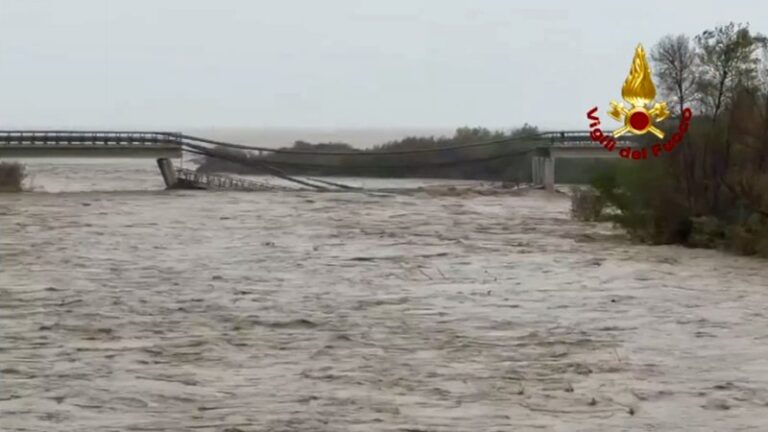
- The collapse of the bridge over the Trigno river along the Adriatic State Road 16, on the border between Abruzzo and Molise, severed one of the country’s main coastal arteries. Light and heavy traffic was diverted inland onto routes already weakened by severe weather and structurally unsuited to handle the volumes of a major national corridor. Road haulage operations faced delays and longer routes, with direct consequences for goods distribution across the affected regions.
- Landslides in Alto Molise and along State Road 157, together with flooding between Termoli and the Foggia area, compounded a situation of widespread isolation that also affected industrial activity. The Stellantis plant in Termoli was closed as a precaution due to critical local conditions and difficulties accessing the site.
On 2 April 2026, Italy’s Adriatic side found itself effectively split in two by a wave of severe weather that hit Abruzzo, Molise and Puglia with particular intensity, precisely during peak Easter travel flows. The combination of the Trigno bridge collapse on State Road 16 and the interruption of the railway line between Fossacesia and Porto di Vasto resulted in the simultaneous shutdown of the two main north-south transport infrastructures on the eastern side of the country, triggering cascading effects on the movement of people and goods and on the operations of businesses located in the area.
The event did not occur suddenly. Since the end of March, a low-pressure system over the central Mediterranean, fuelled by moist and unstable air, had been affecting southern and central regions with persistent rainfall. Between 31 March and 1 April, water levels in the Osento and Cervaro rivers - both minor watercourses with vulnerable catchment areas - had already exceeded alert thresholds, prompting the national and regional Protezione Civile (Civil Protection) to activate monitoring systems. A red alert had been issued for Abruzzo, Molise and Puglia. Overnight between 1 and 2 April, the storm intensified further, turning warnings into actual disruptions.
The first system to fail was the railway. Flooding from the Osento river submerged the tracks between Fossacesia and Porto di Vasto, covering both lines and making transit impossible. Rete Ferroviaria Italiana suspended traffic along the entire section, immediately warning that the disruption would not be quickly resolved due to high water levels and potential damage to infrastructure and engineering works. Trenitalia deployed replacement buses and strengthened assistance at stations, but the volume of Easter travellers made it extremely difficult to absorb the impact. Many passengers travelling to Puglia from Milan and northern Italy were stranded for hours at intermediate stations, with some trains forced to reverse and return to Pescara.
The disruption on the Adriatic line triggered knock-on effects across other parts of the network. On the Caserta-Foggia line, traffic was suspended near Bovino due to flooding of the Cervaro river, while on the Bari-Foggia route delays were recorded between Barletta and Foggia for the same reason. The overall result was the effective closure of rail access to Puglia along the Adriatic axis, precisely when inbound and outbound holiday traffic was at its peak.
By late morning on 2 April, the road situation deteriorated further with the collapse of the bridge over the Trigno river along State Road 16 on the Abruzzo-Molise border. The structural failure, caused by the force of the swollen river, cut off one of the busiest coastal routes in the country. Light and heavy vehicles were diverted inland onto provincial and secondary state roads already weakened by days of rainfall and structurally unfit to handle such volumes and loads. For haulage operators, this meant longer, slower routes with increased operational risks, directly affecting delivery times and regional supply chains.
Road disruptions extended beyond the Trigno collapse. In the early hours of 2 April, a landslide had already struck State Road 157 in Molise, near Civitacampomarano, forcing a complete closure and diversions. In Alto Molise, around Agnone and the Trigno area, landslides and ground subsidence along key access routes effectively isolated entire municipalities, with local authorities describing a territory "surrounded by landslides" and structurally vulnerable to intense rainfall events. Between Termoli and the Foggia area, flooded underpasses and urban sections imposed further constraints on local traffic, with Anas (Italian national road authority) engaged in emergency works and coordinating diversions with Civil Protection and local administrations.
The impact on the local economy and production logistics was immediate. The Stellantis plant in Termoli, one of the most important industrial hubs in central Adriatic Italy, was shut down as a precaution due to critical conditions and access difficulties. Road haulage operators, already managing peak holiday volumes, were forced to recalibrate routes and schedules in a territory where alternatives to State Road 16 and the Adriatic railway are limited and often unsuitable for heavy vehicles. The disruption along the Adriatic corridor created a national bottleneck, pushing part of the logistics flows onto Tyrrhenian and Apennine routes, with longer transit times and additional costs unlikely to be recovered in the short term.
The events of 2 April highlighted a structural fragility that goes beyond a single weather emergency. The Adriatic railway line, despite being a strategic national backbone, lacks effective parallel alternatives: a disruption such as the one between Fossacesia and Vasto effectively splits the country along the eastern axis, with no immediate rerouting options. Similarly, State Road 16 represents the only major coastal artery in that section, and even a partial failure - such as the collapse of the Trigno bridge - forces traffic onto secondary roads designed for entirely different volumes. The bridge collapse raises broader questions about the condition of infrastructure along the Adriatic corridor at a time when extreme weather events are becoming more frequent and intense, and when the resilience of transport infrastructure is a critical factor not only for passenger mobility but for the country’s entire logistics chain.
Antonio Illariuzzi