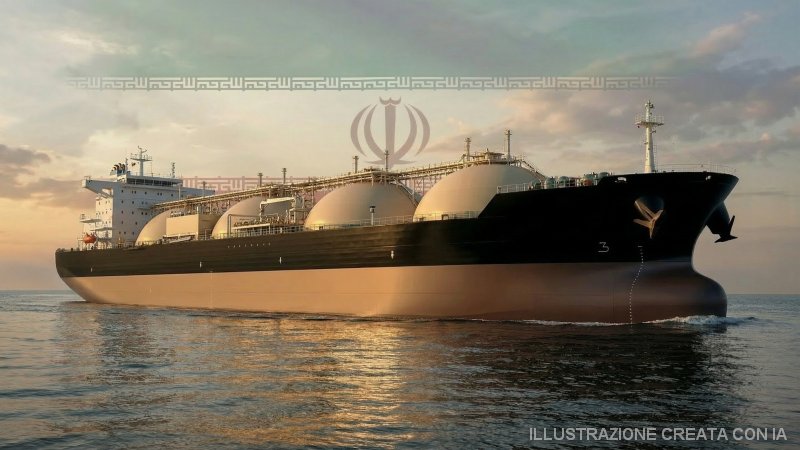




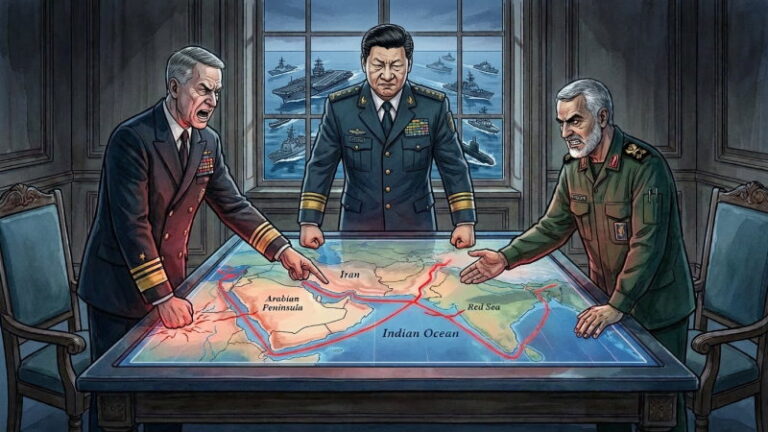
Following the failure of talks between Iran and the United States in Pakistan, each country involved is positioning itself for the next move. The most striking step comes from Washington and is due to take effect at 16:00 (Italian time) on 13 April 2026. The move was first announced by President Trump on his Truth social platform and then confirmed on 12 April by US Central Command, which stated: “United States Central Command forces will begin enforcing a blockade of all maritime traffic entering and exiting Iranian ports on April 13 at 10:00 ET, in accordance with the President’s proclamation. The blockade will be applied impartially to vessels of all nations entering or exiting Iranian ports and coastal areas, including all Iranian ports on the Arabian Gulf and the Gulf of Oman. Centcom forces will not impede freedom of navigation for vessels transiting the Strait of Hormuz to and from non-Iranian ports. Additional information will be provided to commercial mariners via an official notice prior to the commencement of the blockade. All mariners are advised to monitor Notice to Mariners broadcasts and to contact US naval forces on Channel 16 (bridge-to-bridge communication) when operating in the Gulf of Oman and in the approaches to the Strait of Hormuz.”
This amounts to a selective naval blockade, targeting only vessels whose origin or destination is an Iranian port, rather than all traffic through Hormuz. In the hours before it came into force, four tankers transited the area; according to the British source BBC Verify, none were linked to Iran or had departed from Iranian ports. Tehran responded in a statement carried by the Irma agency, in which Ebrahim Zolfaghari, spokesperson for the Khatam al-Anbiya headquarters, said that “the criminal restrictions imposed by the United States on the movement of ships in international waters are illegal and constitute an act of maritime piracy”. Zolfaghari warned that “the ports of the Persian Gulf and the Sea of Oman are for everyone or for no one” and that if the security of Iranian ports is threatened, “no port will be safe”. He also announced Iran’s intention to establish a permanent mechanism to control the Strait of Hormuz, likely involving the payment of a toll, even after the conflict ends.
The US measure is not limited to the Strait of Hormuz, raising the risk of both geographical and political escalation, as vessels could be intercepted on the high seas. A major issue concerns the nationality of cargo ships, or the destination of their cargoes, particularly in relation to China. Iran is known to facilitate the transit of Chinese vessels or those serving Chinese interests. There are no consolidated estimates of their number, but before the crisis around 45% of China’s oil imports passed through Hormuz. That share has since fallen sharply, though not to zero, and the traffic involved is not limited to tankers.
Beijing is not standing by and has so far responded in two ways. The first is direct, through unofficial but significant statements condemning the US measure. The second is indirect and resembles a chess move whose importance becomes clear only later. The day after Centcom’s announcement, on 13 April, China published with immediate effect the “Regulations of the People’s Republic of China on Countering Improper Foreign Extraterritorial Jurisdiction”. The aim is to authorise countermeasures against forms of extraterritorial jurisdiction deemed “improper” or “undue” by third states.
Such “improper” actions include those producing effects in China or harming the interests of Chinese entities. This is unlikely to be a coincidence, whether directly linked to the Centcom decision or more broadly to the Hormuz crisis. For now, there is no talk of escorting cargo vessels with Chinese naval units, as Russia is doing with shadow tankers, but the regulation provides a legal basis that could justify such a move in future.
In recent years, China has been implementing a programme to expand its navy from a coastal defence force into a blue-water fleet. It already includes aircraft carriers with embarked air wings, large multi-role destroyers, replenishment ships and amphibious assault units. This growth is supported by a network of bases and logistical footholds: a military base in Djibouti, access points in Pakistan (Gwadar), and prospects in Myanmar, Thailand, Indonesia and other countries along Belt and Road routes. However, organising a continuous escort service along the entire route between Iran and China remains difficult, primarily for logistical reasons. Such a mission would require the rotation of naval groups, forward replenishment, air cover and sustained intelligence in an area where the United States and its allies maintain bases and operational superiority. It would represent a significant leap in ambition, one that China is preparing for but has so far tested mainly in the Pacific and Indian Oceans, not in a theatre already saturated by US forces in a state of conflict. Even a one-off deployment with limited forces, however, would send a signal that other countries, including the US, could not ignore.
Michele Latorre