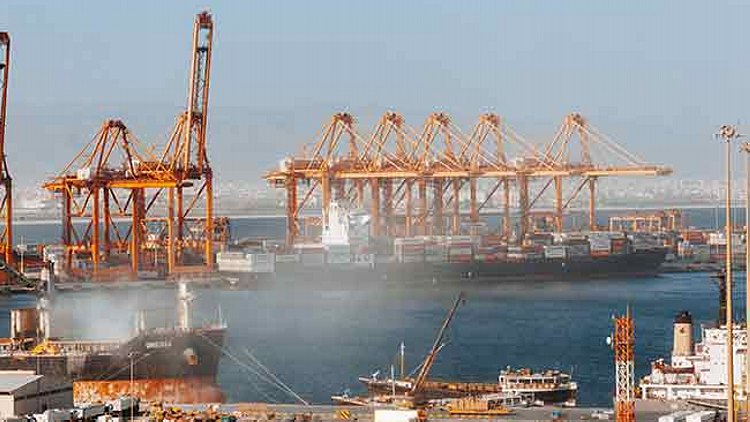




Within the space of a week at the end of March 2026, the Provincial Command of the Guardia di Finanza (Financial Police) of Reggio Calabria conducted three anti-drug operations in the port of Gioia Tauro and surrounding areas, seizing nearly 400 kg of pure cocaine divided into 309 packages. The activity, carried out with the support of the Agenzia delle Dogane (Customs Agency) and the aeronaval operational units, forms part of a plan to strengthen controls at Calabria’s main container hub. According to investigators, the drugs were destined for the Italian and European markets and would have generated around €60 million once distributed through trafficking networks.
The operations covered several areas within the port and its surroundings, following an extended control approach that reflects the evolving methods of drug trafficking. In the first operation, officers identified a suspicious shipment inside a container arriving from North America and bound for the Middle East, officially declared as timber cargo. The inspection, initiated on the basis of risk analysis and carried out using scanners and sniffer dogs, led to the discovery of part of the drugs hidden among legitimate goods.
A second line of investigation developed along the coastline adjacent to the port, where an attempt to recover and transfer the drugs by sea was intercepted. One individual was stopped and arrested while attempting to retrieve part of the shipment using a small boat. The incident highlights a subsequent operational phase following unloading, in which drugs are quickly moved away from the port area to reduce the risk of direct inspections and to fragment the logistics chain of trafficking.
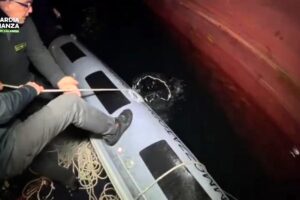
The third operation involved a vessel arriving from the American continent. In this case, the cocaine was recovered thanks to the intervention of divers from the aeronaval operational units of the Guardia di Finanza of Vibo Valentia and Palermo, who inspected the ship’s hull and identified a compartment concealed within the sea chests. Numerous packages of cocaine were hidden inside. Overall, the concealment methods — contaminated containers, technical compartments within ship structures and maritime transfers — point to a complex and adaptive logistics system. Traffickers are increasingly focusing on diversifying entry channels and reducing traceability, exploiting the high volume of commercial traffic handled by the port.
The operations are being coordinated by the Procura della Repubblica di Palmi (Public Prosecutor’s Office of Palmi), led by Chief Prosecutor Emanuele Crescenti. Case files have been submitted for the validation of the seizures and arrest, as well as for the continuation of investigations. Authorities are working to trace the entire supply chain, from the organisations involved in shipping to the final recipients, with particular attention to links between ‘ndrangheta-linked criminal groups and international networks connected to cartels in the Americas.