




Hapag-Lloyd looks to expand in India
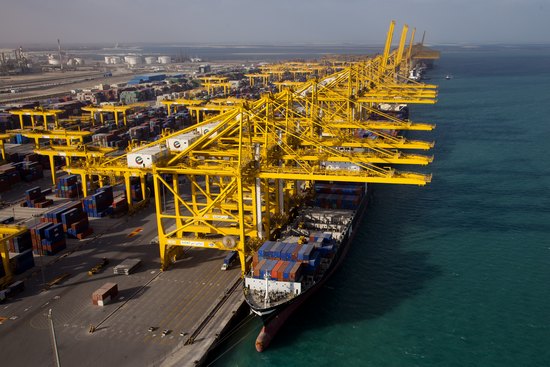
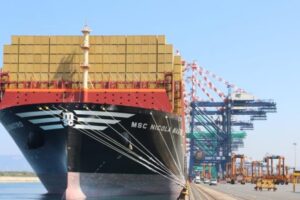
Hapag-Lloyd and the Government of India have signed three letters of intent to strengthen maritime cooperation and support the development of the country’s logistics and port sector. The agreement, signed in Mumbai between chief executive Rolf Habben Jansen and minister Sarbananda Sonowal, outlines areas of collaboration including vessel reflagging, sustainable ship recycling and the strategic development of the port of Vadhavan. In particular, Hapag-Lloyd will assess the possible reflagging of up to four vessels under the Indian flag, although no timeline or technical details have yet been defined. The agreement also includes the creation of a ship recycling value chain compliant with European standards, with a potential capacity of up to 100 vessels, in line with the EU Ship Recycling Regulation. On the infrastructure side, cooperation is planned with the Jawaharlal Nehru Port Authority (Jawaharlal Nehru Port Authority) for the development of the port of Vadhavan, considered a strategic node in the country’s maritime logistics network. According to Hapag-Lloyd, India represents a significant growth market in global trade and a long-term strategic partner. The company operates in the country with more than 2,800 employees, 17 offices and six dedicated maritime services, as well as a stake in J M Baxi Ports & Logistics, which handles around 3.2 million TEU annually. Under its Strategy 2030, Hapag-Lloyd aims to reach approximately 3 million TEU handled in India by 2030.
China’s new hydrogen plan
In March 2026, three Chinese ministries presented a new pilot programme for the large-scale application of hydrogen, aiming to move the sector from the demonstration phase to early commercial deployment through demand-side measures and city clusters. The plan sets a target of 100,000 fuel cell vehicles by 2030, up from around 40,000 units at the end of 2025, recovering from the missed 2025 target of 50,000 vehicles. The strategy also aims to reduce hydrogen prices to below 25 yuan/kg by 2030, and to around 15 yuan/kg in the most favourable areas, compared with an average of 26.7 yuan/kg in 2025. China reports 574 refuelling stations in operation, with a total capacity exceeding 360 tonnes per day as of the end of 2025. The operational model provides for five city clusters with a four-year duration and incentives of up to 1.6 billion yuan per cluster, allocated through a performance-based system. The “1+N+X” structure integrates heavy transport, industrial applications and innovative scenarios, with the aim of expanding use cases and reducing costs across the value chain. The plan forms part of the dual carbon strategy, although questions remain over the balance between green hydrogen and hydrogen derived from fossil sources. The official narrative presents hydrogen as a new engine of growth and an industrial lever, based on a cycle of expanding applications, falling costs and rising demand. However, the transition to a truly industrial scale will depend on the ability to make the entire value chain sustainable beyond public incentives.
Algeciras pushes for new rail terminal
Spain has launched the procedure for a new rail terminal in the Botafuegos area, aimed at strengthening access to the port of Algeciras and supporting freight traffic growth. According to the Ministry of Transport, the project has been open to public consultation since March 2026 and involves an estimated investment of around €62 million. The infrastructure will be connected to the Red Ferroviaria de Interés General (General Interest Railway Network) managed by Adif through a new link of approximately 3.6–3.7 km. The feasibility study examines two alternatives, both featuring five sidings for parking and shunting designed for long freight trains. The solution outside the port addresses the expansion limits of the current internal rail infrastructure, which is now saturated. The project is coordinated with other infrastructure works, including the future A-48 motorway, to integrate road and rail networks. The choice between design alternatives and the project timeline remain open, pending the environmental impact assessment and subsequent tendering phases.
Amazon acquires robotics manufacturer
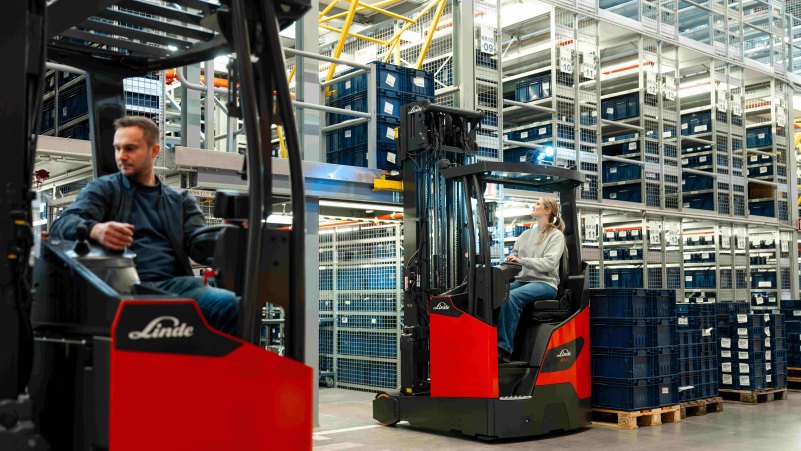
Amazon has acquired Swiss robotics company Rivr in a move to strengthen last-metre delivery capabilities, extending automation beyond its internal operations and closer to the final stage of distribution. According to Economic Times, the deal was completed earlier this week, although financial terms have not been disclosed. The news comes a few months after Amazon announced in October that it had surpassed one million robots deployed across its operational network. The move signals continuity in the group’s strategy to expand the use of robotics throughout the logistics chain, from warehousing to final delivery.
Railport Kędzierzyn-Koźle expands rail operations
Railport Kędzierzyn-Koźle, in southern Poland, is expanding its role in rail logistics for steel and metals within the Sławięcice Hub, in an area serving the German-Polish border and the industrial centres of Silesia. The site has access to the DB Cargo Spedkol rail siding, with a total length of around 50 kilometres, as well as a truck weighbridge. The connection via the Sławięcice line integrates the terminal into the international network and enables combined road-rail transport with continuous process management. One of the main activities involves steel coils from various European steel plants, transported on the regular Schlesien train from the German-Polish border to the Kędzierzyn-Koźle railport. Upon arrival, the coils are unloaded and stored in covered warehouses, where current stock stands at around 2,500 tonnes. Upon receipt of orders, the railport organises truck loading and distribution to final recipients, coordinating both transport and warehousing operations on site. The portfolio also includes copper coils, delivered by road and held in temporary storage until transport orders are activated by customers. The facility also handles flat sheets and profiles, received by truck, stored in covered areas and then distributed by road to end users. The railport is connected to the TEN-T network via the Sławięcice line and has regular links to Silesia and to southern and western Europe via DB Cargo freight trains.
Bracchi logistics hub in Cittadella
Bracchi has launched a new logistics hub in Cittadella, in the province of Padua, with a covered area of 84,000 sq m, one of the largest in Italy, serving the lifestyle, e-commerce and manufacturing sectors. The facility is designed to ensure multi-sector flexibility and the handling of high volumes. It features 82 loading bays, a clear height of 12 metres, more than 100 parking spaces and 65 spaces for industrial vehicles, supporting intensive flows and fast operations. Its location along the Mediterranean and Baltic-Adriatic corridors provides direct access to the main logistics hubs in northern Italy. Connectivity is further enhanced by the Pedemontana Veneta, improving integration with the regional infrastructure network. The hub has also been designed with environmental sustainability criteria. It includes a photovoltaic system to support energy consumption and has achieved BREEAM Excellent certification.