





Cautious return of ships to Suez
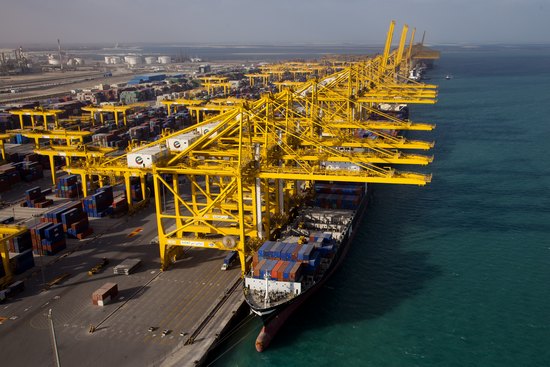
Container services are gradually returning to the Red Sea and transiting through Suez, but the recovery remains partial and dependent on the security situation. Updates from Maersk and analysis by Kuehne+Nagel indicate that only some key services have resumed, while the market is not yet pricing in a full normalisation. In detail, at the end of 2025 Maersk launched trial transits with Maersk Sebarok and Maersk Denver to test escorted passages in a still-risky environment. In mid-January 2026, the first structured return via Suez was announced with the MECL service, starting with the Cornelia Maersk 603W and Maersk Detroit 602E rotations. By the end of January 2026, CMA CGM had reactivated its Indamex service via Suez, with a gradual return beginning in the eastbound direction. In early February 2026, Maersk and Hapag-Lloyd, within the Gemini Cooperation, reinstated the ME11 service in the Red Sea, with regular transits from mid-February. In March 2026, CMA CGM resumed Suez transits for the Phoex BEX2 service after a 10-day suspension. The return is driven by improved fleet efficiency and shorter transit times, with Maersk indicating it could reduce the number of vessels deployed on the MECL service from 14 to 12, thereby freeing up capacity. However, resumptions remain selective and often limited to specific directions, while other services continue to route via the Cape of Good Hope, according to Xeneta. Security conditions in the Bab el-Mandeb and the availability of naval escorts remain critical operational requirements, making these decisions reversible.
DSV sells assets in Sweden
DSV has completed a sale-and-leaseback transaction in Sweden, selling six logistics assets to Logistea for SEK 587 million (approximately $63 million), while retaining their use through ten-year triple net lease agreements. The deal covers five properties and one land-use right held by DSV Road AB, all fully leased and totalling around 41,500 square metres. The assets are located in regional cities including Karlstad, Gävle, Skara, Växjö, Östersund and Halmstad, and function as cross-docking terminals within the national network. The facilities were designed to meet the tenant’s operational requirements and include temperature-controlled spaces for sensitive goods. The triple net structure transfers most operating costs to DSV, ensuring stable cash flows for the real estate investor. Closing is expected by 30 March 2026, with part of the transaction subject to approval by the Inspectorate for Strategic Products. The deal forms part of a broader strategy launched in 2025, when DSV sold four assets to Swedish Logistic Property. These transactions reflect an asset-light model aimed at freeing up capital and supporting investment in core logistics operations. Converting property into operating costs provides greater flexibility in network management and integration. For Logistea, the acquisition strengthens a portfolio characterised by long-term leases with solid tenants and a presence in strategic local markets. No short-term operational impact is expected, although network rationalisation linked to group strategy remains possible in the medium term.
Delay rumours for Rail Baltica
The Rail Baltica railway risks missing the 2030 deadline set by the European Commission, and according to the Financial Times, completion of the line could be pushed back to 2040. The issue was raised by Poland’s Deputy Infrastructure Minister Piotr Malepszak, who described the 2030 target as unrealistic and suggested upgrading the existing network as a possible alternative to building a new line from scratch. According to Rail Baltica, 43% of the project was ready for construction by the end of 2025, but achieving full completion within five years is described as not credible. Costs have also weighed on the timeline, rising from €5.8 billion to nearly €24 billion, alongside funding shortages and the technical requirements imposed by the European Union (EU). The project remains strategically important for rail freight, as the new line represents a historic opportunity to reshape the logistics framework of the Baltic states, which have traditionally been linked to Russia in both commercial and infrastructure terms. The challenges are not limited to Poland: as early as 2025, Estonian MP Andris Kulbergs, chairman of the Rail Baltica committee, suggested a possible delay to 2035, particularly concerning the Latvian section. Latvia is considered the most problematic segment, both in terms of securing funding and due to scaling back already imposed on the project.
Ukraine seizes Russian wagons
From 10 March 2026, 1,592 Russian freight wagons seized by Ukraine have become part of the Ukrainian Railways fleet, according to Deputy Prime Minister Yulia Svyrydenko. The decision concerns rolling stock deemed operational and usable until the end of its technical life for freight transport, including defence-related needs. The value of the confiscated wagons is estimated at €43.3 million. They belonged to Russian companies and individuals subject to sanctions, including VEB-Leasing, JSC State Transport Leasing Company and JSC Nord, as well as other firms active in finance and logistics. The measure forms part of the broader management of assets seized since the start of the Russian invasion, during which the Ukrainian government has taken control of a significant number of Russian rail wagons.
Mezzago Park nears capacity
Mileway has announced the completion of two new lease agreements at Mezzago Park in Lombardy, covering a total of around 9,000 square metres. Over the past 12 months, approximately 31,000 square metres have been leased or renegotiated at the site, bringing the park close to full occupancy. The new tenants operate in the production of industrial safety systems and in the pre-treatment of threaded joints, reinforcing the site’s positioning as a hub for light industrial and advanced logistics activities supporting northern Italy’s manufacturing sector. The complex is located in Mezzago, around 15 km from Monza and 30 km from Milan, with direct access to the A4 Turin–Trieste motorway. The leased units feature high clear heights, multiple ground-level loading doors and ample manoeuvring space for commercial vehicles. Additional space of around 1,800 and 2,300 square metres remains available to support future expansion needs in the area. Michele Lodigiani, Country Director Italy at Mileway, said demand for high-quality last-mile space with strong infrastructure connections remains robust. Mileway was advised on the two transactions by Gianluca Frigerio of Immobiliare Frigerio.