


Array ( [0] => 8 [1] => 39 )

Podcast K44

Cronaca

  • 17 camionisti arrestati a Savona per furto di gasolio

    17 camionisti arrestati a Savona per furto di gasolio

    Un’indagine della Guardia di Finanza nel deposito fiscale carburanti di Vado Ligure ha coinvolto diciassette autotrasportatori, col sequestro di oltre 3.700 litri di gasolio. Il prodotto veniva sottratto durante il carico e rivenduto fuori circuito a prezzi inferiori.

Normativa

Mare

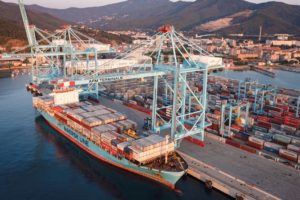
  • Si è svolto lo sciopero nel porto di Savona del 2 aprile

    Si è svolto lo sciopero nel porto di Savona del 2 aprile

    Il 2 aprile 2026 si è svolto lo sciopero di 24 ore indetto da Filt Cgil e Uiltrasporti, che hanno avviato una vertenza imperniata sull’applicazione del part-time nel terminal container Vado Gateway. Non vi sono novità nella trattativa.

Autotrasporto

  • Come la Spagna protegge l’autotrasporto dal caro gasolio

    Come la Spagna protegge l’autotrasporto dal caro gasolio

    Come il Governo di Madrid protegge il trasporto: obbligatoria la revisione automatica dei prezzi in funzione del costo del carburante, alza il peso del gasolio nella formula dal 30 al 40 percento e introduce obblighi di trasparenza in fattura. Il tutto dentro un pacchetto da cinque miliardi di euro pensato …

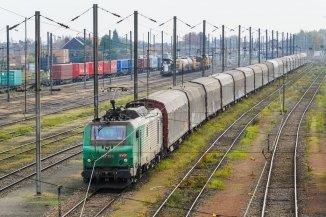
    The rolling motorway between Spain and Portugal gets under way

    Foto: Tramesa
    • The first rolling motorway connection between Valencia and Entroncamento entered service on the night between 25 and 26 January 2026, extending across the border the Valencia–Madrid service launched in 2024 and marking the operational start of an Iberian rail backbone for semi-trailer transport.
    • The service uses T4000 wagons compatible with Iberian gauge and P400 semi-trailers, enabling the direct rail transport of high-volume road units without transhipment, with an initial frequency of two trains per week and a gradual approach to capacity management.
    • The project forms part of the Atlantic–Mediterranean Corridor of the TEN-T network and is supported by public and private investment in infrastructure and rolling stock, with the aim of reducing reliance on road haulage and encouraging modal shift between the Mediterranean and the Atlantic.

    On the night between 25 and 26 January 2026, the first direct combined road–rail freight connection between Spain and Portugal on Iberian gauge set off, with a freight train linking the port area of Valencia to the Entroncamento intermodal terminal. The service is operated by Tramesa, with traction provided by Medway, the railway company of the MSC Group. The inaugural run employed 13 T4000 wagons and carried 26 semi-trailers over a route of around 810 kilometres without intermediate stops, with an initial planned frequency of two trains per week.

    This launch completes the first cross-border extension of the Valencian rolling motorway, following the Valencia–Madrid connection, which entered service in July 2024 and was progressively consolidated over the same year through increased frequencies. The objective is to create a rail backbone for semi-trailer transport linking the Iberian Mediterranean with the Portuguese Atlantic, fitting into the Atlantic–Mediterranean Corridor of the TEN-T network, a strategic infrastructure scheduled for completion by 2031.

    The Valencia–Entroncamento link is part of a corridor designed to connect import and export flows from the port of Valencia and the Spanish hinterland with the Portuguese logistics hub of Entroncamento, an intermodal hub covering 22 hectares with a capacity of 7,000 TEU. The operational logic is to reduce the use of long-distance road transport, leaving trucks to handle the first and last mile, in line with a model already tested on the Valencia–Madrid route. That service has been sized to handle up to around 10,000 trucks per year, with an estimated reduction in emissions of 16,000 tonnes of carbon dioxide annually and avoided external costs valued at €7 million per year.

    The most significant point of discontinuity in the service towards Portugal is technical in nature. For decades, the Iberian gauge of 1,668 millimetres represented a structural constraint on the development of rail intermodality on the peninsula, requiring transhipment operations or axle changes at borders. In this case, the solution adopted does not involve breaks in load, but rather the use of specialised wagons compatible with Iberian gauge and with semi-trailers designed for combined transport. The Sdggmrss T4000 wagons are articulated low-pocket wagons measuring 34.2 metres in length, with a tare weight of 36 tonnes and a load capacity of up to 99 tonnes depending on configuration. They are designed to accommodate P400 profile semi-trailers, allowing the transport of units up to four metres high from the wagon deck and making the service suitable for the main flows of high-volume curtain-sided semi-trailers.

    The composition of the inaugural train reflects a cautious start-up strategy. The 13 wagons and 26 semi-trailers represent a reduced configuration compared with the standard indicated for the Valencia–Madrid route, where trains of 20 wagons and 40 semi-trailers operate. This choice reflects operational testing considerations and cargo availability, with the use of wagons previously laid up at Jundiz. The overall train length, at around 444 metres, falls within the operational limits of the conventional Iberian network and directly affects routing options and crossing with passenger traffic.

    The origins of the service lie in planning launched in 2023. In June of that year, Tramesa declared its aim to extend the rail motorway towards Portugal, while in the same period a cooperation protocol with Infraestruturas de Portugal was referenced. In July 2023, Medway signed a three-year traction contract for the Valencia–Madrid route, with an option for geographical extension. In March 2024, the first wagons arrived and the facilities at the port terminal of Valencia were completed, including the installation of the crane at Dique del Este.

    On 29 June 2024, the first test train ran between Abroñigal and Valencia, while on 22 July 2024 the commercial service began with a weekly frequency in each direction. In the fourth quarter of the same year, after the running-in phase, the Valencia–Madrid route was strengthened to four bidirectional weekly frequencies, with an estimated throughput of around 304 trucks per week. In 2025, the operators announced the imminent launch of the connection with Portugal and carried out operational simulations along the Madrid–Badajoz corridor, also in relation to the new Medway terminals in Extremadura.

    A.I.

    © TrasportoEuropa - Riproduzione riservata - Foto di repertorio
    Segnalazioni, informazioni, comunicati, nonché rettifiche o precisazioni sugli articoli pubblicati vanno inviate a: redazione@trasportoeuropa.it


      Puoi commentare questo articolo nella pagina Facebook di TrasportoEuropa

      bottone newsletter piccolo Vuoi rimanere aggiornato sulle ultime novità sul trasporto e la logistica e non perderti neanche una notizia di TrasportoEuropa? Iscriviti alla nostra Newsletter con l'elenco ed i link di tutti gli articoli pubblicati nei giorni precedenti l'invio. Gratuita e NO SPAM!



    CONTENUTI SPONSORIZZATI


Videocast K44

Aereo

  • Belly cargo nella trappola della guerra del Golfo

    Belly cargo nella trappola della guerra del Golfo

    La terza guerra del Golfo ha colpito anche il traffico belly, che rappresenta una parte consistente del trasporto aereo delle merci tra Europa e Asia. Le limitazioni negli aeroporti della penisola araba hanno drasticamente ridotto la capacità, fino al 40%.

Ferrovia

  • Partito primo treno InRail da Pordenone

    Partito primo treno InRail da Pordenone

    Il 2 aprile 2026 è partito il primo treno InRail dall’Interporto di Pordenone, diretto a Cuneo e sono state inaugurate opere per sei milioni di euro. Gestione ponte del terminal dopo l’uscita di Hupac e percorso verso una società mista pubblico-privata per consolidare il ruolo nello scenario del Nord-Est.

Persone

  • Torello perde il fondatore Nicola

    Torello perde il fondatore Nicola

    La mattina del 5 marzo 2026, la società di trasporto campana Torello ha annunciato la morte del fondatore Nicola Torello. Ha trasformato un’impresa individuale in una multinazionale europea.
Still automatizza carico e scarico dei camion

TECNICA

Still automatizza carico e scarico dei camion
Amazon vuole portare i robot dal magazzino alla porta di casa

TECNICA

Amazon vuole portare i robot dal magazzino alla porta di casa
Linde MH presenta i carrelli retrattili Ri al LogiMat

TECNICA

Linde MH presenta i carrelli retrattili Ri al LogiMat
Schmitz rinnova la vasca leggera

TECNICA

Schmitz rinnova la vasca leggera
Kögel presenta in Italia un semirimorchio per container leggero

TECNICA

Kögel presenta in Italia un semirimorchio per container leggero
previous arrow
next arrow
Il tribunale liquida filiale francese di Ziegler

LOGISTICA

Il tribunale liquida filiale francese di Ziegler
La Cina avvia produzione industriale di robot umanoidi

LOGISTICA

La Cina avvia produzione industriale di robot umanoidi
Come funziona la nuova consegna ultrarapida di Amazon

LOGISTICA

Come funziona la nuova consegna ultrarapida di Amazon
Toyota entra nell’alleanza dell’idrogeno per i camion

LOGISTICA

Toyota entra nell’alleanza dell’idrogeno per i camion
Il Governo rinvia a luglio 2026 la tassa sui pacchi esteri

LOGISTICA

Il Governo rinvia a luglio 2026 la tassa sui pacchi esteri
previous arrow
next arrow
Il taglio delle accise è prorogato fino al primo maggio

ENERGIE

Il taglio delle accise è prorogato fino al primo maggio
Petrolio sopra 110 dollari al barile dopo dichiarazioni di Trump

ENERGIE

Petrolio sopra 110 dollari al barile dopo dichiarazioni di Trump
Scoperti a Fiumicino i vampiri del carburante per aerei

ENERGIE

Scoperti a Fiumicino i vampiri del carburante per aerei
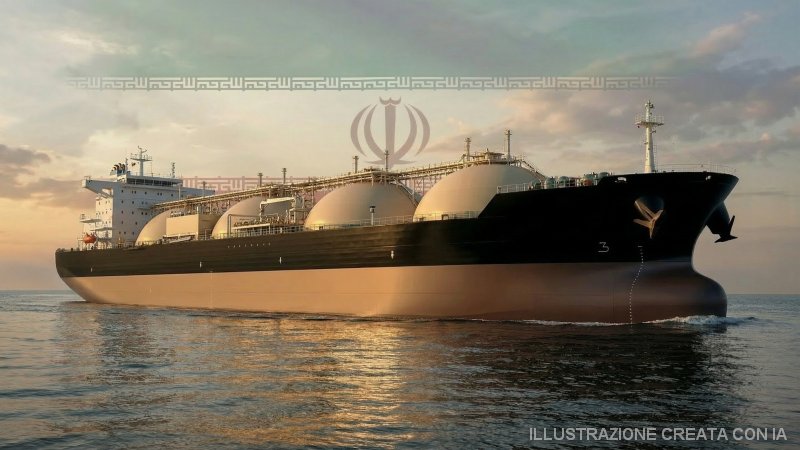
Le condizioni dell’Iran per il transito delle navi a Hormuz

ENERGIE

Le condizioni dell’Iran per il transito delle navi a Hormuz
Il petrolio raggiunge i 116 dollari e rischio forniture Gnl

ENERGIE

Il petrolio raggiunge i 116 dollari e rischio forniture Gnl
previous arrow
next arrow
Trans.eu cresce in Italia con la borsa carichi relazionale

SERVIZI

Trans.eu cresce in Italia con la borsa carichi relazionale
L’evoluzione della borsa carichi autotrasporto è relazionale

SERVIZI

L’evoluzione della borsa carichi autotrasporto è relazionale
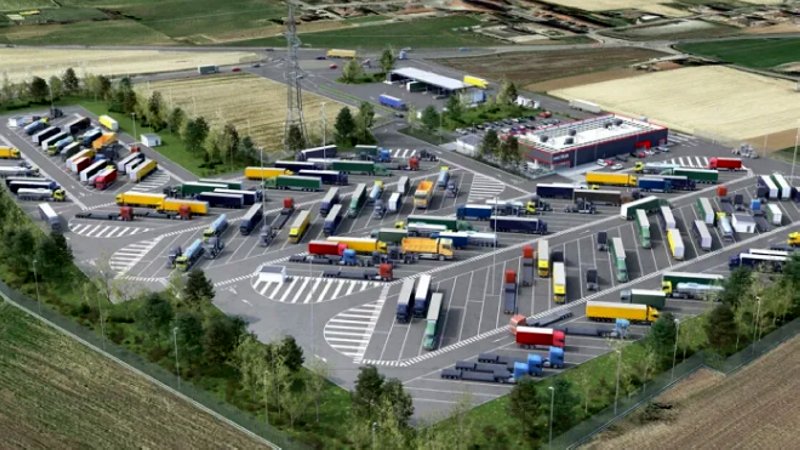
Padrosa realizzerà un parcheggio per camion ad Alessandria

SERVIZI

Padrosa realizzerà un parcheggio per camion ad Alessandria
Leviahub e Pionira accelerano sull’adozione dell’eCmr

SERVIZI

Leviahub e Pionira accelerano sull’adozione dell’eCmr
Trans.eu avvia il pagamento sicuro per l’autotrasporto europeo

SERVIZI

Trans.eu avvia il pagamento sicuro per l’autotrasporto europeo
Sanilog rinnova nel 2026 il piano sanitario per lavoratori della logistica

SERVIZI

Sanilog rinnova nel 2026 il piano sanitario per lavoratori della logistica
L’IA si sta sempre più integrando nel trasporto

SERVIZI

L’IA si sta sempre più integrando nel trasporto
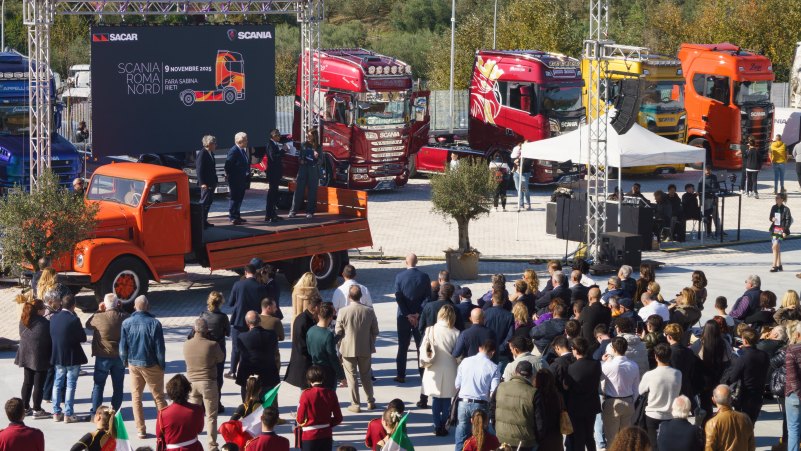
Scania amplia la rete di assistenza nel Lazio

SERVIZI

Scania amplia la rete di assistenza nel Lazio
Nuovi contributi per cibersicurezza alle Pmi e autonomi

SERVIZI

Nuovi contributi per cibersicurezza alle Pmi e autonomi
Dkv Mobility presenta un nuovo software per gestione trasporti

SERVIZI

Dkv Mobility presenta un nuovo software per gestione trasporti
Forto nomina Matteo Caiti Country Manager Italia

SERVIZI

Forto nomina Matteo Caiti Country Manager Italia
Nuove tecnologie Geotab per il trasporto refrigerato

SERVIZI

Nuove tecnologie Geotab per il trasporto refrigerato
Sanzione antitrust di 5 milioni sul noleggio veicoli per Ald

SERVIZI

Sanzione antitrust di 5 milioni sul noleggio veicoli per Ald
Circle Group potenzia software per porti e interporti

SERVIZI

Circle Group potenzia software per porti e interporti
Scania realizza una struttura per i camion a Milano

SERVIZI

Scania realizza una struttura per i camion a Milano
previous arrow
next arrow