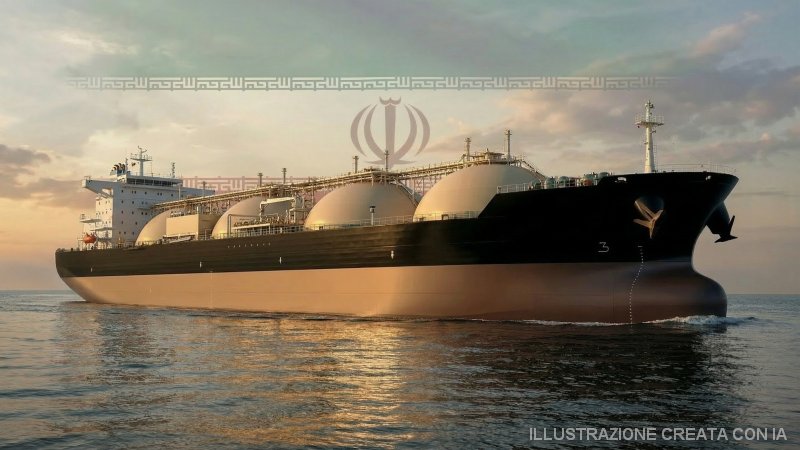







- The Arctic Metagaz is a Russian LNG carrier around 277 metres long, part of the so-called shadow fleet, and was struck in the central Mediterranean in early March 2026. After the crew was evacuated, the vessel was left without command, carrying up to 60,000 tonnes of LNG and hundreds of tonnes of fuel.
- The wreck has drifted for weeks across waters between Malta, Lampedusa, Linosa and then into the Libyan SAR zone. An initial attempt to tow it towards the Libyan coast failed when the towline snapped just a few miles from shore.
- The case illustrates problems that go well beyond a single incident. Sanctions, opaque ownership, the absence of an operational shipowner and fragmentation between coastal states, the EU and international bodies have slowed efforts to secure the vessel, while a double risk remains: fire or thermal explosion and hydrocarbon spillage.
The Arctic Metagaz is still adrift in the central Mediterranean more than a month after the incident that turned it into an unmanned, commandless wreck. As of 8 April 2026, the Russian LNG carrier is located northwest of Benghazi, within the Libyan SAR zone, monitored at a distance by vessels but not under stable tow towards a port of refuge. The ship, approximately 277 metres long, is designed to carry up to 60,000 tonnes of liquefied natural gas and is believed to still have several hundred tonnes of heavy fuel on board, estimated by various sources at between 450 and 900 tonnes in total. This makes the situation simultaneously a maritime safety emergency, an environmental threat and a political issue at the heart of the Mediterranean.
According to a Greenreport report dated 6 April and other reconstructions, the vessel has been located between 70 and 90 nautical miles off the Libyan coast, in relatively calm sea conditions due to a high-pressure system. It now appears as a ghost ship still moving off Cyrenaica, while some sources point to the tug Maridive 701 among the vessels shadowing it, without managing to bring it under stable control. At present, there is no public operational plan outlining timelines, destination port or cargo offloading procedures.
The origins of the crisis date back to between 3 and 5 March 2026, when the Arctic Metagaz was struck in the central Mediterranean, in an area between Malta and Sicily about 160–170 nautical miles southeast of Malta. Several analysts converge on the hypothesis of a drone attack, both aerial and surface, within the framework of a hybrid war that has gradually extended confrontation over Russian energy routes into the Mediterranean. Ukraine has not officially claimed responsibility, but Russian sources and various commentators link the incident to other Ukrainian operations targeting Moscow’s energy infrastructure and trade.
The attack reportedly caused explosions, a major fire and structural damage severe enough to render the vessel inoperable. The crew, around 30 people according to RSI, were evacuated and rescued. From that moment, the Arctic Metagaz lost all navigational control and effectively became a drifting wreck. Images released in early April by eastern Libyan naval forces show torn hull plating, widespread burn marks, a pronounced list and deformations in deck structures. These elements point not only to functional damage but also structural degradation, with growing risk if the vessel remains at sea.
The issue extends beyond the physical condition of the ship. Several sources believe the Arctic Metagaz belongs to the so-called Russian shadow fleet, a group of vessels used to transport crude oil, refined products and gas while circumventing sanctions and trade restrictions. The ship appears on EU and US sanctions lists, complicating intervention by EU states and Western companies. Meanwhile, the shipowner and flag state, Russia, have effectively abandoned the wreck following the crew’s evacuation, without taking a direct role in securing it. The result is a particularly critical combination: a sanctioned vessel, opaque ownership, no operational responsible party and hazardous cargo still on board.
The route followed by the LNG carrier in the weeks after the incident highlights the cost of this paralysis. In the days immediately following the crew’s evacuation, the ship drifted between Lampedusa, Linosa and waters west of Malta, one of the most sensitive corridors in the Strait of Sicily in terms of both biodiversity and maritime traffic. For nearly two weeks, no structured salvage operation was organised. Notices to mariners and monitoring activities were issued, but no coastal state assumed full coordination.
At this stage, the first signs emerged of the leadership and coordination gap that has marked the entire case. Italy and Malta were initially involved for geographical and SAR competence reasons, but the transition from one area of responsibility to another led to decision-making delays. At least nine member states, according to Ageei, called for EU-level coordination on the environmental threat. The EU was therefore drawn in, but no single operational command emerged from Brussels. International bodies, from IMO to REMPEC and UNEP-MAP, maintained a technical and supportive role, offering recommendations and assistance without taking charge of the emergency.
A formal turning point came when the wreck entered the Libyan SAR zone. Between 19 and 24 March, the National Oil Corporation (NOC) announced that it had taken operational control of the case. NOC stated that it had activated a permanent emergency structure, engaged an international salvage company and decided to tow the vessel to a Libyan port deemed suitable for handling such hazardous cargo. However, the name of the port was not disclosed, and no public details were provided on how the cargo would be offloaded, tanks cooled, fuel isolated or berthing managed safely.
The first towing attempt, launched between late March and early April, ended unsuccessfully. The tow brought the vessel to within about four miles of the Libyan coast, but the line snapped and the Arctic Metagaz drifted back out to sea. NOC attributed the failure to difficult sea conditions, while other sources point to the broader technical complexity: managing a large, damaged LNG carrier without crew, carrying cryogenic cargo and fuel, within an already compromised legal and geopolitical framework.
From that point, the vessel resumed drifting east and northeast, eventually reaching the area northwest of Benghazi. The past month of drift shows how a maritime incident has progressively become a case study of the tensions shaping today’s Mediterranean. The Russian shadow fleet, energy conflict, weak regional cooperation, overlap between maritime law and sanctions regimes, and the absence of clearly exercised responsibility are all concentrated in a single vessel still moving without effective control.
There are now two major environmental risks. On one side is LNG, which in the event of rapid release can evaporate and form a cold gas cloud with potential for fire and thermal explosion. On the other are the vessel’s heavy fuels, which in the event of hull failure or grounding could cause a persistent spill affecting waters, sediments and coastlines. The most immediate threat is therefore the combination of structural damage, potential fire and fuel dispersion. LNG, if involved in a new fire, could intensify a high-temperature scenario, while fuels could act both as an ignition source and sustaining combustion, complicating the cooling of cryogenic tanks. At the same time, unlike gas, which tends to disperse quickly, fuel oil and diesel would have slower and more persistent environmental impacts.
The environmental context further aggravates the situation. The central Mediterranean is a semi-enclosed sea, with slow water exchange and a high concentration of biodiversity and economic activity. A major incident would have consequences extending far beyond the immediate stretch of coast affected by any grounding or port entry. Food chains, fisheries and coastal sectors across several countries could suffer long-term impacts. The case is also significant for maritime transport and energy logistics: the presence of a large, uncontrolled vessel in an area marked by dense traffic, subsea cables, trade routes and energy infrastructure adds operational instability to an already fragile basin.
At an institutional level, the case reveals a deeper issue than the emergency itself. It is not simply a delayed response, but the absence of a framework clearly defining who should intervene when a sanctioned vessel with opaque ownership is struck in a conflict context and then abandoned by its owner. In this case, IMO conventions, the law of the sea, SAR responsibilities, sanctions regimes and national jurisdictions overlap. Each layer provides part of the answer, but none appears sufficient on its own to establish a rapid and fully legitimate chain of command.
This regulatory uncertainty translates into operational weakness. The technical means for intervention, from ocean towing to specialised salvage teams, do exist in principle. What is missing is the political convergence needed to deploy them within a timeframe compatible with the risk. Libya stepped in when the vessel entered its SAR area but found itself handling a case requiring advanced technical capacity, insurance coverage and high-level international cooperation, which it cannot fully sustain. The European Union, meanwhile, has remained in the background despite being directly exposed to the environmental and safety consequences of the vessel’s initial drift in the Strait of Sicily.
The Arctic Metagaz case thus exposes a structural tension for the maritime sector. The growth of opaque and poorly insured fleets is reshaping the risk profile of the entire Mediterranean basin. It is no longer just a matter of verifying cargo origin or compliance with sanctions regimes, but of determining who pays, who decides and who intervenes when a large vessel loses control in a sensitive area.
M.L.