





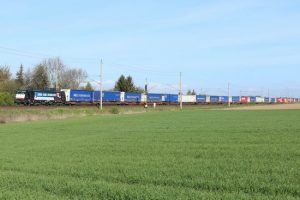
Tensions at the Polish-German border remain high, although Warsaw’s checks have proven less effective and less consistent than anticipated by Prime Minister Tusk. Polish authorities had announced the introduction of strict measures against illegal immigration starting from 7 July 2025, and a seven-kilometre queue that quickly formed on the A12 at the Swiecko crossing, 150 kilometres west of Poznan, in the early hours of the new rules hinted at severe delays for transiting vehicles and serious repercussions for freight transport.
The traffic jam lasted into the night, but in the following days the situation returned to normal and no further issues or delays were reported, seemingly due to an unofficial suspension of checks. This move triggered outrage from opposition parties. Several videos have gone viral online allegedly showing the absence of checks by Polish authorities, and Tusk’s government has come under intense criticism in recent days, accused of favouring German interests at the expense of national ones.
The discontent culminated in widespread protests in over 80 Polish cities, with large demonstrations reported on Saturday the 19th and Sunday the 20th across the country. Some groups of volunteers, backed by opposition parties, have also set up watchpoints at border crossings to monitor the work of authorities and disseminate footage of alleged irregularities in the checks, which were supposed to remain in place until 5 August according to the government.
German media, too, have in recent days highlighted how the impact of the Polish checks has fallen short of expectations. The weekly Wirtschaftswoche confirmed that the situation calmed down after a troubled first day. “We hardly even notice the border checks,” a spokesperson for Alstom, the rail vehicle manufacturer with plants near one of the southern crossings, told the publication.
Meanwhile, on the German side of the border, local authorities have also come under fire as they continue with their anti-migration policy. Last weekend saw a protest in the border town of Frankfurt an der Oder organised by the Volt party. The event drew around 400 participants, calling for an immediate end to all checks and a full restoration of freedom of movement within the EU. Criticism has also come from the governments of the federal states of Rhineland-Palatinate and Saarland, who are loudly demanding the lifting of restrictions to prevent major harm to the logistics sector.
Germany, however, is not the only focal point in the broader landscape of illegal immigration controls. Poland had also announced new measures at its border with Lithuania, though here too the disruption has so far been limited. No major congestion was reported during the first ten days of the new border regime, and the queue observed on 18 July between Kalvarija and Budzisko appears to have been an isolated incident unrelated to the recently implemented checks.
On the Belarusian front, by contrast, Poland is once again facing a new wave of migratory flows. After several months of relative calm, tensions are rising again, and it cannot be ruled out that this latest escalation may be part of a broader attempt by Putin to further destabilise political balance within the European Union.
Marco Martinelli