









On 25 June 2025, the Swiss Federal Council approved the underground freight transport project (Sug) as part of the Federal Transport Sectoral Plan. This marks a pivotal step towards the implementation of Cargo Sous Terrain (CST), a fully automated underground tunnel network, following years of studies, consultations and regulatory procedures. The project, spearheaded by the CST company and backed by a broad consortium of Swiss firms, envisions the creation of a subterranean logistics network stretching approximately 490 kilometres.
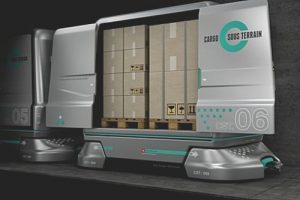
The infrastructure will link the main centres of the Swiss Plateau, from Geneva to St Gallen, passing through Basel, Lucerne, Zurich, Bern and Thun. The network will be traversed by electric autonomous vehicles carrying standardised containers at a speed of 30 km per hour, with operations running twenty-four hours a day, six days a week. Goods will move in an environment entirely separate from surface traffic, offering a stable, efficient and sustainable alternative to road and rail freight.
The initial construction phase involves a 70-kilometre pilot section between Härkingen and Zurich. This first segment, with an estimated cost of 3.4 billion Swiss francs (around 3.6 billion euros), is expected to become operational by the end of 2031. Subsequent phases will extend the national network by 2045, with a total investment projected at 30 billion francs (approximately 32 billion euros). Each section will be implemented progressively, allowing for testing and refinement of the system before expansion.
The tunnels will have a diameter of about 8 metres and will be built at depths ranging from 30 to 80 metres, depending on the terrain. Inside, there will be three lanes: two for traffic in opposite directions and a central one reserved for maintenance, storage and sorting operations. Transport will be managed by self-driving vehicles powered by induction propulsion, ensuring service reliability and continuity.
Transshipment stations will play a crucial role as the access points to the underground system. Located in existing industrial or logistics areas with good connectivity, these facilities will enable integration between the CST network and existing transport modes, including road, rail and air. Loading and unloading will be entirely automated, carried out via vertical shafts equipped with lifts.
The entire system is designed to operate on renewable energy and produce zero direct emissions. Estimates suggest it could reduce road freight traffic by up to 40 percent, easing the burden on surface infrastructure and improving air quality in urban areas. In addition to cutting emissions and noise, excavated material is to be repurposed for construction, in line with circular economy principles. Transshipment stations will be situated within already urbanised areas, limiting land consumption and adhering to federal regulations on agricultural land use.
The adoption of the Sug Sectoral Plan not only provides a regulatory framework but also establishes a multi-level governance model to ensure institutional coordination. The Confederation retains responsibility for the overall approval and high-level planning of the project. The cantons will be in charge of defining specific routes in their regional master plans, determining the location of hubs based on local characteristics. Municipalities will be responsible for issuing permits and coordinating at local level. Technical design, financing and implementation of the system remain under the remit of CST, which will operate entirely with private capital. This approach reduces the financial burden on public budgets and ensures that costs are borne directly by the economic operators who will benefit from the system.
The Sectoral Plan was developed in close coordination with other components of the Federal Transport Plan, particularly the sections dedicated to rail and road infrastructure, to ensure coherence and integration with the existing network. It was also harmonised with other spatial planning instruments, including those concerning agricultural and environmental management, to minimise landscape impact and ensure balanced land use planning.