





Ordinance PJC/780/2025, published in the Boletín Oficial del Estado (the Spanish official gazette), introduces significant changes to the country's road haulage sector. The stated aim is to improve sustainability, enhance operational efficiency and align the regulatory framework with current environmental and logistical challenges. The measures, which will be implemented in two phases starting on 24 July 2025, mark a substantial shift for the sector as a whole, from hauliers and logistics companies to intermodal transport operators.
The most important provision is the increase in total vehicle mass from 40 to 44 tonnes. However, this will not apply indiscriminately to all vehicles but will affect two specific configurations: articulated vehicles with at least five axles, and road trains comprising a three-axle motor vehicle towing a two- or three-axle trailer. This measure is designed to maximise payload per trip, thereby reducing the number of journeys required and, in turn, lowering CO2 emissions from road transport.
The ordinance also addresses height restrictions, introducing an exemption to the current four-metre limit. In specific cases linked to the nature of the load or the type of service, a maximum height of 4.5 metres will be permitted. This exemption applies, for example, to the transport of straw or forage bales, livestock transport vehicles with variable-height configurations, industrial deliveries on short and defined routes, car carriers, crane trucks used for the removal of broken-down or crashed vehicles, and vehicles used for intermodal transport via approved closed containers.
Specific provisions are included for certain types of transport. In the case of log transport, the ordinance allows for significantly higher maximum masses on predefined routes between neighbouring provinces or for distances no greater than 150 kilometres between the forested area and the destination industrial site. Depending on vehicle configuration, permissible weights may vary from 32 to 57 tonnes.
Vehicles powered by alternative or zero-emission fuels are also given preferential treatment. To offset the additional weight of these technologies, such vehicles may benefit from an increase of up to one tonne for alternative fuels and up to two tonnes for fully zero-emission vehicles. The ordinance also permits an additional two tonnes for vehicle combinations involved in intermodal transport of 45-foot containers or swap bodies.
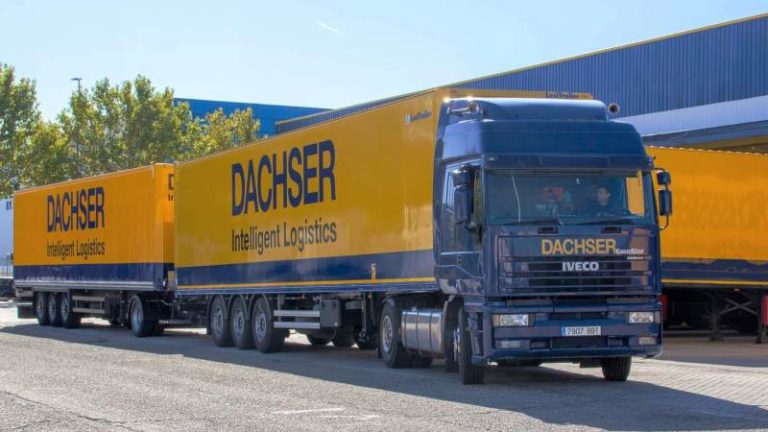
The regulation takes a bold step on the issue of ecocombis or duo-trailers, introducing a simplification that replaces the current system of specific authorisations. The key innovation is the removal of the requirement for individual approval for each vehicle configuration. Operation will now be permitted provided the vehicle complies with the technical specifications and operational conditions laid down by the Jefatura Central de Tráfico. These requirements concern coupling elements, safety devices – including those to improve visibility, signalling, and hazard prevention – and other features that must be certified and commercially available.
These vehicles will only be allowed to circulate on routes deemed suitable, as determined by the relevant traffic authority following a binding opinion from the infrastructure operators concerned. An updated list of approved routes will be published officially in the Boletín Oficial del Estado. Despite the simplification, these vehicles will remain subject to strict limits: a maximum authorised mass of 72 tonnes, a total length not exceeding 32 metres, and the load must remain within the vehicle's footprint. The transport of dangerous goods under ADR regulations will remain prohibited.
Regarding implementation, the ordinance establishes a two-step timeline. Most provisions will take effect the day after publication in the Boletín Oficial del Estado, that is, from 24 July 2025. The most impactful changes, such as increased axle and overall masses, will be phased in: three months later for most vehicles, and six months later for tankers. Once these periods have elapsed, vehicles may operate under the new limits without the immediate need to update their registration documents.
The update will instead be carried out during the next scheduled technical inspection, provided the new weights do not exceed the vehicle's technical limits. Once the Tarjeta ITV has been updated, the owner can request the issue of a new circulation permit reflecting the new data. Finally, existing authorisations for euro-modular vehicles will remain valid until their original expiry date, although operators may opt to adopt the new regime if they find it more beneficial.