


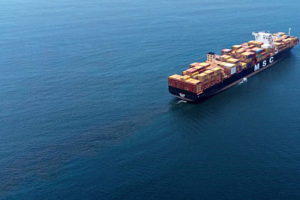


Shipments to Central and South America are taking on a growing role in the expansion strategies of European companies. The evolution of trade flows, also supported by the recent agreement between the European Union and Mercosur, which is due to come into force in the coming months, is reshaping the balance between the two blocs and opening up new channels for European exports. In this context, companies are being asked to manage a complex supply chain involving maritime transport, customs procedures and coordination among multiple operators along intricate routes.
The agreement between the EU and Mercosur marks an important step towards increasing trade volumes, thanks to the gradual reduction of tariffs on both imports and exports. Forecasts point to rising traffic and closer integration of production chains between Europe and South America. This development, however, requires stronger expertise in regulatory and customs management, areas that directly affect shipment times and costs.
To meet these needs, the role of logistics operators able to provide integrated services and operational continuity across the entire supply chain is becoming more important. In this context, Sogedim is positioning itself as a partner for the international development of Italian companies, offering specific expertise on transatlantic routes and coordinated shipment management. Among the solutions it has developed, Eagle Service stands out as an operating model designed to simplify export processes.
Eagle Service, already active on the Genoa-New York route, combines maritime transport with a structured handling of customs formalities, with the aim of making the flow of goods smoother and reducing operational issues. This approach also allows companies to manage shipments to Central and South America with greater control, thanks to an extended logistics network and established partnerships on the ground. One of the central elements in managing these routes is visibility across the entire supply chain. The ability to track shipments, coordinate operations and rely on a single operational point of contact helps reduce bureaucratic complexity and improve overall efficiency. The integration of services also makes it possible to optimise time and costs, limiting the risks linked to delays or misalignment between the various logistics stages.
The EU-Mercosur agreement, involving Argentina, Brazil, Paraguay and Uruguay, is based on the gradual elimination of tariff barriers on a significant share of bilateral trade, with the aim of facilitating market access and reducing costs for exporting companies. The scope of the agreement also includes chapters on technical standards, rules of origin, services and public procurement, as well as commitments on sustainability and transparency.