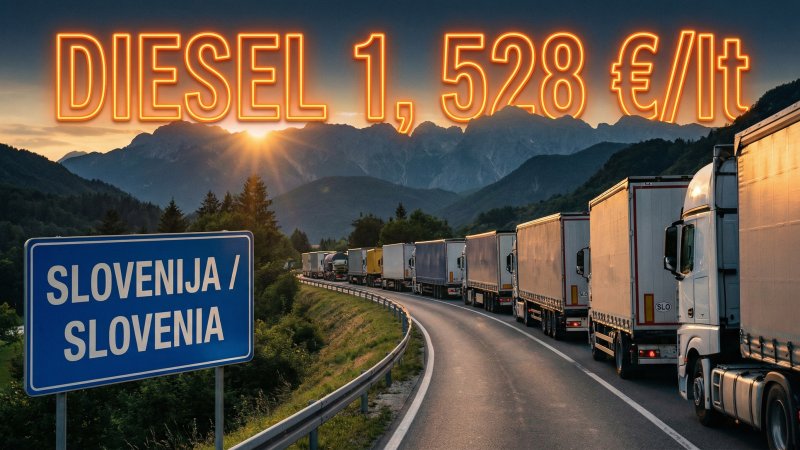



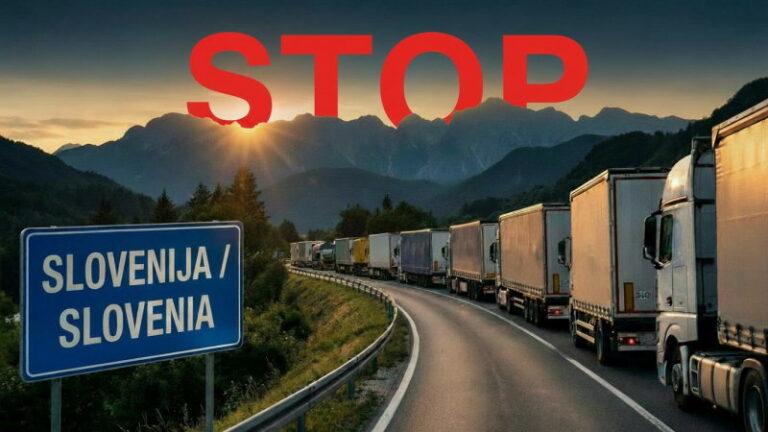
In the first weeks of March 2026, Slovenia is dealing with a growing influx of foreign vehicles – particularly lorries from Italy, Austria and Croatia – heading to stations across the border to refuel with cheaper diesel. The phenomenon, which surged after the excise duty cut introduced by the government on 10 March, has brought diesel prices down to €1.528 per litre, compared with an Italian average of €2.10 per litre for self-service fuel as of 18 March 2026, according to daily data from the Ministry of Enterprises. The price gap, which reaches €0.57 per litre and in some cases exceeds €0.60, has led to queues and logistical tensions, especially in the Nova Gorica area and along routes linking to Friuli Venezia Giulia.
The government led by Robert Golob, through the Minister of the Environment, Climate and Energy Bojan Kumer, has ruled out immediate risks to national reserves but confirmed local distribution issues, with some stations temporarily running out of diesel. The response is twofold: a gradual release of strategic reserves and an assessment of measures to limit foreign demand, with the aim of ensuring supply continuity for residents and stabilising the distribution network.
The options under review focus on tools to selectively curb inflows. These include introducing caps on the number of litres per refuelling at service stations near the border and forms of priority access for Slovenian residents during peak hours. According to several local media sources, a geographically targeted approach is also being considered, with restrictions applied especially in areas most exposed to cross-border demand. If implemented, such measures would directly affect how international fleets plan their refuelling.
The key issue concerns the compatibility of any restrictions with EU rules on the free movement of goods. Measures explicitly based on nationality or residence could raise concerns at EU level, requiring Ljubljana to find technically neutral solutions that are still effective in reducing pressure on border fuel stations. In this context, the introduction of general limits on purchasable volumes appears one of the more viable options, albeit less selective.
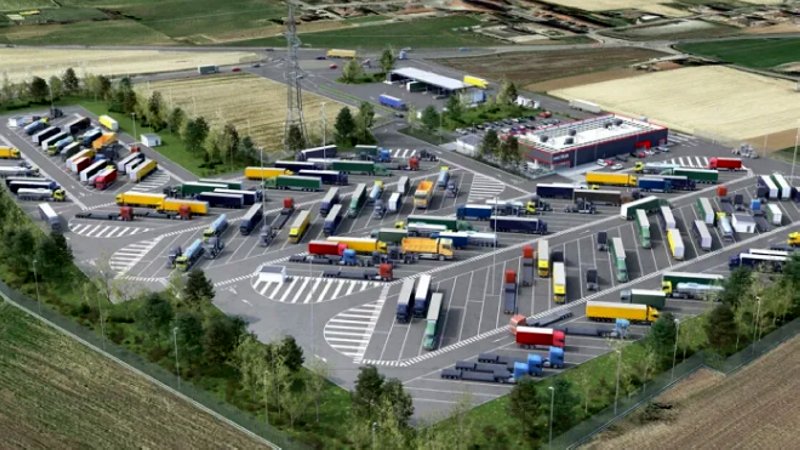
For the road haulage sector, the price differential has already had tangible operational effects. Thousands of lorries cross the border every day, planning routes so they can refuel in Slovenia with tanks close to empty. The savings per trip are significant: between €240 and €400 for a standard fill of 600–800 litres, with higher figures for vehicles equipped with dual tanks. However, this economic advantage is not evenly distributed.
The release of strategic reserves, already under way, is a short-term response to logistical bottlenecks but does not address the demand driven by the price gap. For this reason, the restrictive measures under consideration are central to the Slovenian government’s strategy. Their possible introduction could reshape, in the short term, refuelling routes for road freight transport in the Alpine-Adriatic area, with effects on both companies’ operating costs and pressure on neighbouring countries’ distribution networks.
Antonio Illariuzzi