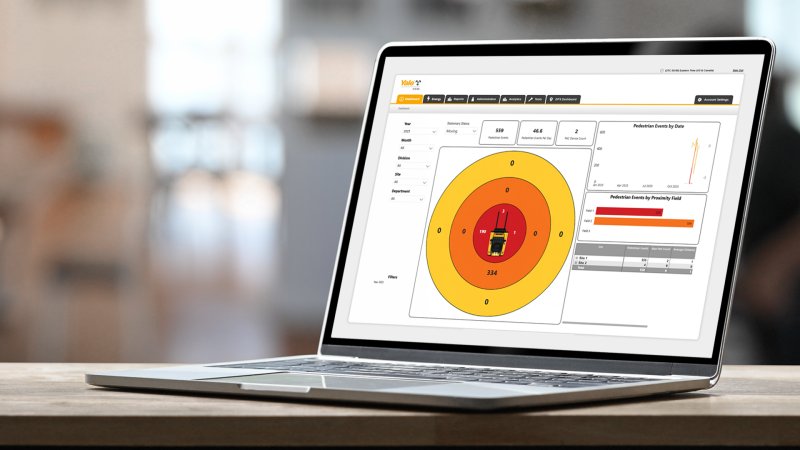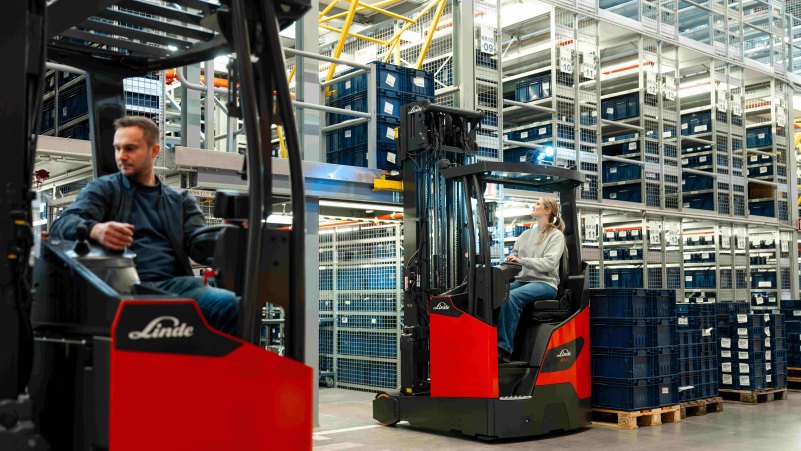





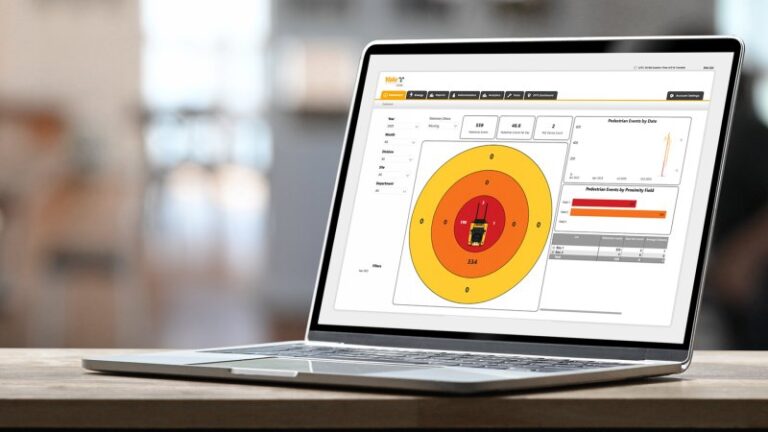
Yale Lift Truck Technologies announced in early April 2026 the launch of a dashboard dedicated to detecting events linked to the presence of pedestrians near forklift trucks. The technology can identify individuals up to five metres from the vehicle, with the aim of improving operational safety in warehouses through greater data availability. The dashboard collects information generated by the Yale Reliant camera system and the Yale Vision wireless telemetry platform, already in use among several logistics operators. Access is provided at no additional cost for customers using both solutions. The system has been developed using real-world imagery and adapts to different environmental and lighting conditions, offering a higher level of accuracy than technologies that rely solely on body heat detection.
The company explains that the platform enables analysis of several operational parameters, including the total number of pedestrian-related events across the entire fleet, the timing distribution of incidents, proximity distance, position relative to the truck and frequency per individual vehicle. This is complemented by contextual information, such as whether the truck was stationary or moving at the time of the event, helping to reconstruct operational dynamics. Processing this data allows warehouse managers to identify critical areas and recurring behaviours, supporting targeted safety interventions. These may include revising pedestrian routes, updating signage and introducing specific training programmes for operators and warehouse staff.
The dashboard integrates with the Yale Reliant camera, introduced in 2025, which offers a 110-degree field of view and triggers automatic alerts when a pedestrian is detected. Notification modes include audible and visual warnings, with voice messages and light indicators showing the pedestrian’s position on the onboard device. A traction control configuration is also available, automatically and progressively reducing the vehicle’s speed when pedestrians are present. This feature is designed to encourage an active operator response, allowing adjustments to the truck’s trajectory or further speed reduction.