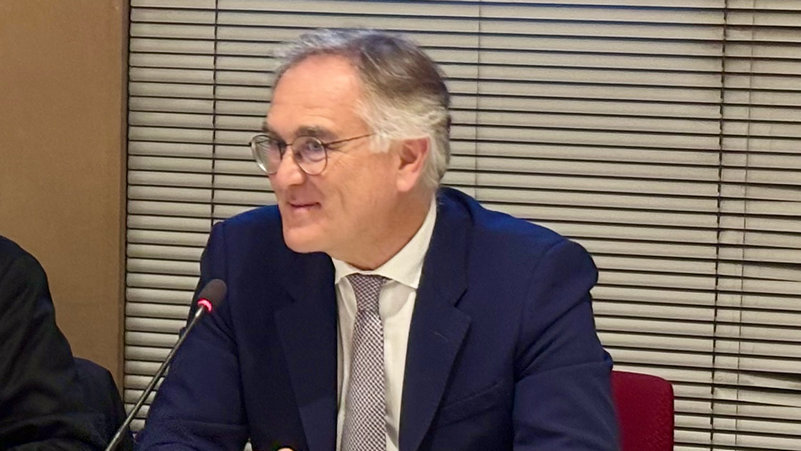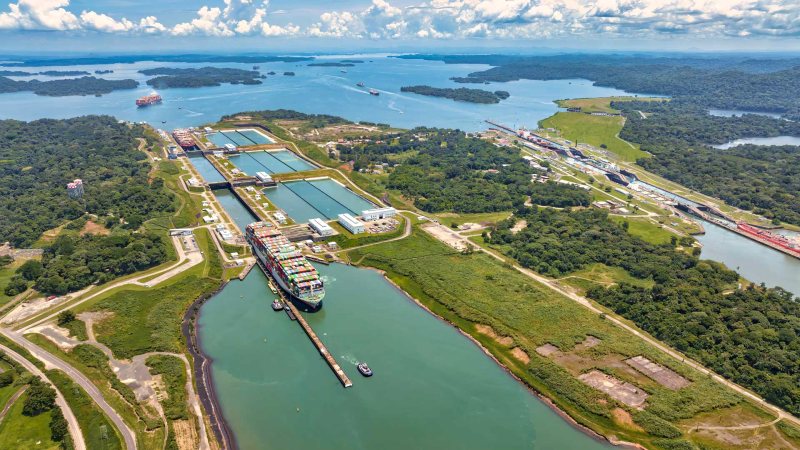







To limit the risk of concentration in the hands of a single operator of Panama’s two existing container terminals and to safeguard the neutrality of the canal, the Authority has decided to double capacity. In August 2025, administrator Ricaurte Vásquez Morales stated that in the first quarter of 2026 an international tender would be called for the construction and management of two additional container terminals, one on the Atlantic side and the other on the Pacific. “There is huge demand for terminals and port infrastructure. This is the time to get involved,” Vásquez said, highlighting the change of course for an Authority that has traditionally focused only on managing the waterway rather than the ports.
The new terminals form part of a five-year, 8.5 billion dollar expansion plan, which also includes the construction of a liquefied petroleum gas pipeline, new water reservoirs and upgrades to road infrastructure. The pipeline, by linking the two oceans, will allow the transfer of ethane and propane without passing through the canal’s locks, serving growing Asian demand as well as US Gulf exporters.
Panama’s move comes within the wider geopolitical game set in motion when Donald Trump declared his intention to regain control of the Panama Canal. Shortly after that statement, on 14 March, it was announced that a consortium formed by BlackRock and MSC had signed an agreement to acquire all the terminal assets of Panama Ports Company, including the two Panamanian facilities. The deal was later blocked by the Chinese government, given that CK Hutchison Holdings is based in Hong Kong, and the situation remains unresolved.
In this context, the decision by the Canal Authority appears to be an attempt to preserve neutrality and ensure fair access for all operators, preventing dominance by a single group. Panama’s strategy must also be seen against the backdrop of intensifying regional competition. Mexico is developing the Interoceanic Corridor of the Isthmus of Tehuantepec, a 308-kilometre rail link between the Atlantic and the Pacific. Colombia is advancing plans for a trans-oceanic railway and a “dry canal” between Buenaventura and Cartagena. In Peru, the major port of Chancay is under construction, backed by heavy Chinese investment.
The Panama Canal, which alone handles around 5% of global maritime trade, continues to report growth. In July 2025, transits rose by 8% compared to the previous month, with more than a thousand crossings. Long-term sustainability, however, remains a priority. The Río Indio reservoir project, valued at 1.2 billion dollars, will be crucial in securing a stable water supply and preventing new crises such as the drought that hit in 2023-2024.
From an economic perspective, the Panama Canal Authority forecasts a decline in revenue for the 2025-2026 fiscal year, estimating 4.4 billion dollars compared with 5.6 billion the previous year. The fall is attributed to the end of the early traffic build-up caused by US tariffs.