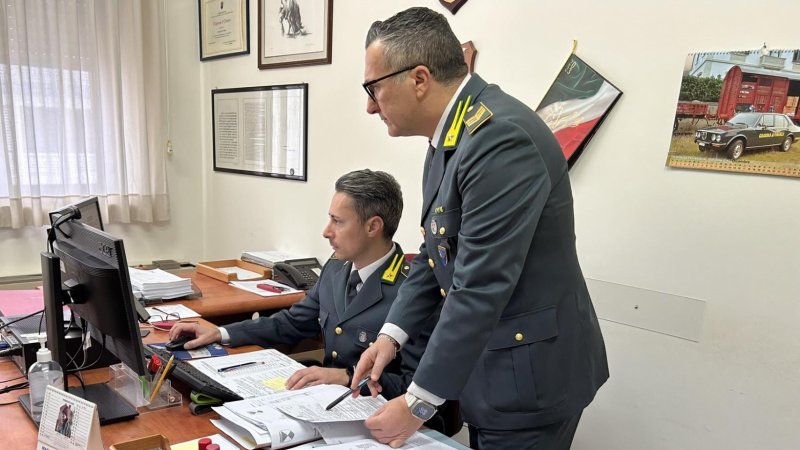






An apparently insignificant detail led to the discovery of more than 20 kilograms of opium paste concealed inside the catalytic converter of a lorry arriving from Iraq. The seizure took place in February 2026 in the customs areas of the Port of Trieste during routine inspections of incoming vehicles and cargo. Officers from the Comando Provinciale della Guardia di Finanza (Provincial Command of the Financial Police) and officials from the Agenzia delle Dogane e dei Monopoli (Customs and Monopolies Agency) were alerted by the unusual cleanliness of the vehicle’s exhaust system, which appeared excessively polished and free of the dust typically accumulated during long road journeys. The detail prompted a more thorough inspection.
Inside the catalytic converter, officers found a cylindrical metal container holding a block of opium paste, carefully wrapped in layers of cellophane and carbon paper to mask its smell and avoid detection by sniffer dogs. The driver, a 44-year-old Iranian national, attempted to escape after the drugs were discovered. He was apprehended and arrested for importing narcotics into Italy and transferred to the “Ernesto Mari” prison in Trieste, at the disposal of the judicial authorities.
The lorry, loaded in Iraq, had been shipped by ferry from the Turkish port of Pendik in Istanbul and was bound for a logistics company based in Cologne, Germany. The entire vehicle has been seized, and investigations are under way to identify the actual senders and recipients and to reconstruct the international links in the trafficking chain.
This is not the first time that the Port of Trieste has emerged as a critical hub for opium trafficking from the Middle East. In April 2023, around 22.6 kilograms of opium were seized from a double bottom in an Iranian lorry, also arriving from the Turkish port of Pendik. In July 2025, another major seizure followed: 30 kilograms of opium paste hidden inside bricks and decorative items in a truck from the Turkish port of Mersin, again loaded in Iraq and declared as destined for European logistics companies.