



Hapag-Lloyd completes newbuild programme
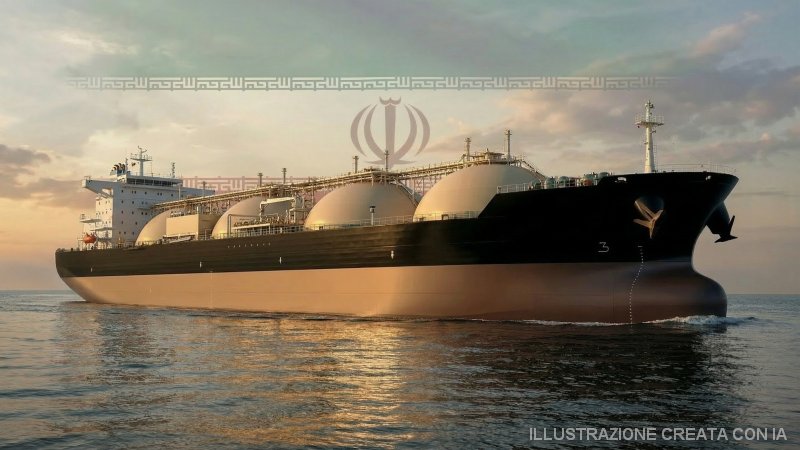
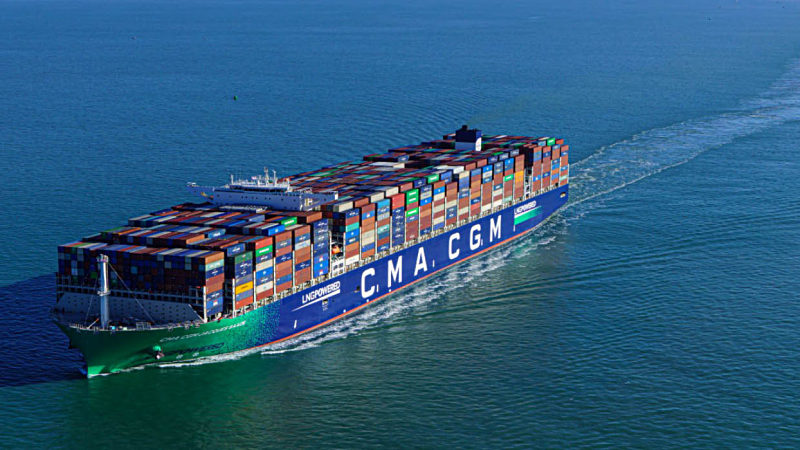
Hapag-Lloyd has celebrated the christening of the Wilhelmshaven Express at Wilhelmshaven, the twelfth and final vessel in the Hamburg Express series. The ceremony, held at the Jade Weser Port, marks the conclusion of a three-year newbuilding programme for 24,000 TEU ships, one of the most significant in the company’s history, representing a total investment of around €1.85 billion. Built by Hanwha Ocean in South Korea, the vessels feature dual-fuel propulsion (LNG and biomethane) and deliver up to 25% lower CO₂ emissions compared with conventional models. The 399-metre-long Wilhelmshaven Express will operate on the Ne1 service of the Gemini Cooperation, connecting Asia with Northern Europe. CEO Rolf Habben Jansen described Wilhelmshaven as a strategic hub for network efficiency and supply chain resilience. Hapag-Lloyd now plans a new programme of 24 low-emission ships, scheduled for delivery between 2027 and 2029.
New dual-fuel vessels for Evergreen
Evergreen has commissioned Guangzhou Shipyard International and Samsung Heavy Industries to build 14 dual-fuel LNG container ships of 14,000 TEU each, seven per shipyard. According to Greek broker Intermodal, the total investment amounts to around €2.6 billion, with deliveries due between 2028 and 2030. This newbuilding order follows the February announcement of 11 dual-fuel LNG vessels of 24,000 TEU, divided between GSI and Hanwha Ocean. With this latest order, Evergreen consolidates its strategy of fleet renewal and expansion geared towards energy transition. The Taiwanese carrier, the world’s seventh largest in container transport, is close to surpassing a total fleet capacity of two million TEU.
Modernisation plan for Itajaí
Itajaí, Brazil’s second-largest port, is launching a US$158.8 million modernisation plan under the supervision of the Santos Port Authority. Announced by president Anderson Pomini, the investment aims to strengthen the port’s commercial and tourism competitiveness. One of the main interventions involves the removal of the Pallas shipwreck, planned for the first half of 2026 at a cost of US$12.8 million. The plan also includes upgrading the north and south quays to improve safety and manoeuvrability, installing the Vimis maritime traffic monitoring system, and modernising electrical substations and lighting. The customs area will expand by 60,000 square metres, featuring new scanners, automated gates, and an integrated truck monitoring system. The SmartPorto project will introduce intelligent cameras and real-time control systems.
New Luxembourg–France train
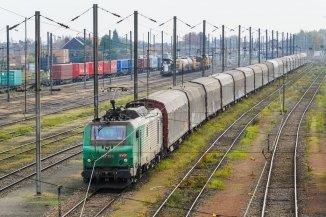
A new combined rail service is now operational between Bettembourg terminal in Luxembourg and Mouguerre terminal, near Bayonne in Nouvelle-Aquitaine. Operated by Viia, a subsidiary of Rail Logistics Europe (SNCF Group), the service is designed for rail motorways and enables the transport of trailers and containers, including non-cranable ones, using special wagons. The inaugural train completed its journey on 16 October. From mid-November, the service will offer four round trips per week. The project strengthens the North–South logistics corridor in Europe and supports low-emission freight transport. Cfl Terminals and Captrain are also partners in the initiative, with the Mouguerre terminal serving as a new operational hub for the Atlantic region.
New container terminal in Nador
Marsa Maroc and CMA Terminals, a subsidiary of CMA CGM, have signed an agreement for the joint management of the West Container Terminal at Nador West Med, on Morocco’s Mediterranean coast. The joint venture, owned 51% by Marsa Maroc and 49% by CMA Terminals, will develop and operate the facility, which is due to start operations in 2027. The terminal will offer an annual capacity of 1.8 million TEU, a 900-metre quay, 18 metres of draught, and a 37.5-hectare yard within a total area of 60 hectares. Eight STS quay cranes will be installed. The agreement builds on the cooperation launched in 2024 between Tanger Med and CMA CGM to develop infrastructure that meets international standards of efficiency and connectivity. The deal is subject to regulatory approval. Nador West Med aims to become a strategic transhipment hub in the Mediterranean. Its proximity to the Strait of Gibraltar will further strengthen Morocco’s position as a logistics platform linking Africa, Europe and Asia.
Iata updates cargo manuals
The International Air Transport Association (Iata) has released the 2026 editions of its cargo and ground operations manuals, featuring nearly one hundred updates to align with evolving global standards. Revisions focus particularly on the Dangerous Goods Regulations (DGR), Battery Shipping Regulations (BSR), Live Animals Regulations (LAR) and the Iata Ground Operations Manual (IGOM). Updates to the DGR and BSR mainly concern lithium batteries, whose air transport has risen by 25%. New provisions introduce official names for hybrid vehicles, stricter charge limits for lithium batteries with equipment, and compliance checklists for shippers. Texts for 290 operational variations have been standardised, and new safety data sheet guidelines added. The 2026 LAR includes updates to container specifications and staff training, with Brazil joining the list of countries adopting the regulation. There are also new guidelines for transporting poultry and protected species. Among the digital innovations is the Lar Verify portal, offering online access to updated regulations and tools for classifying batteries and dangerous goods.
Dynamic charging for electric trucks
In France, it is now technically possible to charge electric trucks while driving. On the A10 motorway near Paris, the world’s first open-traffic test for dynamic wireless charging has begun. The “Charge as you Drive” project, promoted by Vinci Autoroutes, involves four prototype vehicles — a truck, a van, a car and a bus — all equipped with receiving coils. According to Vinci, the system can transfer over 300 kW of instantaneous power and around 200 kW on average, enough to maintain or increase battery charge while on the move. Coils embedded beneath the asphalt supply power to the motor and recharge the battery, reducing the need for long stops and oversized batteries. For trucks, this could mean several tonnes less battery weight and greater payload capacity, with benefits for both costs and environmental impact. The project forms part of France’s broader highway electrification strategy, which already provides charging stations at all 180 Vinci Autoroutes service areas.
Venice becomes Volkswagen automotive hub
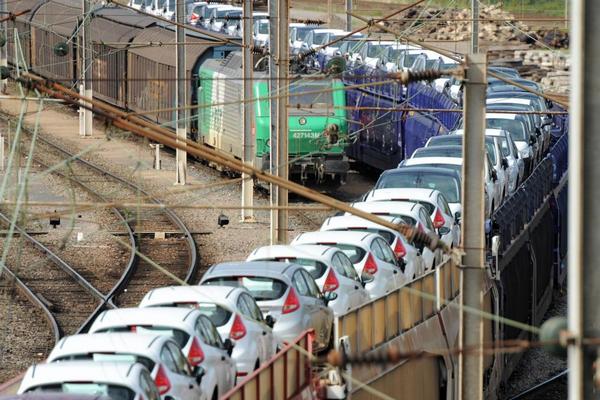
The Port of Venice has launched a new regular automotive transport service for the Volkswagen Group, connecting its Bratislava plant to the Chinese market. Cars are transported by rail to the Tencara terminal in the southern industrial canal of Porto Marghera, where they are loaded onto Glovis and Cosco vessels bound for China, with an estimated transit time of around 30 days. Over 90% of the logistics model is intermodal rail-based, significantly cutting CO₂ emissions. Initially, ships will call every two weeks, reaching full operational capacity by January 2026, with an estimated annual throughput of 100,000 vehicles. Investments have enabled the construction of a nearly 300-metre quay and logistics yards covering more than 27 hectares. The establishment of Porto Marghera’s simplified logistics zone has accelerated authorisation procedures and attracted private investment.