



Rhenus completes integration in Poland
Since 10 September, C. Hartwig Gdynia has officially taken on the Rhenus name, operating as Rhenus Air & Ocean Poland. The move marks the completion of the integration of one of Poland’s oldest international forwarding companies into the Rhenus Group. It represents the final stage of a process that began with the 2021 acquisition, which had already strengthened the German company’s air and sea freight network. With this rebranding, Rhenus consolidates its presence in Eastern Europe and broadens the range of logistics services it offers in Poland. On the local market, the company provides maritime, air and intermodal transport, as well as project logistics solutions, in line with the group’s international organisation. Rhenus currently operates a network spanning more than 70 countries, supporting global supply chains.
Metrans strengthens rail links with Turkey
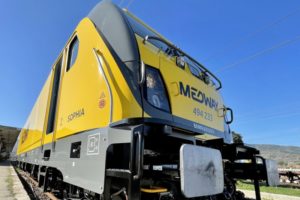
Metrans has launched transport in swap bodies on the Halkalı–Dunajská Streda line and is preparing to open the first direct rail link from Turkey to the European Union via the Kocaeli Railport. The company, one of Europe’s leading intermodal transport operators, is thus consolidating its presence in Turkey with an offer that combines road and rail. According to CEO Peter Kiss, Turkey plays a key role in the group’s international growth strategy thanks to its geographical position and the potential for developing intermodal solutions. Operations are supported by two local offices and the Halkalı terminal, providing direct assistance to customers.
Russian diesel exports rise
Diesel shipments from Russia increased in the third week of September despite ongoing difficulties at refineries hit by Ukrainian drone attacks. According to Vortexa data reported by Bloomberg, exports rose by 85% in the week ending 21 September, surpassing 1.2 million barrels per day. Growth was driven mainly by the Black Sea port of Novorossiysk, where drone strikes had temporarily disrupted flows. Overall seaborne fuel shipments stood at around two million barrels per day in the first 21 days of September. The level, however, remains below those recorded in the same month over the past three years.
Magma Aviation fleet expands
Magma Aviation has announced the addition of a new B747F to its fleet. The move, unveiled at the start of the last quarter of 2025, forms part of a growth strategy that in recent years has seen the company expand routes, teams and aircraft types. CEO Peter Kerins said the increased capacity would serve both existing customers and new routes, in line with long-term planning. The company also intends to add further aircraft in the coming years, significantly expanding its fleet.
Qatar Airways Cargo launches new app
Qatar Airways Cargo has released the latest version of its mobile application, QR Cargo, designed to give forwarders and customers more autonomy in managing shipments digitally. The platform enables instant bookings, real-time tracking, flight schedule consultation, electronic transport document handling and quote requests directly from mobile devices. Registered users also have full access to the integrated Digital Lounge portal, allowing them to manage the entire process from quotation to booking confirmation. Key functions include automatic notifications, digital document uploads, booking updates, customised dashboards and multi-user access for forwarders and agents. The app is directly connected to Qatar Airways Cargo’s internal systems, ensuring constant updates of operational information and direct access to customer service.
New technologies in Lufthansa Cargo warehouses
Lufthansa Cargo is testing new scanning technologies at its Frankfurt and Los Angeles warehouses to boost operational efficiency. The initiative is part of the company’s airfreight digitalisation strategy, already applied in booking processes using artificial intelligence systems. The trials involve two specialist companies in computer vision measurement systems. Shipments are scanned directly on conveyor belts or forklifts during normal operations, eliminating the need for an extra control stage in storage or loading procedures. The system automatically detects the actual dimensions of shipments in real time, reducing discrepancies with declared sizes. The data collected helps optimise the entire transport chain, from more efficient aircraft capacity usage and warehouse space evaluation to planning subsequent distribution routes. Until now, dimension checks have been carried out with laser scanners and manual inspections. The new technologies promise greater speed and accuracy, offering significant operational advantages. At the end of the testing phase, Lufthansa Cargo will decide whether to extend these solutions to other hubs in its network.
WSC fire safety programme
The World Shipping Council has announced the launch of the Cargo Safety Program, aimed at reducing fire risks on board caused by misdeclared or undeclared dangerous goods. It is described as the first industry-wide initiative focused on systematically preventing such incidents. According to Allianz’s Safety and Shipping Review 2025, ship fires have reached their highest level in the past decade. Dangerous goods incorrectly declared account for more than a quarter of cargo-related incidents. The new programme combines digital analysis tools with shared inspection procedures. Its core is a platform developed by the National Cargo Bureau, which uses artificial intelligence algorithms to analyse millions of bookings in real time, applying keyword searches and commercial pattern recognition. Alerts are reviewed by carriers and, if necessary, followed up with targeted inspections. The initiative also introduces common standards for inspections and a feedback mechanism on incidents, turning real cases into preventive measures. At launch, carriers representing more than 70% of global container capacity had joined the programme.
Jotun and Messina reach agreement
Jotun has announced a commercial agreement with Italian shipowner Ignazio Messina for the adoption of Hull Skating Solutions (HSS). The vessel *Jolly Rosa* will be the first Messina ship to use the HSS system, which includes the HullSkater developed with Kongsberg for proactive hull cleaning and inspection. The solution integrates high-performance coatings, technical monitoring and hull performance guarantees. According to Jotun’s estimates, applying HSS will allow Messina to cut around 11,800 tonnes of CO2 emissions per year compared with average market products, calculated under ISO 19030 standards.