






From Saturday 10 January 2026, new limitations on industrial vehicle traffic will take effect on the Austrian Lueg Bridge (Luegbrücke), along the A13 Brenner motorway in Tyrol. The measures apply to vehicles with a gross weight exceeding 7.5 tonnes and form part of the traffic management plan prepared by Asfinag, the Austrian motorway operator, to ensure safety and traffic continuity during the modernisation works on the infrastructure, which are scheduled to continue until 2030.
On certain Saturdays in January, southbound traffic towards Italy may be allowed to use two lanes, provided weather conditions permit and there is no snowfall. Night-time, public holiday and weekend bans already in force for heavy goods vehicles will remain unchanged. In 2026, a total of 36 southbound ban days and 21 northbound days are planned, including 14 new days of complete truck stoppage. On Saturdays between 10 January and 14 March 2026, the ban for vehicles over 7.5 tonnes will be extended to the time slot between 7.00 am and 3.00 pm.
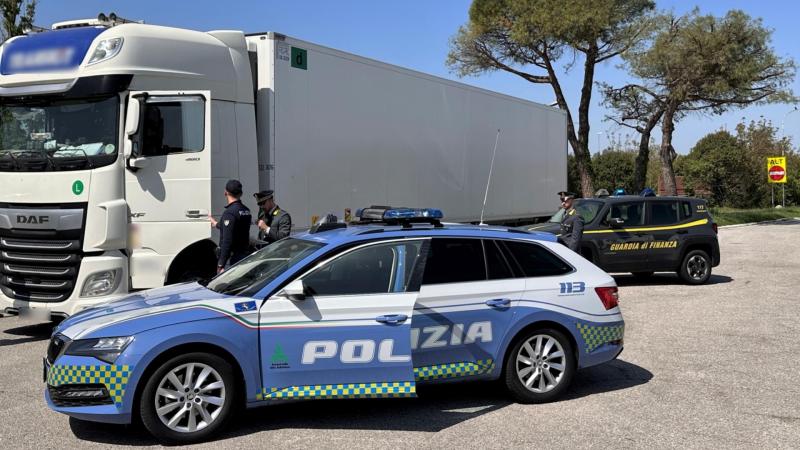
To ensure compliance with the restrictions, Asfinag has installed an in-road weighing system capable of automatically detecting the weight of passing vehicles. During periods when two lanes are open, vehicles over 3.5 tonnes must use the inner left lane, which is structurally stronger, in order to concentrate loads in the central part of the bridge and reduce stress on the structure. Checks are active near Nößlach and Brenner. In the work zone, the speed limit is set at 60 km/h.
On the Italian side, the Government Commissioner for the Province of Bolzano issued Decree No. 674 on 8 January 2026, introducing limitations on commercial traffic on the A22 Brenner motorway between Vipiteno and the state border, in order to prevent negative knock-on effects from the Austrian bans. The decree allows heavy vehicles already en route to stop in equipped areas between Vipiteno and the state border. For those wishing to avoid the Lueg Bridge, the authorities indicate alternatives such as the Felbertauernstraße or the Arlberg Pass and tunnel, while the Resia Pass will remain closed until December 2026. The Brenner railway line, by contrast, continues to operate without restrictions.
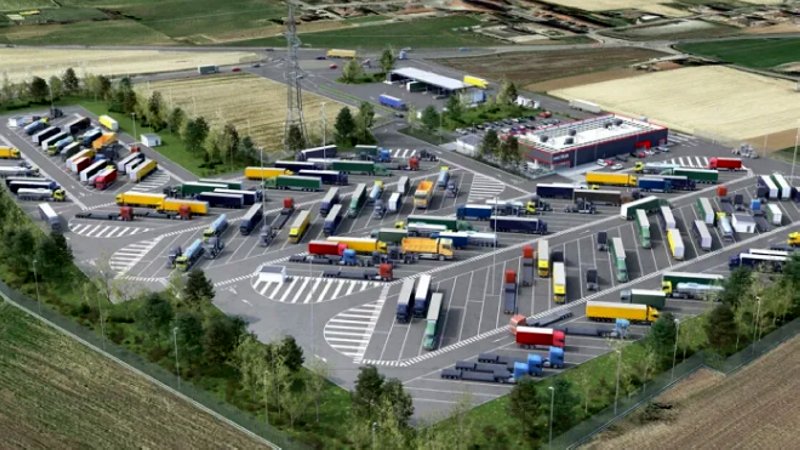
Autobrennero is coordinating the management of rest areas, particularly at the Sadobre freight terminal in Vipiteno, to enable orderly regulation of traffic flows. Cross-border coordination is ensured by the Euregio Tyrol–South Tyrol–Trentino, which brings together the presidents of the three autonomous provinces. Arno Kompatscher, President of the Province of Bolzano, highlighted how cooperation between the territories has made it possible to avoid a scenario of severe congestion on both sides of the Brenner.
The Lueg Bridge reconstruction project is structured in three phases. The first, from 2025 to 2027, involves the construction of a new two-lane bridge parallel to the existing one, while traffic remains on the current structure. In the second phase, traffic will be diverted onto the new bridge and the old structure will be demolished. The third phase, extending until 2030, will see the construction of a second new bridge, restoring the full capacity of the A13 with a total of four lanes. In the 2026 operational calendar, two-lane operation is planned for around 180 days in both directions, mainly during the summer months, although the general rule remains single-lane traffic.
The reconstruction works have been awarded to a consortium formed by Strabag and Porr, with a total value of €217 million. The construction site was launched in spring 2025 and completion of the entire project is scheduled for 2030. Concerns have been voiced by South Tyrol’s tourism sector: Manfred Pinzger, President of the Hgv, the association of hotel and restaurant owners in South Tyrol, has asked Asfinag to revise the traffic calendar to avoid long queues and disruption during peak weekends.
The Lueg Bridge, built between 1966 and 1968, is 1,804 metres long and rests on 48 pillars. After more than 55 years of service, the structure was declared irreparably damaged due to the penetration of de-icing salts, which compromised the reinforced concrete. Since 1 January 2025, the bridge has already been passable with one lane in each direction, a configuration defined as regular operation that will remain in place until the completion of the first phase of works, expected by the end of 2027.