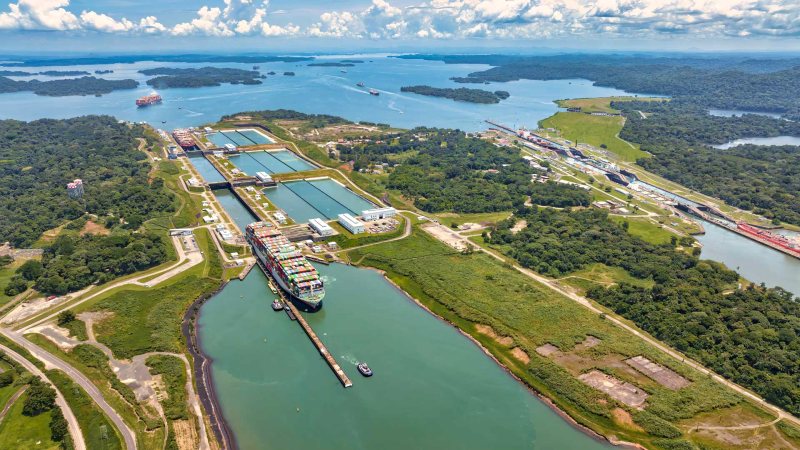



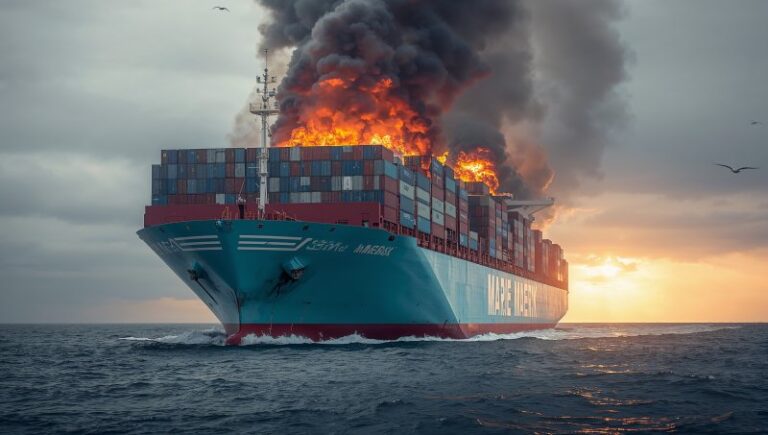
On 13 August 2025 the Marie Maersk, one of the largest container ships in the world with a capacity of more than 19,000 teu, suffered a serious fire while sailing off the Liberian coast. The ship, part of the Triple-E class operated by Danish company Maersk, had departed from Rotterdam bound for Malaysia and was navigating one of the busiest trade routes in the world when the crew spotted smoke rising from the containers. Flames spread rapidly beyond the first containers affected, making external intervention by tugs and specialist teams essential.
The crew followed safety protocols and attempted to contain the blaze with the vessel’s onboard systems, but the scale of the fire forced a diversion towards the African coast and a call for assistance. That same evening, two fire-fighting tugs, the Captain Cat and the Med Rigel, reached the vessel, joined by the sister ship Maersk Savannah which escorted it at reduced speed.
By the following weekend, the operation had been reinforced with the arrival of further naval assets and an offshore support unit. According to Maersk, thanks to the joint work of the crew and external fire-fighting teams that boarded on 19 August, the blaze has been contained though not yet extinguished. Teams continue to cool the affected areas to prevent flare-ups, while the company waits for a suitable port of refuge to be identified.
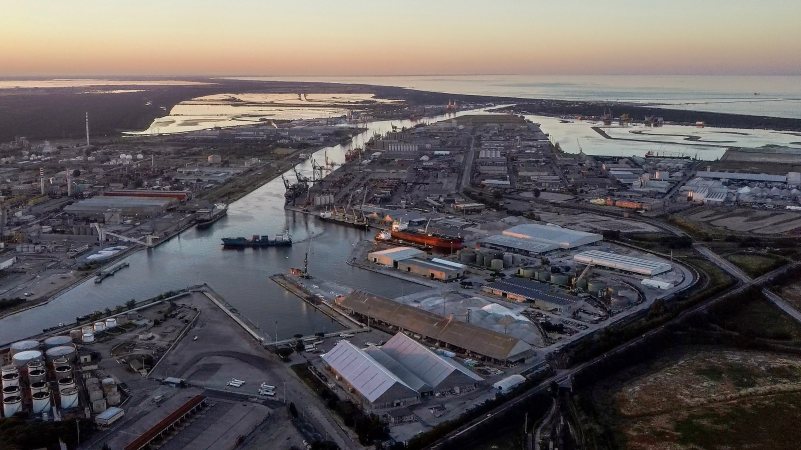
Finding a safe berth is now the central challenge. The ship’s position off Liberia, combined with its extraordinary dimensions – 399 metres in length and nearly 214,000 tonnes deadweight – greatly limits the options for shore-based assistance. Few ports on the west coast of Africa are equipped to handle a vessel of such scale, let alone one carrying burning containers.
The case recalls similar episodes, such as the Maersk Frankfurt in 2024 or the X-Press Pearl, when several ports refused entry due to the risks linked to damaged cargo. Maersk has stated it is in close contact with customers to provide updates on the condition of their goods, though it cannot at present confirm the fire’s actual impact on the containers. Such incidents are often traced back to misdeclared or poorly packed cargo, which remains a leading risk factor. The ever-growing size of vessels, with capacities exceeding 19,000 teu, only magnifies the issue: more containers mean a higher probability of hazardous materials being on board.