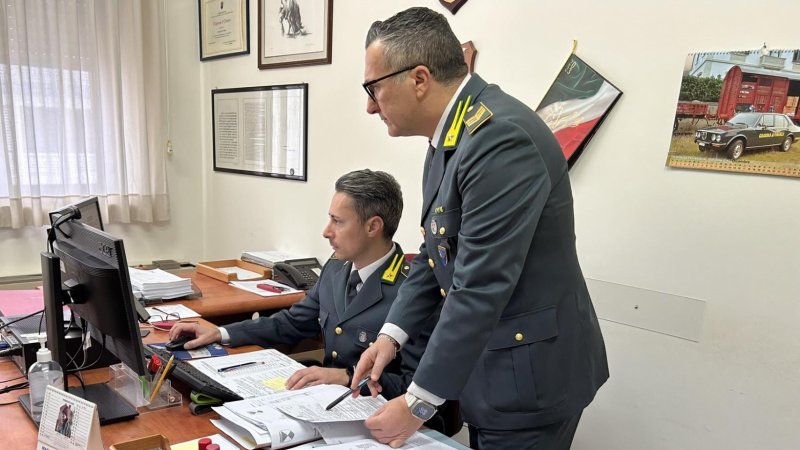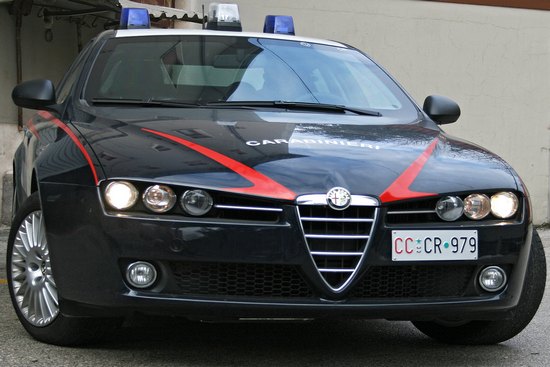




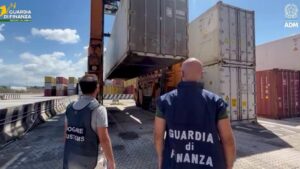
On 10 September 2025, officers from the provincial command of the Guardia di Finanza in Reggio Calabria and customs officials intercepted a new cocaine shipment at the port of Gioia Tauro. The consignment, totalling 288 kilograms divided into 249 packages, had been concealed in the ventilation shafts of two containers. Had it reached the market, it would have been worth more than 46 million euros. The operation began after scanning equipment revealed structural anomalies in the containers, which were confirmed during a direct inspection.
Since the start of 2025, customs and finance officers have intercepted over three tonnes of pure cocaine at the Calabrian hub, with an estimated street value of nearly 500 million euros. Seven operations have been carried out so far, beginning on 15 January with the discovery of 110 kilograms hidden in a container of paper reels from North America. Only a few days later, on 4 February, 27 kilograms were seized from a banana shipment originating in Ecuador. Between 17 and 28 February, 788 kilograms were uncovered in containers carrying wood pellets and in a refrigerated engine compartment used for frozen fish.
The largest single seizure took place on 28 March, when more than a tonne of cocaine, 1,170 kilograms in total, was found in eleven containers arriving from Brazil and disguised among bags of pellets. On 24 June, an operation led to the seizure of 228 kilograms and the arrest of two dockworkers caught in the act. Then, in the early hours of 7 July, 417 kilograms were discovered in sixteen bags hidden inside a damaged container. The most recent operation on 10 September resulted in the seizure of a further 288 kilograms.
The seizures have been accompanied by broader investigative work. In July 2025, an operation codenamed “Arangea bis-Oikos” led to the arrest of 54 individuals and the confiscation of 117 kilograms of cocaine outside the port. Investigators reconstructed the links between several criminal organisations that were using Gioia Tauro as a strategic hub for drug imports from Ecuador, Spain, Germany, the Netherlands and Belgium. The inquiry also revealed the role of dockworkers and local intermediaries in facilitating the entry of illegal consignments.
The methods used to conceal the drugs have become increasingly sophisticated, with traffickers hiding them in ventilation ducts, among legitimate cargoes such as bananas, frozen fish, paper reels and timber, or within false compartments built into containers. Despite these tactics, cooperation between the Guardia di Finanza and the Customs Agency has made it possible to intercept significant illicit flows, inflicting multimillion-euro losses on the criminal groups that rely on Gioia Tauro as their main gateway to Europe’s narcotics routes.